
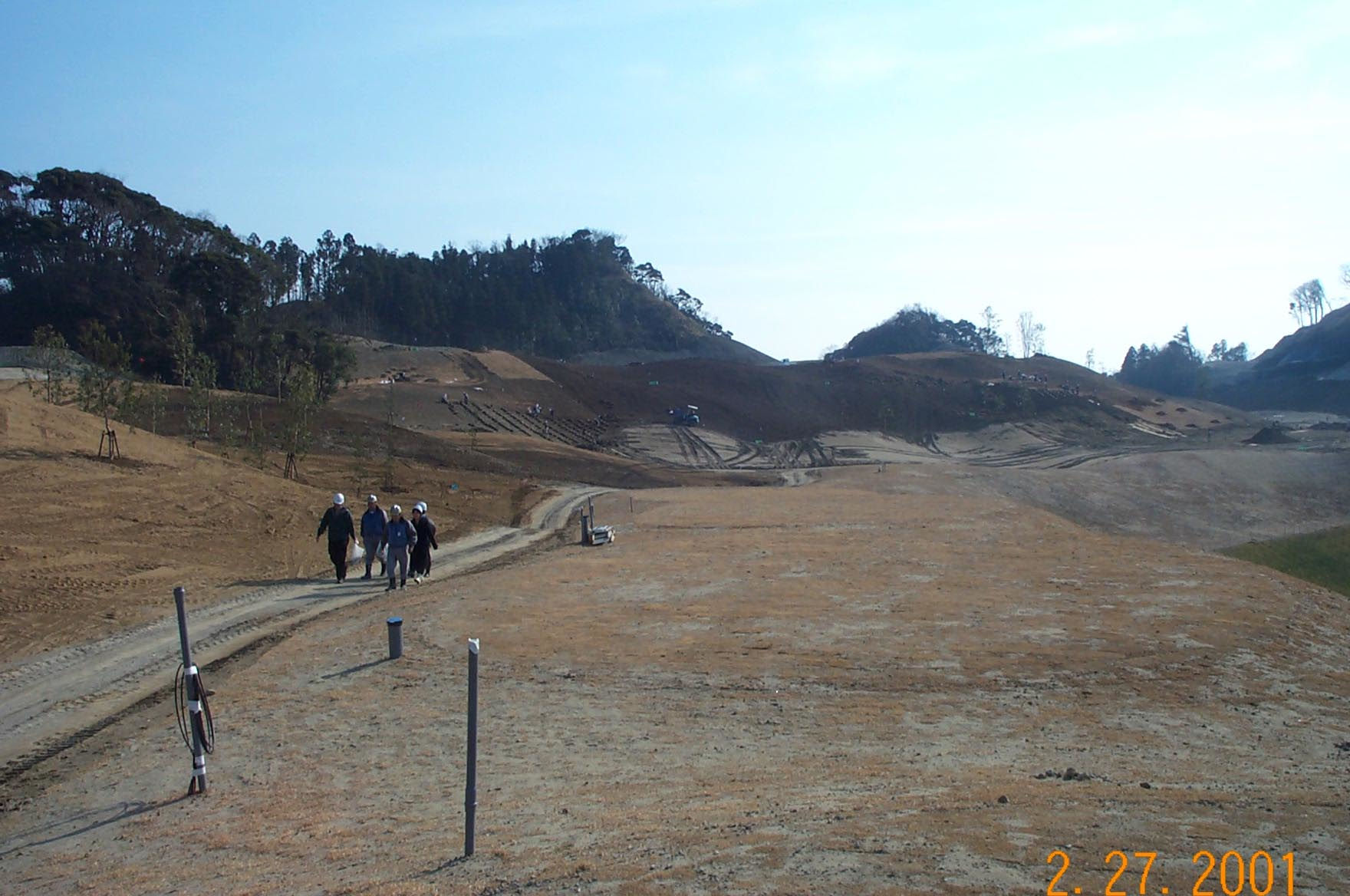
Zoysiagrass sod in Japan and Korea is typically cut into small pieces that are easy to handle. I had a conversation with Dr. Mike Richardson and Andrew McDaniel about this some time ago, but at that time I wasn’t able to find the photos I wanted to demonstrate the “each piece on its own, with topdressing between allowing the grass to grow together” method.
I’ve found some relevant photos now.
Most golf courses in Japan, and a lot in Korea, are planted to zoysiagrass.

In tropical locations, zoysiagrass can be grown in from stolons, if you can wait the months it takes to produce a usable sward. In temperate climates, for obvious reasons related to grow-in time and erosion prevention, zoysiagrass sod is used when establishing large areas of turf.

Of course, if you won’t be playing golf on the surface immediately, or if you won’t be opening the park immediately, there is no need to plant each piece of sod with its edges touching the adjacent piece. These are rhizomatous and stoloniferous grasses, and they will fill the gaps between sod pieces, eventually.

The spacing between pieces can vary based on when the sward needs to be used. If it needs to be used immediately, then the sod needs to be planted with each piece touching the next. If the sward will be used after months of good growing weather have passed, then sod can be planted with large gaps between pieces.

An obvious benefit to this method is the efficient use of sod. One only purchases the amount of sod necessary, and then allows the grass to fill in the gaps. A less obvious benefit, but one that will be familiar to any who have considered whether to seed or sod a cool-season green, or to sprig or sod a warm-season one, is the type of surface one has after sodding with topdressed gaps between pieces. This surface has some areas of sod, with their usual burden of thatch and resistance to water movement. Then there are lots of spaces with a brand new turf growing in the rootzone mix you have topdressed with, free of thatch, into which water can easily infiltrate. It’s a bit of a hybrid system between sodding and sprigging, with the benefits of both.