
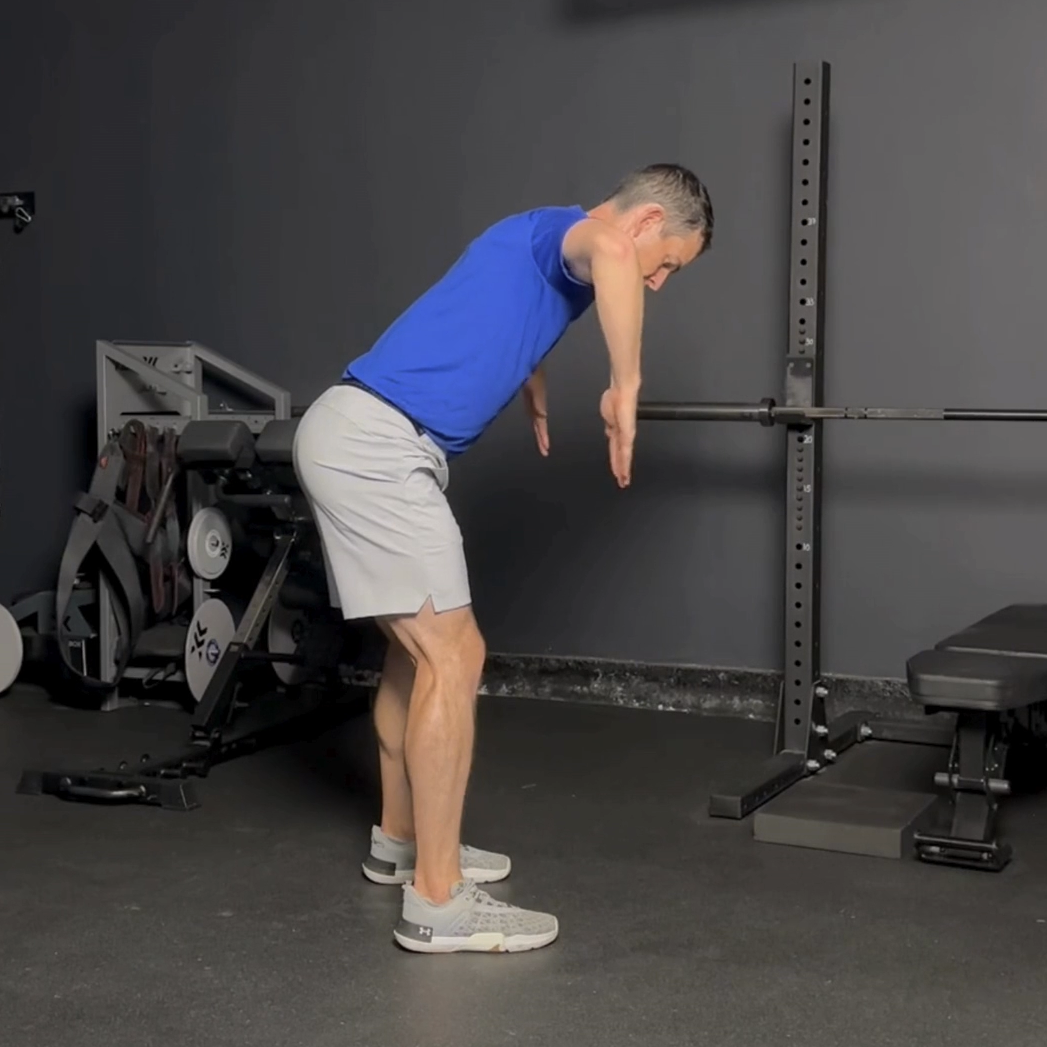
Understanding Mobility
Before going any further, we need to define what mobility actually is. Golfers talk about mobility all the time, but we need to make sure we are talking about the same thing.
Mobility is your ability to move a joint through a range of motion with control.
In complex movements like the golf swing, joints do not work in isolation. What matters is not just how far a joint can move, but whether you can access and control that range as part of a coordinated movement.
That is the key distinction between mobility and flexibility.
Mobility is usable range. It is the range you can reach, coordinate, and control on your own.
Flexibility refers to the ability of muscles and connective tissue to lengthen. It can be expressed actively or passively, depending on context, but it does not automatically imply control.
The two qualities are related, but they are not the same thing, and they do not require the same type of training. Golfers often use the words mobility and flexibility interchangeably, which is understandable, but from a movement and performance standpoint, they describe different characteristics.
Flexibility matters. If tissue cannot lengthen enough to allow a position, that position will not be accessible actively. Flexibility, however, does not automatically show up in your golf swing. When thinking about range of motion in the golf swing, we need to consider the velocity and force of the movements we are performing.
The golf swing is fast, powerful, and highly coordinated. To use a range of motion at speed, the body needs strength and control in that range. Without that, the nervous system often limits access as a protective response.
This is why golfers can spend significant time stretching, feel looser, and still see little change in how they move when they swing.
Now that we have a clear definition of mobility, we can look at why it matters for the golf swing, where it plays a role, and why more is not always better.