
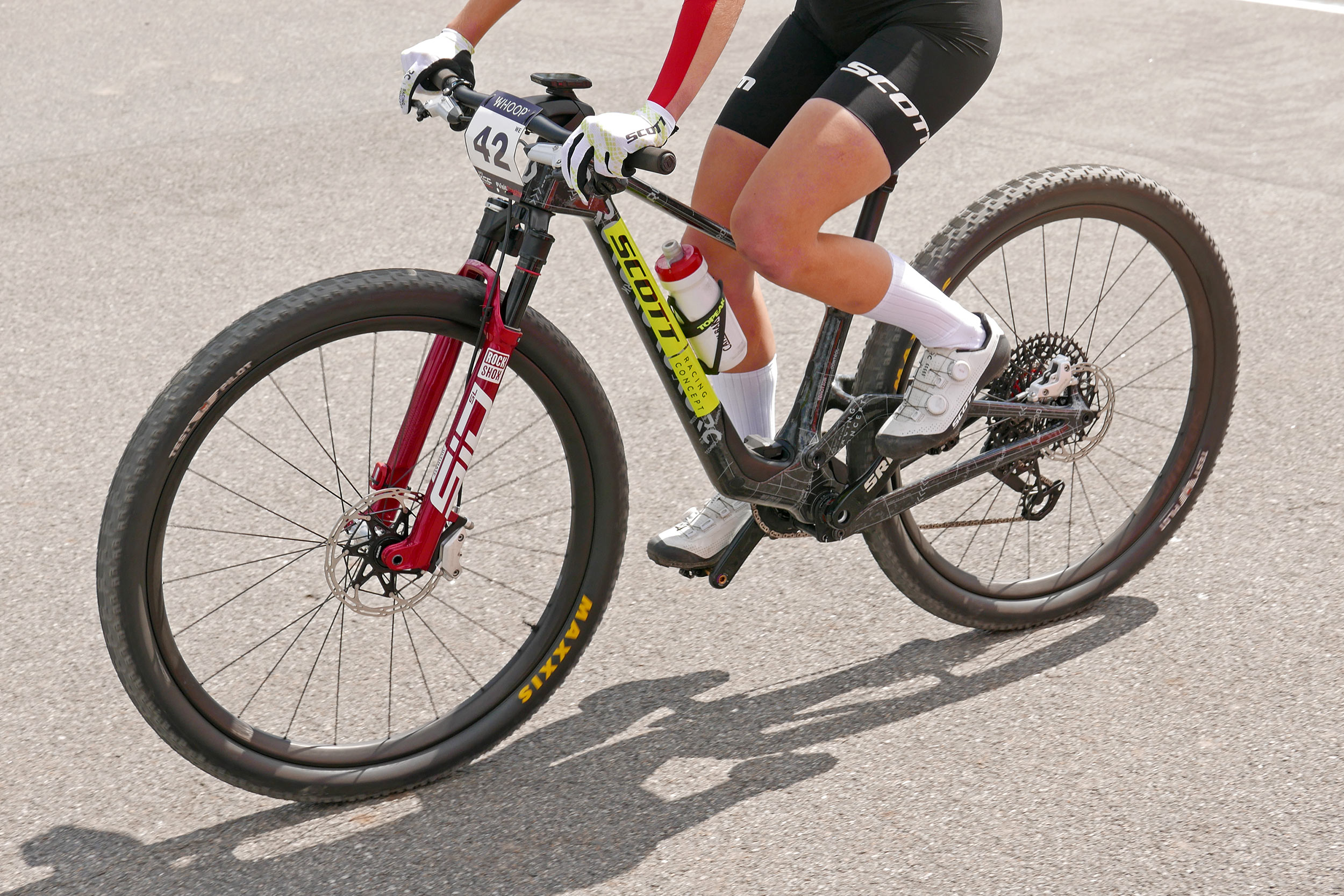
Nino Schuter may be out of the racing game, but we’ve still spotted another all-new prototype evolution of the Scott Spark – the single pro XC we’ve featured more than any other over our years covering World Cup cross-country race tech. The new bike bears a striking resemblance to the current Spark – Scott’s first Bold-inspired XC bike design with a hidden internal rear shock that I first rode and wrote about 5 years ago.
But there are a number of significant changes that we can spot in this unreleased prototype. The first being that the rear shock isn’t quite 100% hidden inside anymore.
So why is it peeking out?
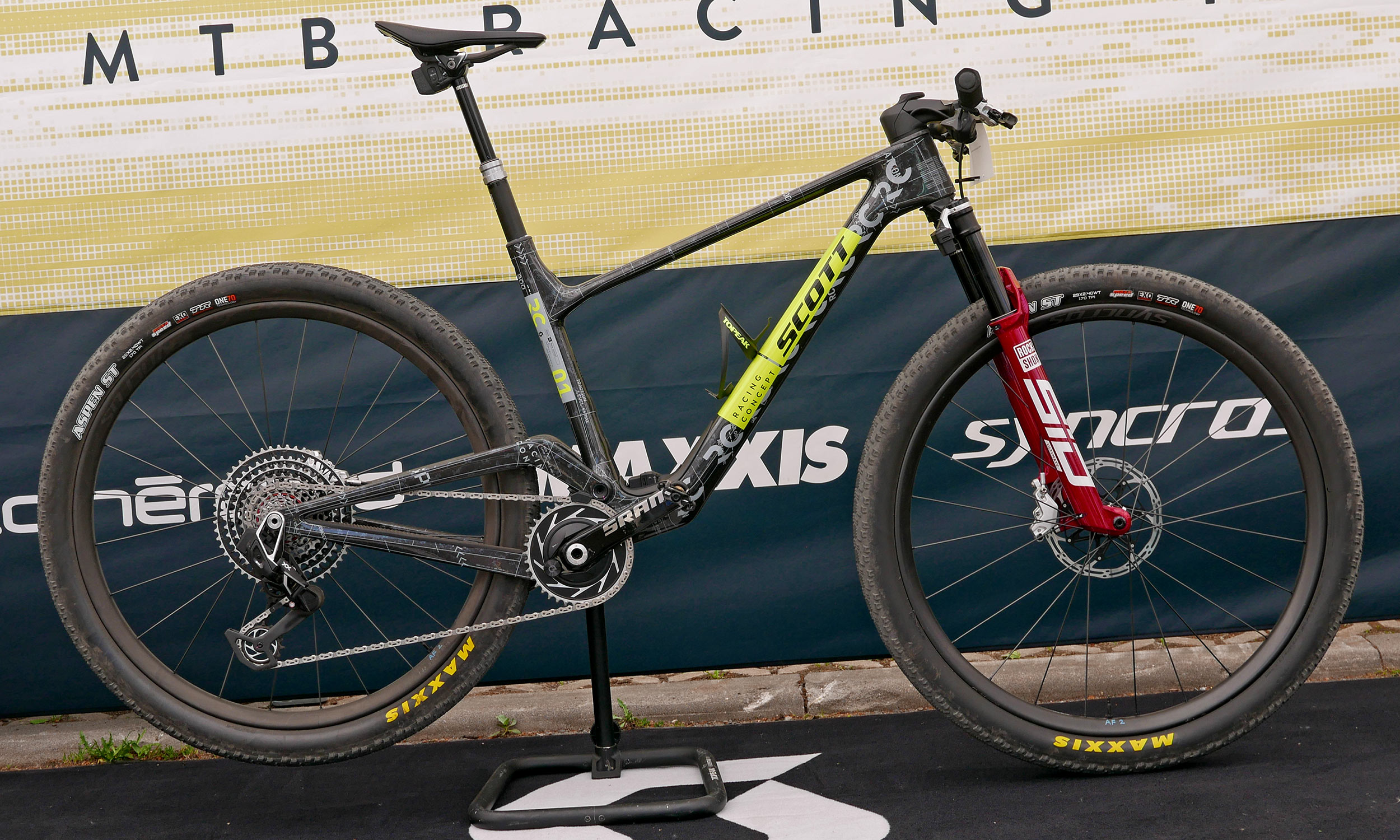
Scott Spark RC prototype World Cup XC race bike
The only semi-hidden out shock was the first thing we noticed. It looks like an opening that gives easier, quick access to the AXS battery on the Flight Attendant rear shock.
But really, a closer reveals that this is actually a completely new suspension design. And hiding the shock inside the frame is maybe the only real similarity with the current model.
There’s quite a lot more going on here…
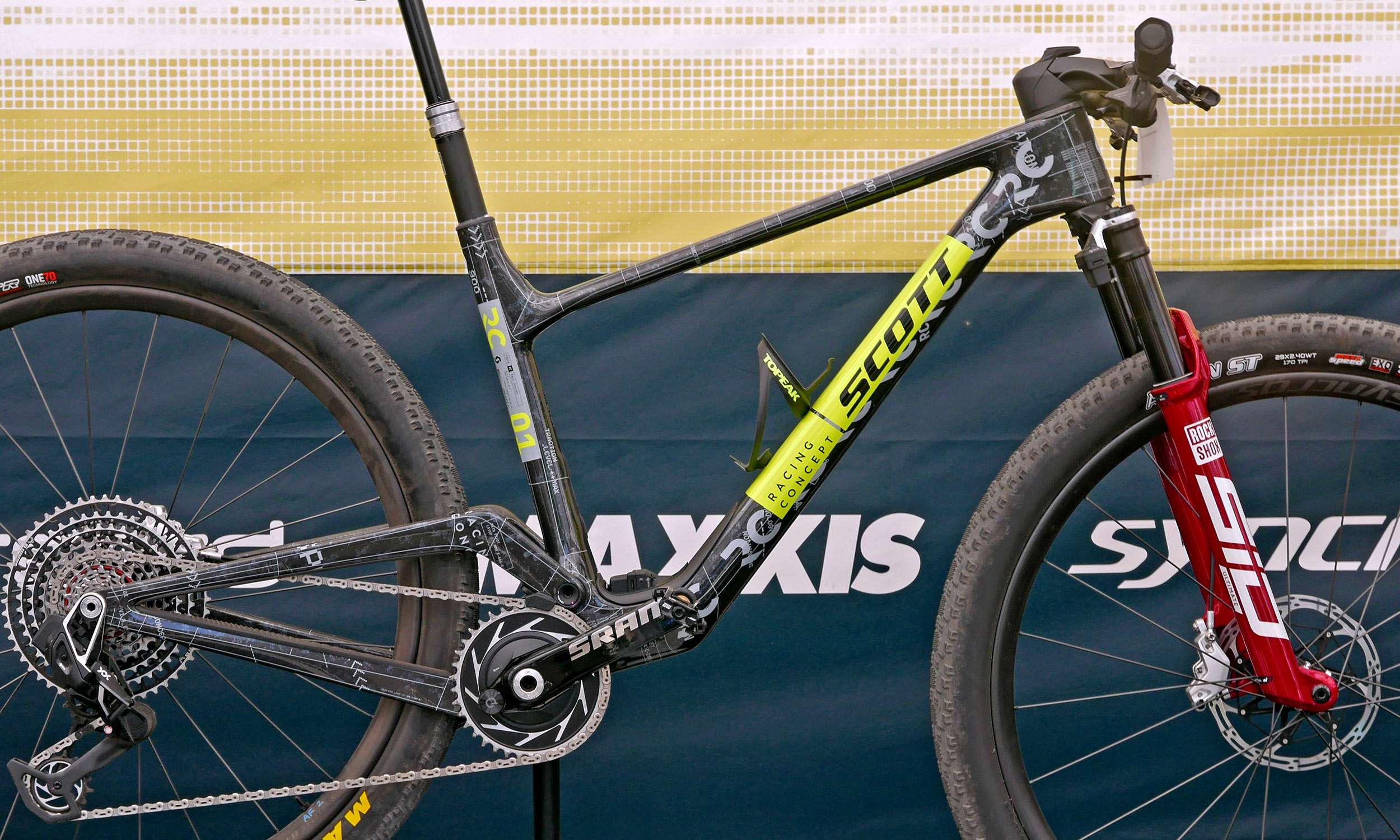
Plus, Scott isn’t really hiding the bike at all. So, it’s likely we’ll have the full technical details in the very near future!
What new tech is coming soon?
Let’s start off with the basic suspension design.
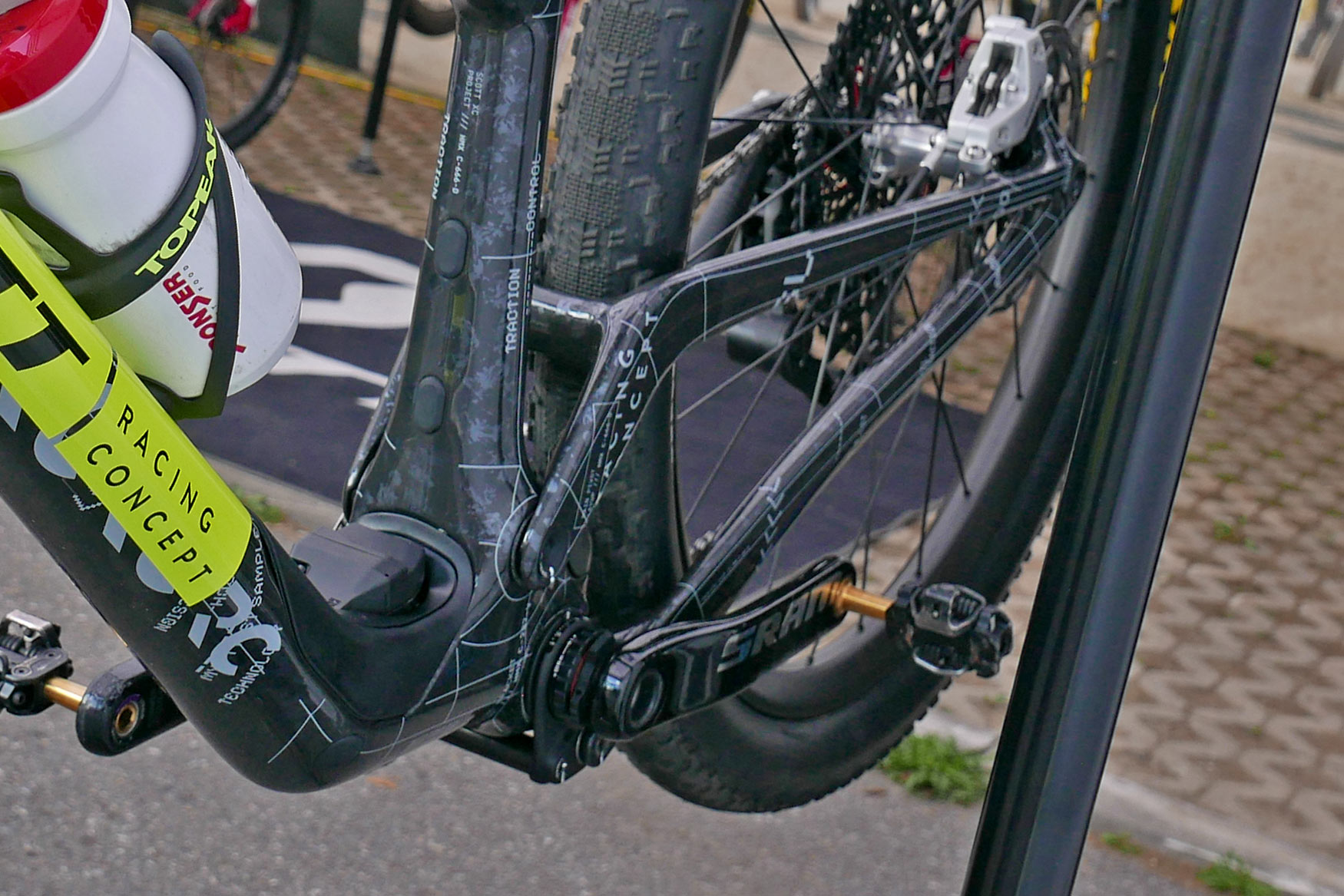
The current Spark is a single-pivot with flex stays and a linkage that drives the internal shock. This new prototype Spark appears to effectively be a 4-bar, with an external short link concentric around the bottom bracket and again relying on flex in the rear stays.
We can’t see what’s happening inside the frame. But because there is a plastic cover over the internal shock with an opening for the AXS Flight Attendant battery, we can see that the rear shock is oriented almost perfectly horizontal. That’s a big shift from the current solution that is essentially in-line with the slope of the downtube.
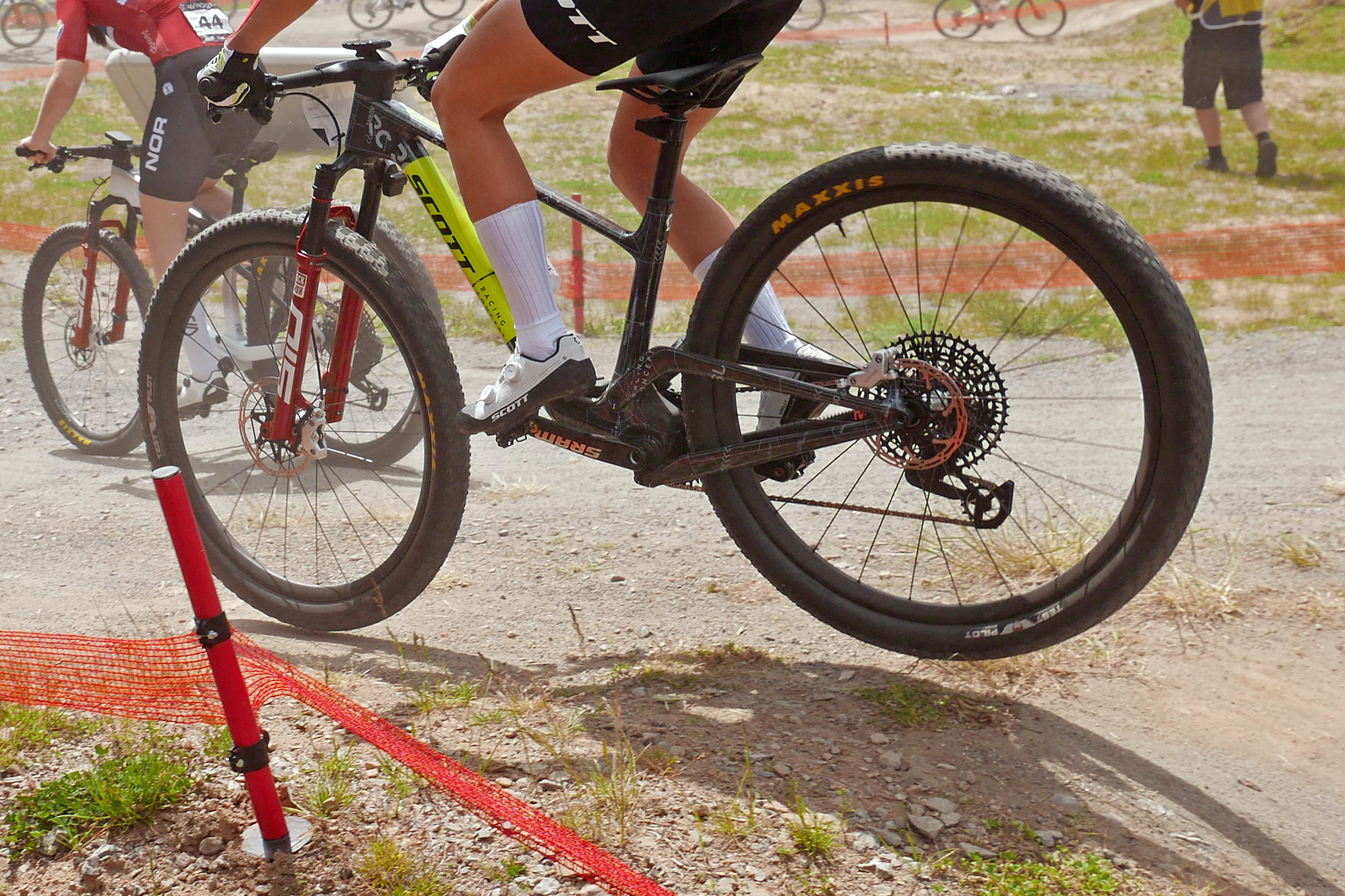
Presumably, this would help lower weight in the frame for more stable handling. But importantly, it all still appears to exist quite a bit above the center of the bottom bracket, suggesting ground clearance won’t be an issue.
There’s also very clearly a second access cover behind the seattube, suggesting access to the hidden shock will be much easier on this new bike.
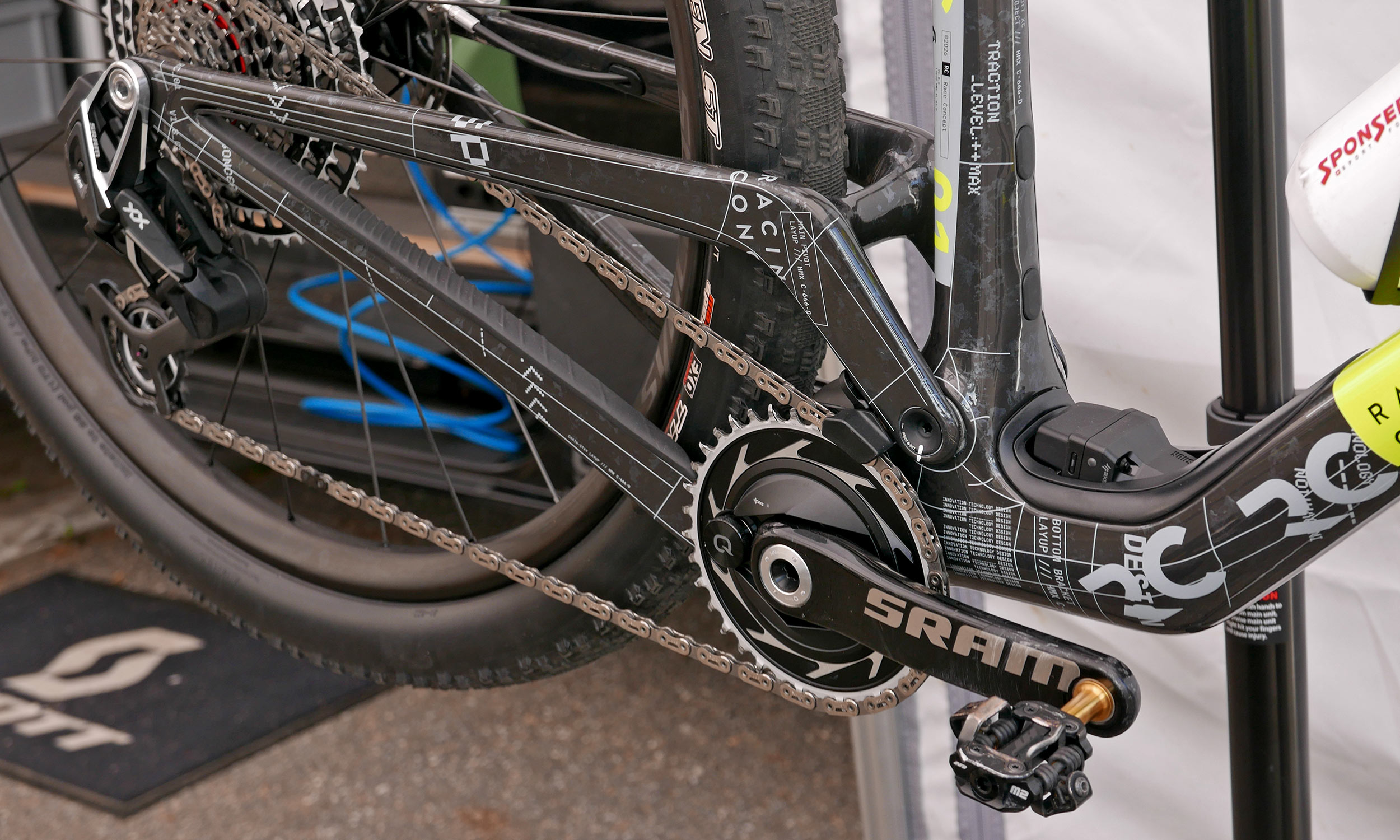
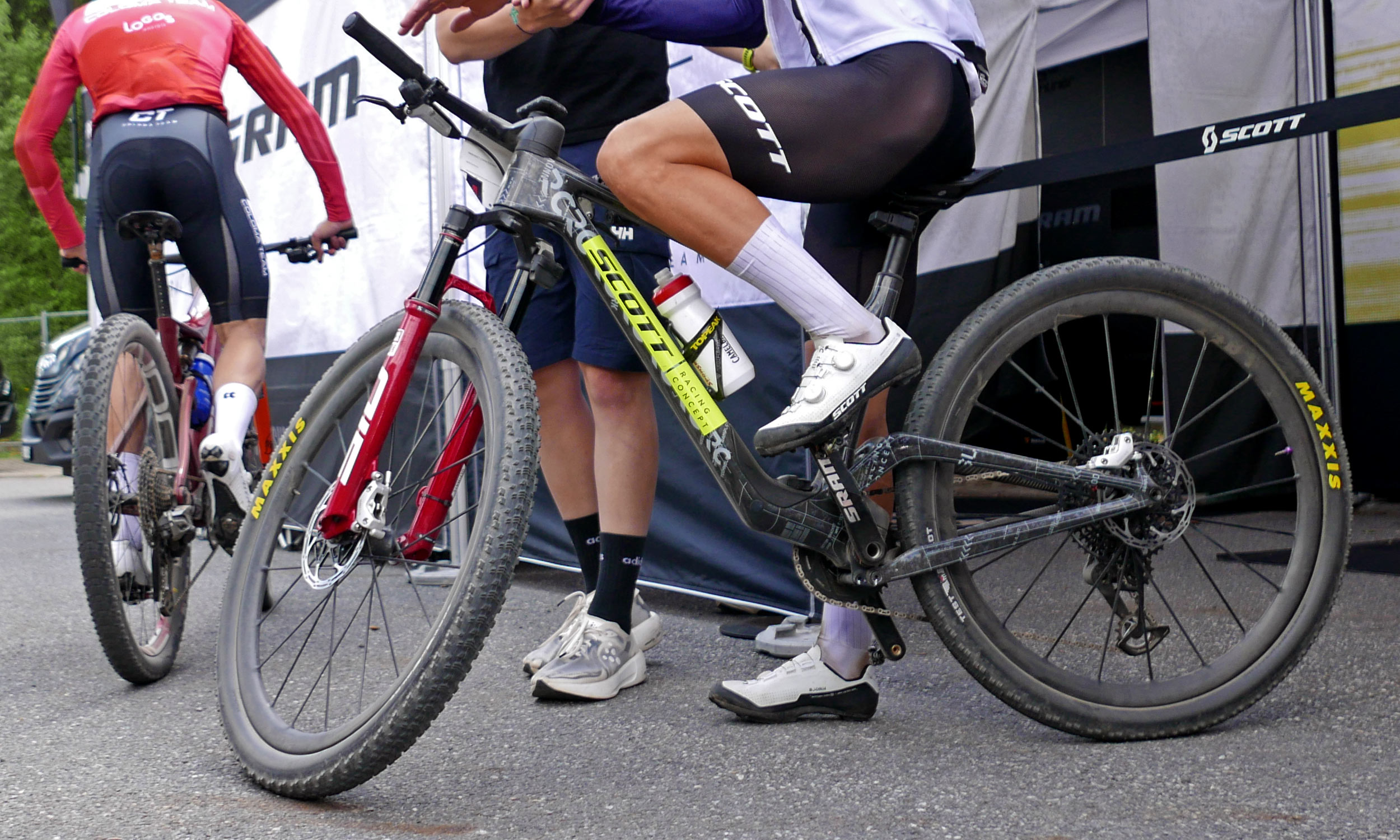
From the driveside, the entire suspension setup of this prototype looks even simpler and ‘cleaner’ than the current Spark. But a glance at the other side reveals a complex multi-part short link around the bottom bracket, that we can only imagine will get filled up with dirt, mud & debris, and will certainly add more maintenance complexity.
Other key tech we can see…
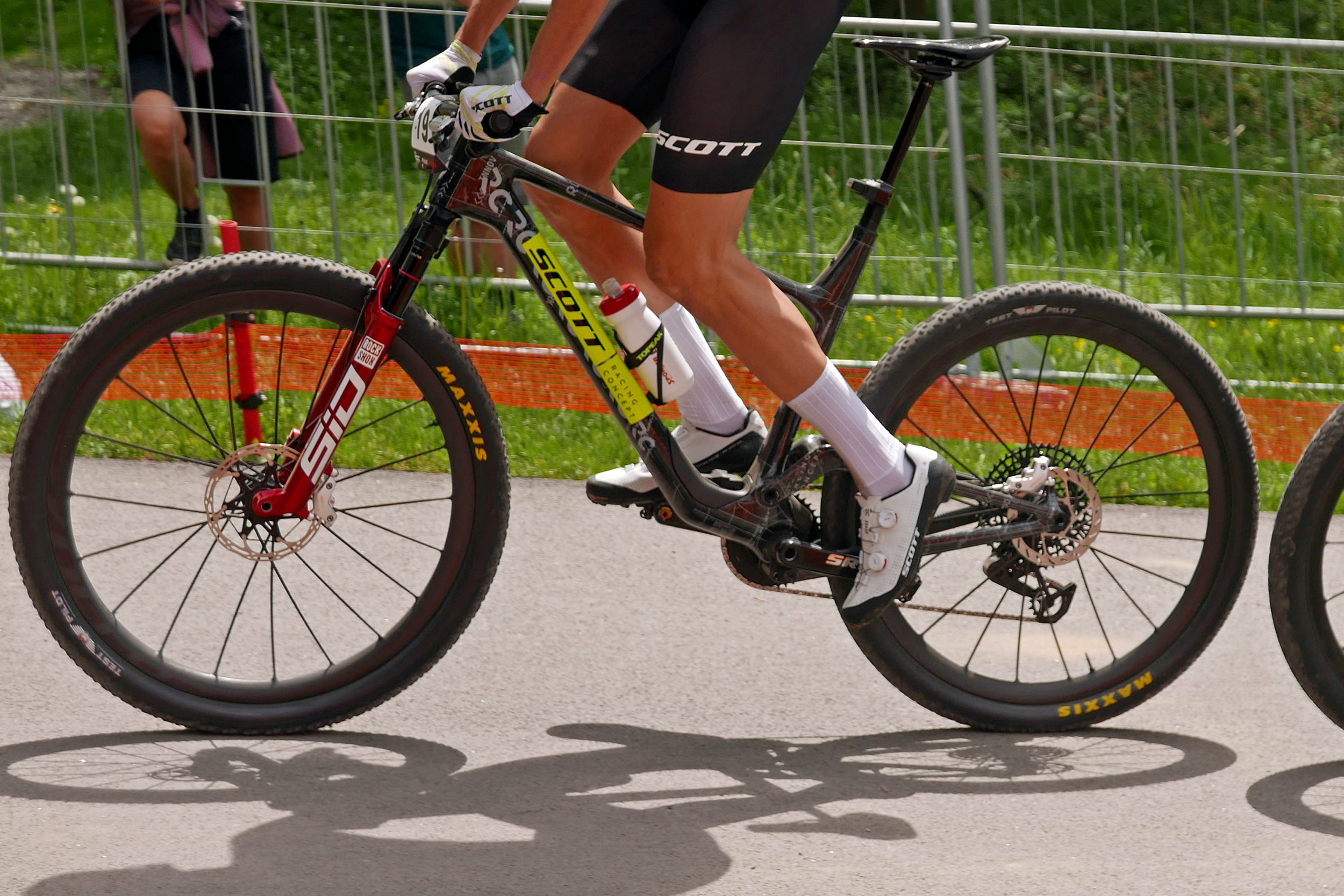
At least it’s nice to see a threaded bottom bracket there, though.
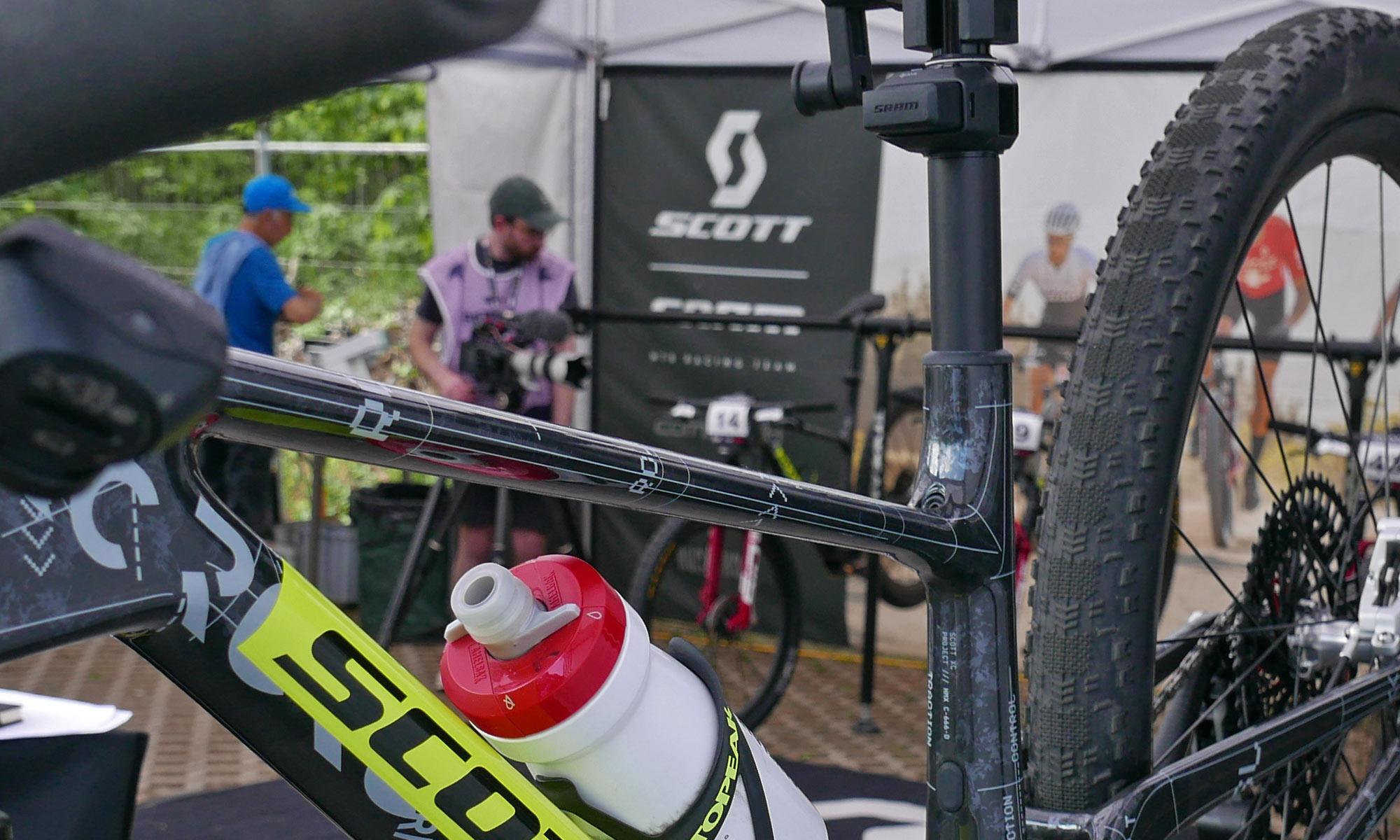
There’s also a new seatpost clamping mechanism. More like we’re used to seeing on road & gravel bikes, this bike looks to get an internal, wedge-style expander.
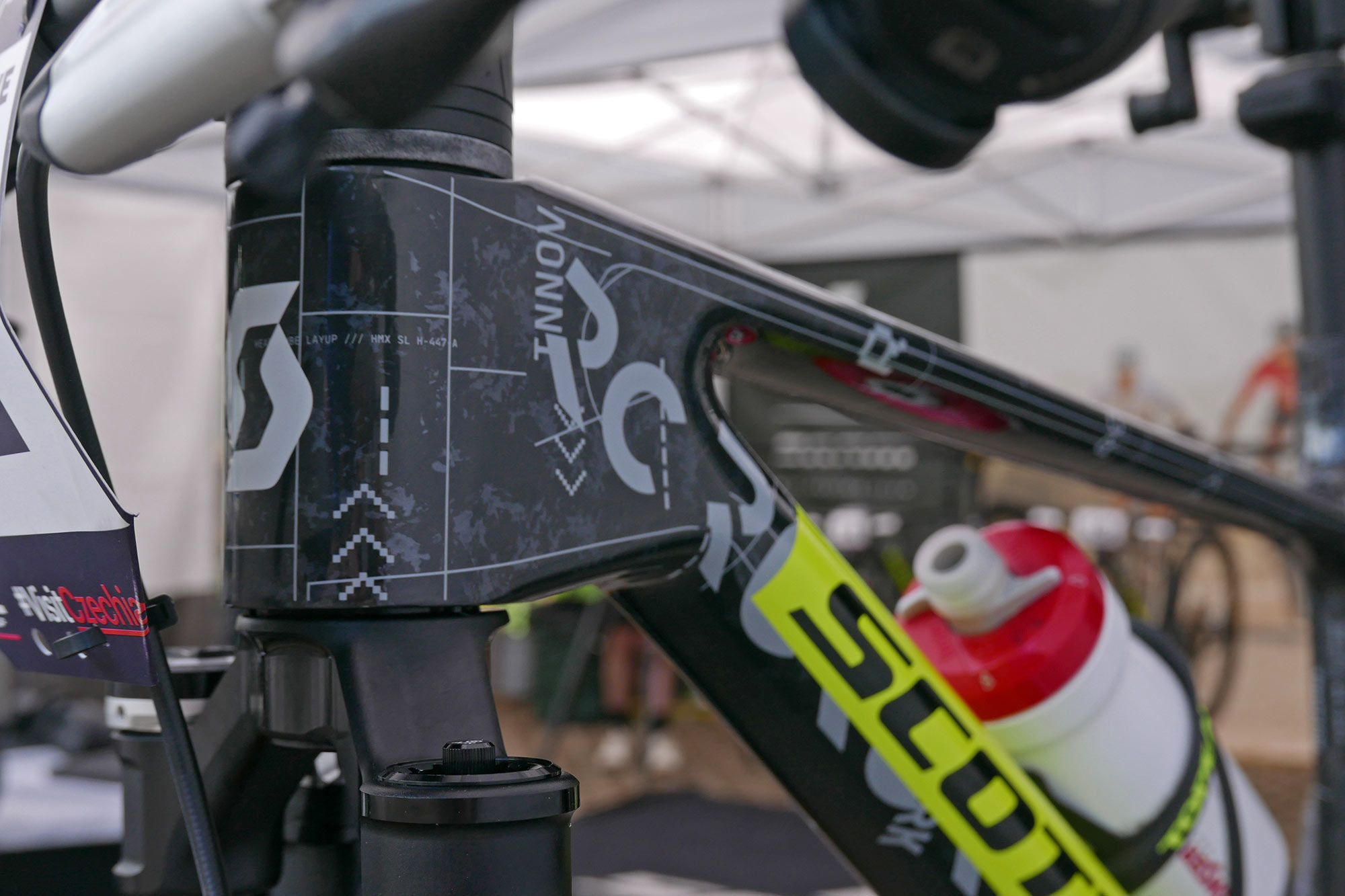
Unsurprisingly, this prototype appears to be made from Scott’s top HMX SL-spec lightweight hi-mod carbon, based on the writing all over these frames. All other text on the frame appears to be prototype marketing gibberish.
It is not 32″, but there are some new Syncros carbon wheels here!
And lastly, we can confirm that it does not fit 32″ wheels. Only room for 29″ wheels here.
But for quick detour on those 29″ wheels…
For XCC short track, the team were on existing one-piece molded carbon Syncros Silverton SL wheels, known for ultralight weight and supreme stiffness. But for the longer and more technical XCO race, they were riding a new unnamed set of Syncros wheels with conventionally laced (hidden nipples) carbon spokes and silver CNC-machined alloy hubs.
Likely, they will launch with this unreleased 29er Spark RC soon…
Now back to your regularly-scheduled 32″ rant…
Scott-SRAM MTB Racing were, in fact, one of the biggest drivers behind the push to 32″ in racing development. Rumors suggest Nino was one of those strongly pushing Maxxis to make a 32″ option in his favorite Aspen tread for several years, always looking for a technological edge in XC racing.
But the new wheelsize is clearly still being developed. And while we’ve seen working prototypes being developed & tested – and even raced – by several big bike brands, it’s only been this spring where we’ve seen major fork markers with anything close to production-ready. Scott-SRAM’s suspension supplier RockShox has been noticeably absent, so far. And that has to be a limiting factor for a large portion of pro XC racing teams at the moment.
We’re sure there’s a 32″ SID in development, but we haven’t seen it yet.
Maybe soon?