
Updated May 20, 2026 05:47PM
Welcome to Velo’s Unbound gravel coverage, we are on the ground in in Emporia, Kansas, covering the biggest show on gravel roads. If we think you should know about it, you’ll see it here.
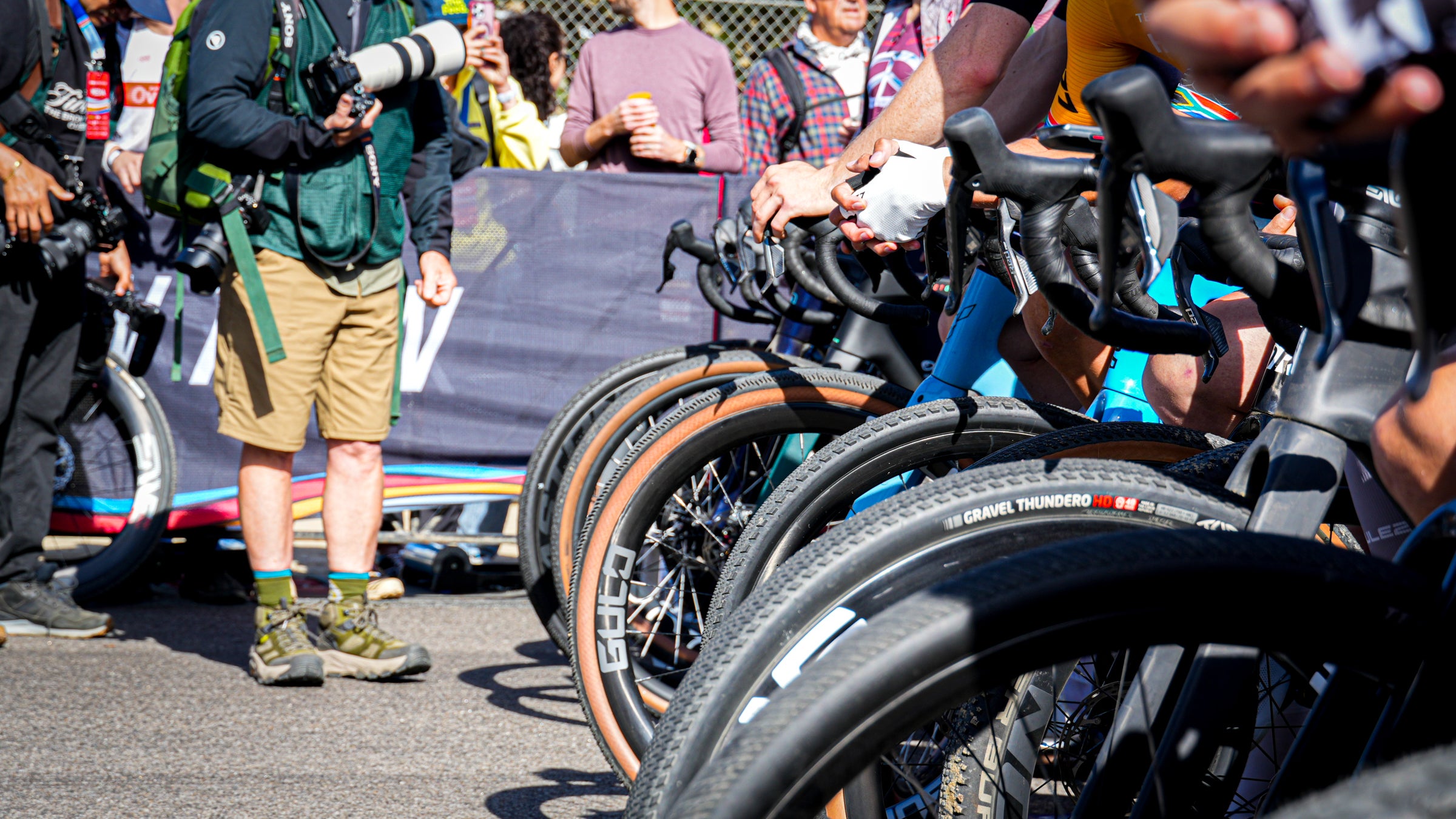
The Life Time Grand Prix is the premier off-road racing series in the world, pitting 25 of the top men and women against six diverse courses across the United States. While each of the races is open to a much larger peloton of off-road riders, the series presents a fantastic opportunity to examine the landscape of gravel racing and the technology powering the sport.
A lot goes into the tech choices of the riders. Of course, everyone who is in the Life Time Grand Prix hopes to be riding the best gear, but in reality, sponsorship concerns, brands’ marketing priorities, and personal relationships also color the landscape. While this is present in all avenues of pro cycling, the Life Time Grand Prix offers a uniquely specific venue for tech dissection.
To dig into the Life Time Grand Prix tech before the key test at Unbound Gravel, we took a broad perspective. From frames, groupsets, tires, and kits — here is the tech of the 2026 Life Time Grand Prix.
What are the bikes of the Life Time Grand Prix?
Of the 44 riders who are currently riding the Life Time Grand Prix, there is significant parity between the bike brands, with no brand sponsoring more than two men and two women, except Trek, which has a third woman on its roster. That being said, many of the biggest brands do have two riders in both fields, like Specialized, Factor, and Giant/Liv.
Additionally, a few brands have a disproportionately large presence in the series. Regardless of whether it is a marketing priority or an affinity for the American aspect of the professional series, there is clearly an emphasis on some smaller brands that have made it a priority to be a part of the series. Ventum, Allied, Fara, Rose, Pivot, and Argonaut all have riders in the series.


While the broad picture is interesting, looking at the top ten after Sea Otter refines that list even further. There is still a broad collection of frames, but the bigger brands outweigh the smaller, more specific brands.
What are the groupsets of the Life Time Grand Prix?
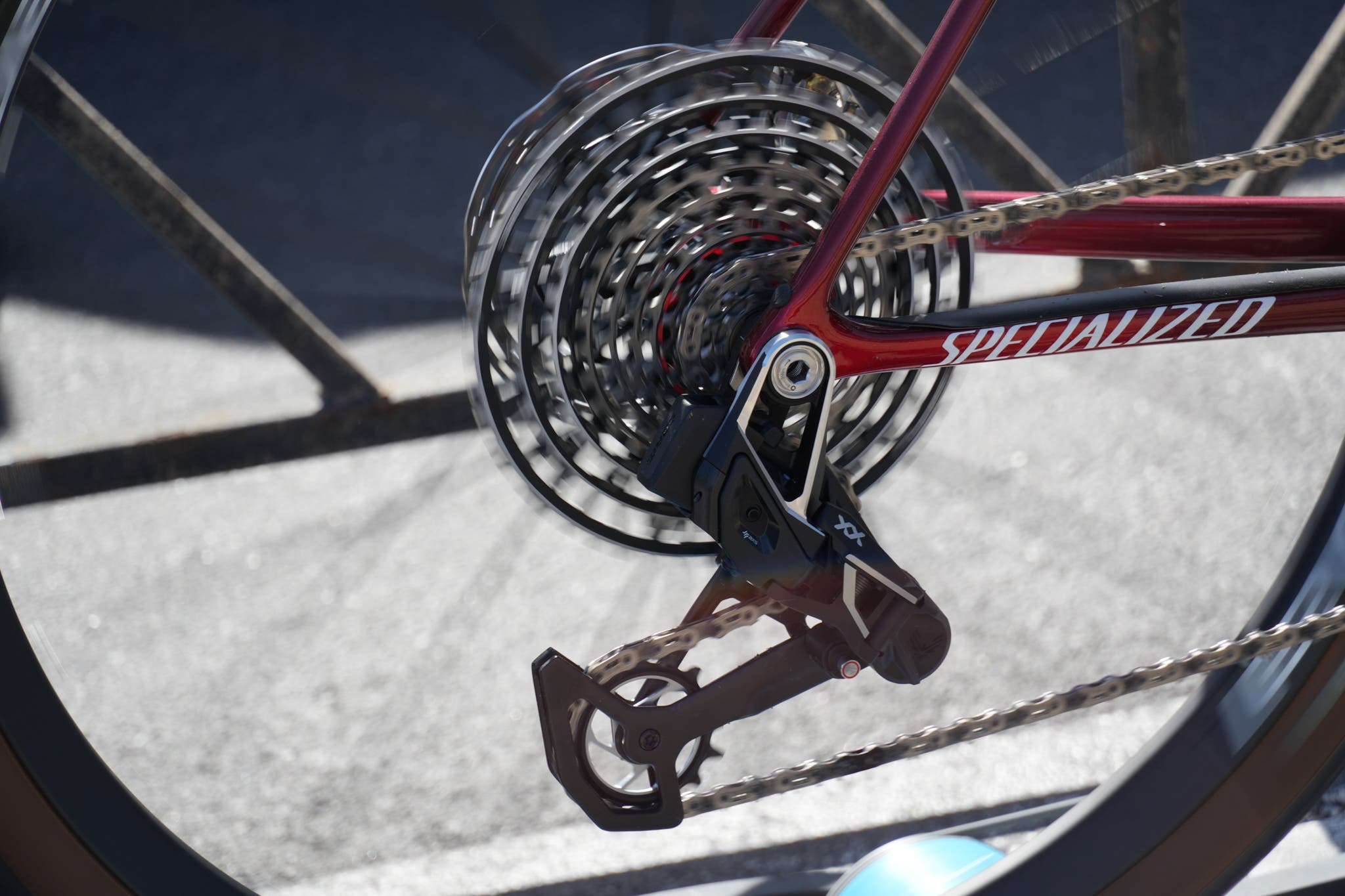
While the bike frames are the big ticket items that are the leading sponsors of most of the Life Time Grand Prix athletes, the category of tech that might be the most interesting is the groupsets of the peloton.
Unlike the other categories on this list, groupsets are not always full sponsorship agreements. Since SRAM and Shimano are so dominant, they can be selective as to which athletes they provide cash, product, or the rider’s bike brand takes care of the moving bits. That being said, beyond the top two brands in the market, the other representation in the Grand Prix is certainly due to sponsorship agreements.
Yet, even with sponsorship money and opportunities available, SRAM and Shimano are on all but two of the bikes in this year’s Grand Prix peloton.

The top brand is SRAM, which is not surprising given how popular the SRAM XPLR groupset is. However, Shimano still has carved out a significant share of the pie with its upgraded GRX, XTR, and Dura-Ace combinations, offering an equivalent alternative to SRAM.
Campagnolo has one lone rider in the men’s field, Norwegian Anton Stensby, who is in the top ten of the series currently, showing that its Super Record groupset can compete at the highest level even if it is not very common. Additionally, TRP and Classified have representation in the form of the 2025 U23 Grand Prix winner, Griffin Hoppin, who represents the collaboration between Classified and TRP through the Vistar groupset.
What are the tires of the Life Time Grand Prix?
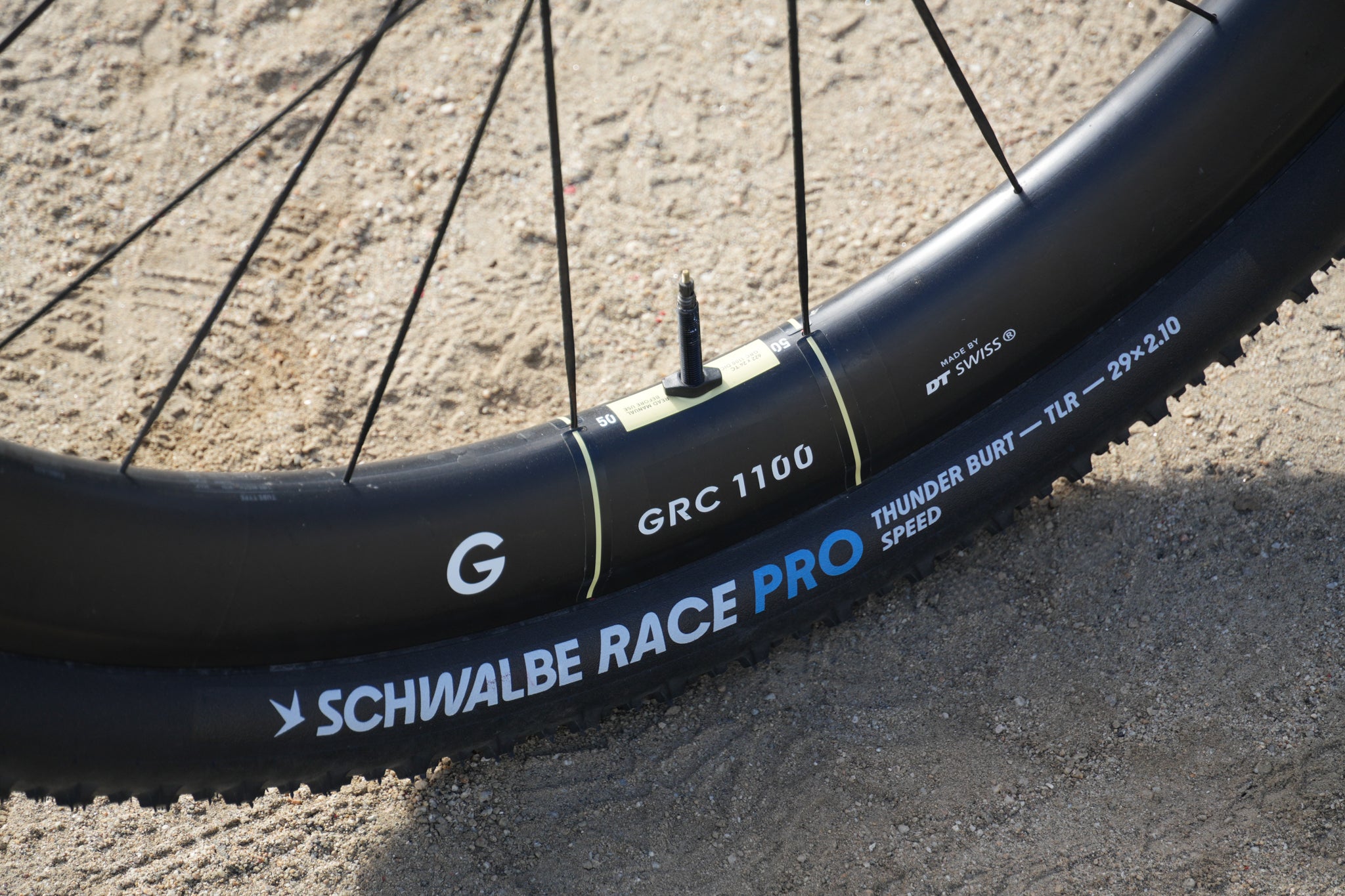
With gravel, it always comes back to where the rubber meets the road: tires. For some, tire talk never gets old. For others, it’s a burden of competing in the discipline. Yet, for every racer, it is perhaps the biggest technical variable of the whole gravel cycling equation.
From a brand frequency perspective, tires are somewhere between groupsets and frames for the number of companies that have a seat on the table. There are certainly more than two dominant brands, even if a few brands have a massive share of the peloton, but there are not really any surprising companies in the list. The tires here are the shortlist for the top tire brands in the sport, with a few interesting additions and one surprising absence.

The most significant brand that doesn’t have a place in the Life Time Grand Prix is Hutchinson. On one hand, the French brand is not the largest player in the US market and that could play a role in how many Americans would consider a sponsorship deal with the company. On the other hand, as we covered earlier this month, the Hutchinson Carcal Race is the fastest gravel tire on the market and now comes in a 50mm option.
All of this being said, there are a few athletes who do not have a specific tire sponsor. Our tire data is exclusively based on the tire choice at Sea Otter. Those athletes might turn to Hutchinson at some point; however, on paper, the Sea Otter course would be the LTGP (Life Time Grand Prix ) stop that would make the most sense with the flagship Hutchinson tire.
Additionally, Specialized requires its athletes to ride the full slate of Specialized/Roval products. That makes those choices slightly less impactful — most of the athletes are probably aligned with Specialized for the other equipment — however, Specialized tires have come a long way. From the results the team is winning this year, it seems as if they are not holding them back.

When you dig into the details of tire choice, an interesting breakdown beyond the simple choice distribution is how that changes between the American and foreign riders. Schwalbe, for instance, is very popular in the international field, while Kenda is a much bigger tire for the Americans. Whether this is based upon the marketing priorities of the companies or more fluid dynamics like community influence is hard to say based on the one-dimensional data we have to work with, but it does suggest what tires have made impressions for the two distinct styles of gravel racing.
What are the other tech choices of the Life Time Grand Prix?
Beyond the frame, groupset, and the tires, the last two major tech choices we were able to source were wheels and kit choices. Both of these categories of gear have tons of different high-end options available, which makes the category pretty ripe for a broad collection of featured brands. Like each of the other categories, the Specialized Off-road team means just shy of 10% of the field will be on Roval wheels, while the rest of the peloton will be a mix of wheels that come from partnerships with bike companies or independent deals.

Ultimately, this leads to a distribution pretty similar to the frame breakdown. DT Swiss is the big leader here with seven athletes, while Zipp is the next biggest with a collection of five riders. Smaller brands, like I9, Gulo, and WTB, bring up the rear with one athlete each.

In terms of kit choices, it is a similar story with a few brands grabbing the majority of the racers, and smaller brands trying to make an impression through having representation among the Life Time Grand Prix peloton. The biggest footprint, however, is a bit surprising. Pearl Izumi has the most athletes in its roster, with four men and three women riding Pearl Izumi. Just as bikes had a large portion of their distribution riding bikes with only one athlete in the LTGP, ten kit suppliers have just one athlete as well.