
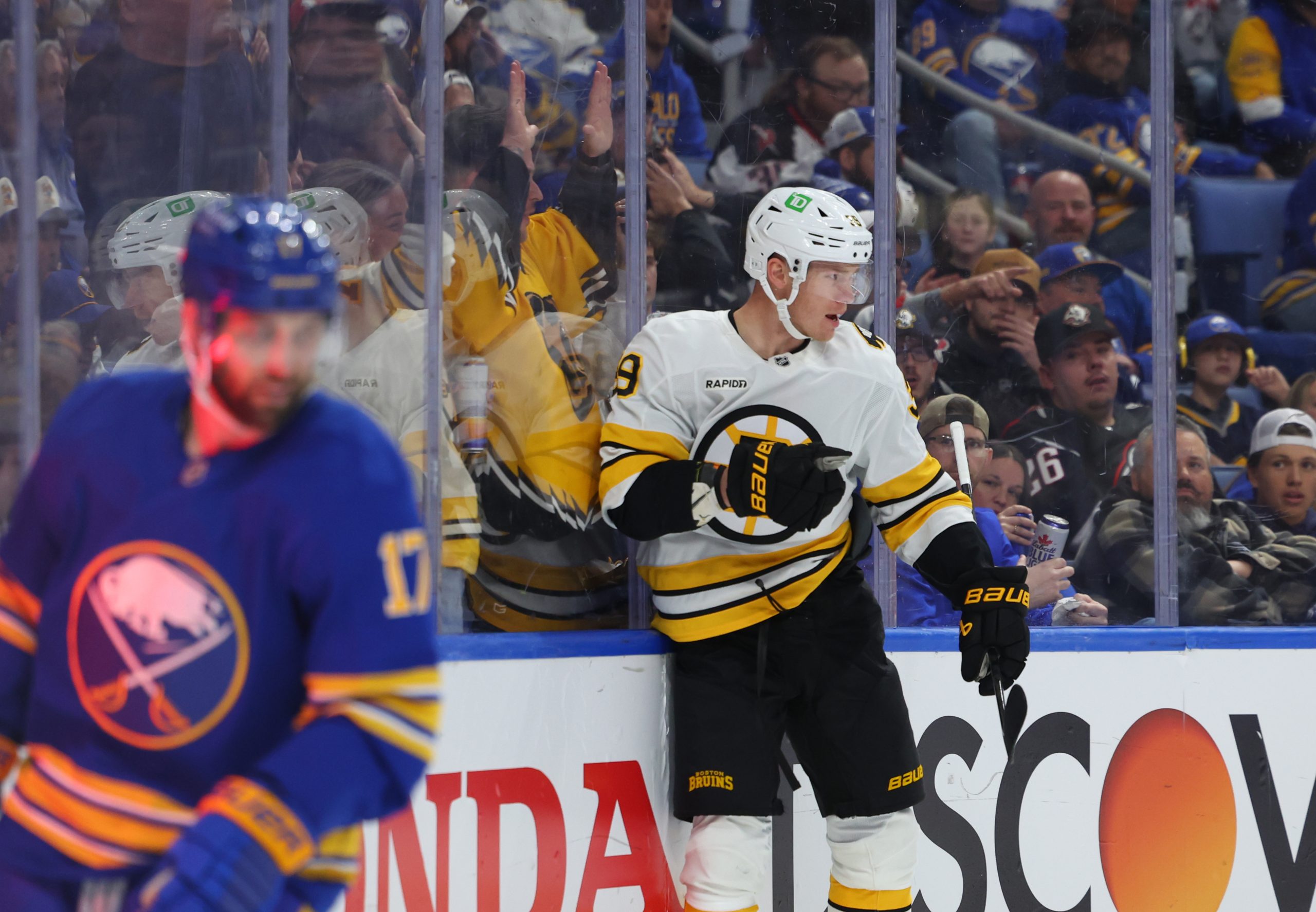
The Stanley Cup Playoffs are rarely about who is the most talented team on paper; they are about who can maintain their composure when the environment turns hostile. For the Boston Bruins, Sunday night in Buffalo was a harsh reminder of how quickly a disciplined structure can evaporate. After controlling the pace for the better part of two periods, the Bruins watched a two-goal lead vanish in a frantic five-minute span during the third, eventually falling 4-3 to the Buffalo Sabres.
As we look toward the rest of the week, the focus isn’t just on the scoreboard, but on the psychological adjustments required to settle a series that has suddenly become very loud.
The Anatomy of a Third Period Meltdown
For 50 minutes, the Bruins played exactly the kind of road game coach Marco Sturm likely drew up on the whiteboard. They were heavy on the puck, stifling in the neutral zone, and opportunistic when it mattered. The top line of Morgan Geekie, Elias Lindholm, and David Pastrnak looked every bit like a playoff-caliber unit, with Geekie and Pastrnak both turning in three-point performances.
However, the Sabres—buoyed by their first playoff crowd in 15 years—found a gear the Bruins weren’t prepared to match late in the game. Jeremy Swayman was stellar for the vast majority of the night, turning aside over 30 shots, but the defensive structure in front of him began to fray under Buffalo’s physical forecheck. The Sabres finished the night with over 50 hits, a staggering number that eventually wore down the Boston blue line.
The takeaway for the Bruins isn’t to reinvent the wheel. Their structure for the first two periods was sound. The issue was a failure to weather the storm once Buffalo found their first goal. In the playoffs, momentum is a physical force. The Bruins allowed one goal to turn into a landslide, and by the time Mattias Samuelsson put the Sabres ahead, the air had completely left the Boston bench.
Blue Line Durability and Roster Depth
One of the primary concerns heading into Game 2 is the workload being placed on the top defensive pairing. Charlie McAvoy logged nearly 25 minutes of ice time in the opener, featuring heavily on both the power play and the penalty kill. While McAvoy is built for these marathons, the physical toll of a seven-game series against a high-hitting team like Buffalo cannot be ignored.
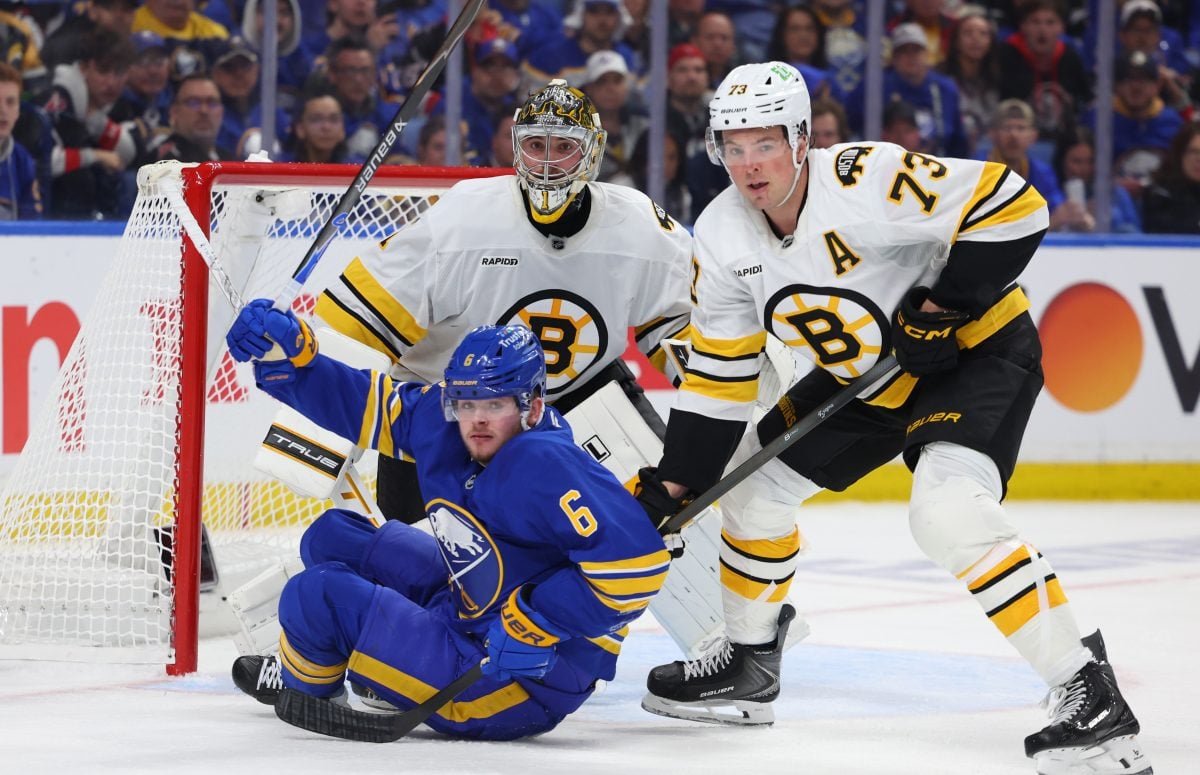
The Bruins need more efficiency from their bottom four. If the Sabres continue to dump the puck deep and finish every check, the Bruins’ ability to transition out of their own zone will depend on the quickness of their decision-making. In Game 1, we saw too many “hope plays”—blind passes toward the middle that were swallowed up by Buffalo’s pinching defenders.
Mending the Ranks: Injury Updates
On the health front, the Bruins are relatively fortunate compared to their opponents, but there are still lingering concerns about the consistency of the secondary scoring. While there are no major new injuries reported following the physical Game 1, the grind of the regular season finish has clearly left a few players moving a half-step slower.
Across the ice, the Sabres are dealing with more significant personnel issues. Buffalo will be without veteran center Sam Carrick for the duration of this series. However, they may receive a boost soon, as both forward Noah Ostlund and goaltender Alex Lyon are nearing returns from their respective upper and lower-body injuries. For Boston, the strategy remains simple: exploit the depth of a Sabres team that is currently leaning very heavily on its top stars like Tage Thompson.
Bruins Upcoming Schedule
The Bruins remain in Buffalo for one more game before the series shifts back to the friendly (and likely very loud) confines of TD Garden. With the series lead in Buffalo’s hands, Game 2 becomes a must-respond scenario to avoid returning home in a two-game hole.
| Date | Opponent | Venue | Time (ET) |
| Tuesday, April 21 | at Buffalo Sabres | KeyBank Center | 7:30 PM |
| Thursday, April 23 | vs. Buffalo Sabres | TD Garden | 7:00 PM |
| Sunday, April 26 | vs. Buffalo Sabres | TD Garden | 2:00 PM |
Adjusting the Game Plan for Game 2
To even the series on Tuesday, the Bruins have to find a way to take the crowd out of the game early. In Game 1, they did this successfully for two periods, but they failed to keep their foot on the throat.
- Puck Management: The Bruins must avoid the “safe” play that ends up being a turnover. Buffalo’s speed on the counter-attack is their greatest weapon.
- Net Front Presence: While Pastrnak found the scoresheet, the Bruins’ power play looked a bit too perimeter-oriented at times. They need to force Ukko-Pekka Luukkonen to deal with more traffic and secondary chances.
- Physical Response: You don’t necessarily need to match the Sabres hit-for-hit, but you cannot allow them to dictate the physical terms of the game. Players like Nikita Zadorov and Mark Kastelic need to make their presence felt in the dirty areas of the ice to give the skilled forwards more room to breathe.
The Bruins “learned the hard way” in the opener, as the local media has been quick to point out. But this is an experienced group. The leadership core has been through these momentum swings before. If they can tighten up the final 10 minutes of the game and trust their defensive systems, there is no reason they can’t head back to Boston with the series tied.
In the playoffs, a loss is just a data point—until you let it become a trend. Tuesday night will tell us exactly which one Game 1 was.
AI tools were used to support the creation or distribution of this content, however, it has been carefully edited and fact-checked by a member of The Hockey Writers editorial team. For more information on our use of AI, please visit our Editorial Standards page.
Free Newsletter
Get Boston Bruins coverage delivered to your inbox
In-depth analysis, breaking news, and insider takes – free.