
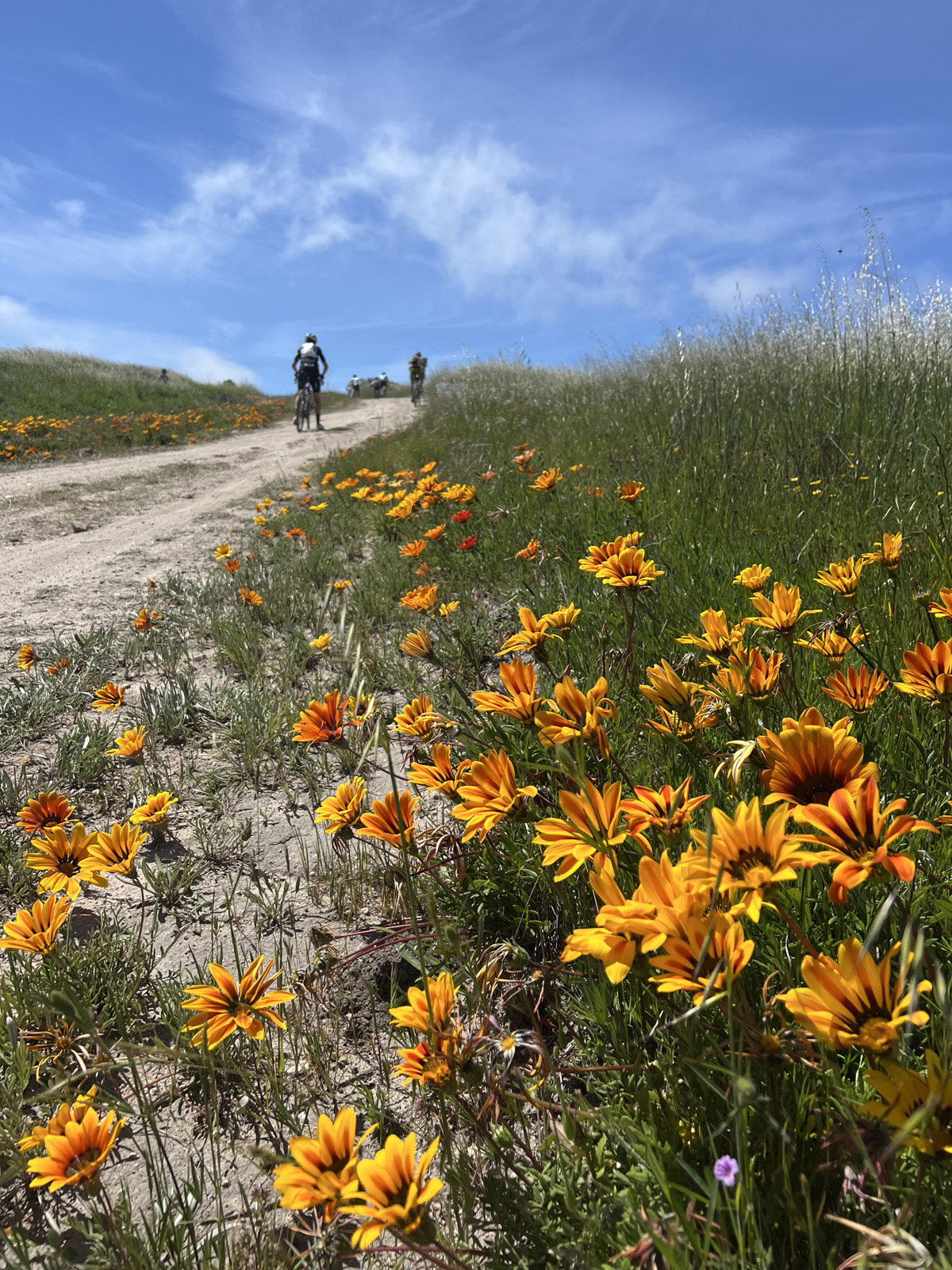
By Sarah Kaufmann — Every spring, when the weather breaks and roads and trails dry out, riders who spent the winter on their indoor trainers head outside for fresh air and sun on their skin. This is why most of us ride — the feeling of freedom and self-made propulsion that our bikes give us. After months spinning the trainer hamster wheel, we want open rides without structure or power targets. Rides turn social and exploratory, and route or group selection creates the balance between intensity and recovery. But when you forsake all structured training during the transition outside, you sacrifice months of progressive work building fitness. Riders who made real, measurable progress through the winter often plateau — or worse, lose fitness — within weeks or months of heading outdoors. Outdoor riding isn’t the problem. You lose the pieces that were driving improvement — the progressive, structured plan. Most riders keep working hard outside. But effort without intentionality differs from effort with a plan.
Mistake #1: Dropping Structure Completely
This is the primary mistake I see riders make. You follow a progressive plan for months indoors — threshold intervals, VO2 intervals, well-timed recovery, endurance rides — and then you head outside and scrap the plan. Every ride becomes open-ended. You may carry rough intensity targets, but the progression and structure run more on vibes than on intention.
The freedom you get from riding outside delivers an important reset after months indoors, and that reset has real value. But random hard efforts don’t reliably produce fitness adaptations. Adaptations come from progressive, repeatable stress applied consistently over time, paired with well-timed rest. When that structure fades, the gains slow down or stop — even when you ride more and the rides feel harder.
You don’t need to replicate your entire indoor plan outside, and you don’t need to hit intensity targets with the same precision. But keep one or two key sessions per week that carry a specific purpose — a target intensity, an interval structure, or a defined goal. Keep a couple of dedicated recovery rides where you spin for 60 minutes or less at 50% of FTP. Let the rest of your rides run free. Those anchor sessions will keep your fitness trending upward.
Mistake #2: Replacing Specific Work with Group Ride Intensity
Group rides rank among the most fun parts of cycling — social, motivating, using the pack to go fast. But when group rides become your only source of intensity, they can grind you down. Most group rides deliver plenty of intensity to substitute for a hard session. The problem is that the intensity runs uncontrolled. You match surges, bridge gaps, and push hard when others do on a climb. You often dig deeper than you would alone, because other riders pull more out of you. That can serve you well — when you use it sparingly and at the right moment. But if you always come home wrecked from the group ride, that fatigue will start eroding your other quality sessions.
Structured intervals — whether they target VO2 max, threshold, or muscular endurance — are repeatable and measurable. You also often do more work in these sessions because you haven’t burned other big matches; you manage your output for maximum efficiency. Fun intensity and effective intensity don’t always mean the same thing, though both have their place.
You don’t have to skip every group ride. But fit them intentionally into your training schedule. If Thursday night is the group ride, make that your hard day — and plan everything else around it. Don’t let it replace every structured session you built your winter around.
Mistake #3: Losing Focus Without a Metrics Display
One of the underappreciated benefits of indoor training is how much ambient feedback the workout weaves into the experience. Cadence targets appear on the screen. Power reads smooth and consistent. Intervals start and stop on a timer. Outside workouts demand more planning and mental energy to execute. You navigate terrain changes, wind, and stops and starts. The temptation is to simply ride hard.
Executing outdoor workouts effectively requires a few simple habit changes. Plan the workout before you leave by choosing terrain that supports the effort — a steady climb for threshold work, a rolling section for tempo. Use the lap button to mark intervals on your bike computer. Adjust your expectations around smooth power output. Intentionality doesn’t require rigidity.
Mistake #4: Losing Recovery Structure
Most indoor training plans build in planned recovery — a lighter training week every three to four weeks. Those weeks often disappear outside. The sunshine feels too good to waste. A group ride lands on your planned easy day, and suddenly the easy week isn’t easy anymore.
This is where fatigue quietly accumulates. Motivation runs high and riders often don’t notice the drift. Sometimes you mistake fatigue for lost fitness and actually double down, training harder. Weeks of unbroken intensity and volume produce a performance decline — heavy legs, shifts in mood, appetite, and sleep. Efforts feel harder than they should. By the time you recognize the pattern, you’re already in a hole.
Recovery forms a critical pillar of every training plan. When you transition your indoor plan outside, protect the integrity of your recovery weeks.
Putting It All Together
None of this means you should dread the transition or mechanically transplant your indoor plan to the road. A structured winter plan exists to build a platform so you can ride your best outside. But riders who make the most consistent progress carry that structure into their outdoor riding — a couple of focused sessions each week, intentional pacing, and respect for recovery.
You don’t have to abandon structure. Let it evolve with the season.
(Visited 62 times, 1 visits today)