
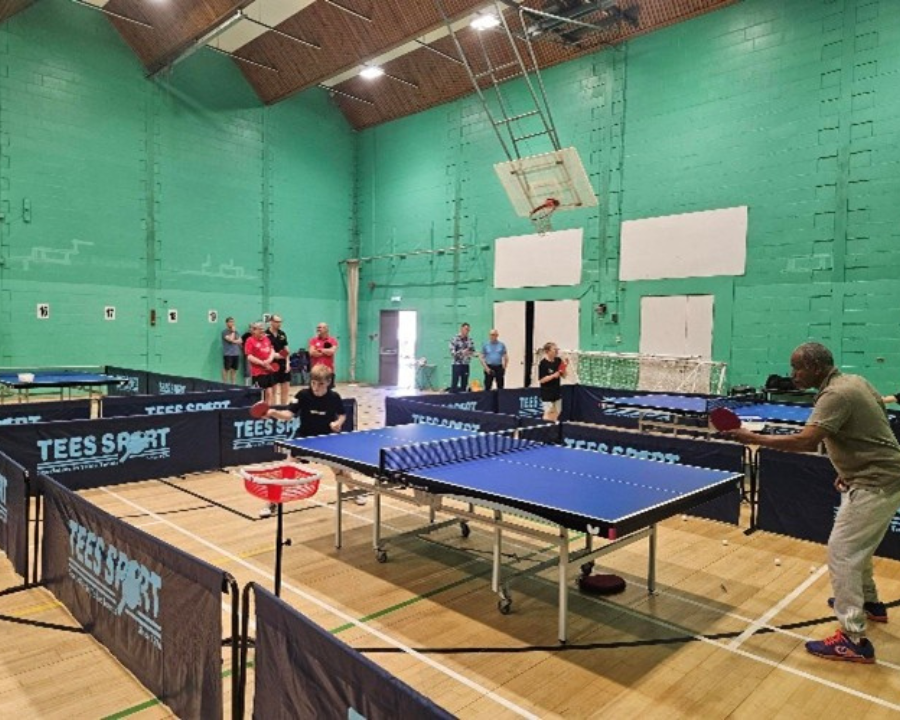
Across the session, coaches shared thoughtful observations and practical ideas, reinforcing a simple truth — better movers become better players.
Why Movement Matters
Although table tennis is often viewed as a “technique sport”, the workshop highlighted that most early‑stage errors are actually movement problems, not technical ones. Coaches recognised common issues such as reaching for the ball, falling backwards, stiff footwork, and slow recovery after wide shots. These breakdowns often stem from gaps in agility, balance, or coordination rather than flaws in the stroke itself.
One coach noted that players frequently lead with the hand or head instead of the feet, creating poor contact and unstable positions. Another pointed out how starting positions — weight on heels, feet too narrow or too wide — can limit movement before the rally even begins.
The Movement Layers:
The session explored the progression from:
- Fundamentals of Movement (FoM) — agility, balance, coordination
- Fundamental Movement Skills (FMS) — locomotion, object control, stability
- Fundamental Sport Skills (FSS) — applying movement in a table‑tennis context
FoM → FMS → FSS
Coaches agreed that players with broader physical backgrounds (e.g., squash, gymnastics, football) often learn table tennis skills more quickly. Their stronger foundations in balance, rhythm, and spatial awareness make it easier to develop footwork, timing, and racket control.
Practical Ideas from the Group
The workshop included a wide range of examples from coaches working with children, adults, and older beginners:
- Using the table itself for balance tasks and colour‑based movement cues
- Encouraging players to stay low, react with their feet first, and maintain rhythm
- Adapting movement games for older adults to build confidence and stability
- Highlighting how small movement wins — better recovery, improved balance, quicker reactions — translate directly into more consistent rallies
The shared message was clear: movement solutions work for every age and every level.
Key Takeaway
If the feet don’t get you there, the technique never gets a chance. Fix the movement, and the technique often fixes itself.