
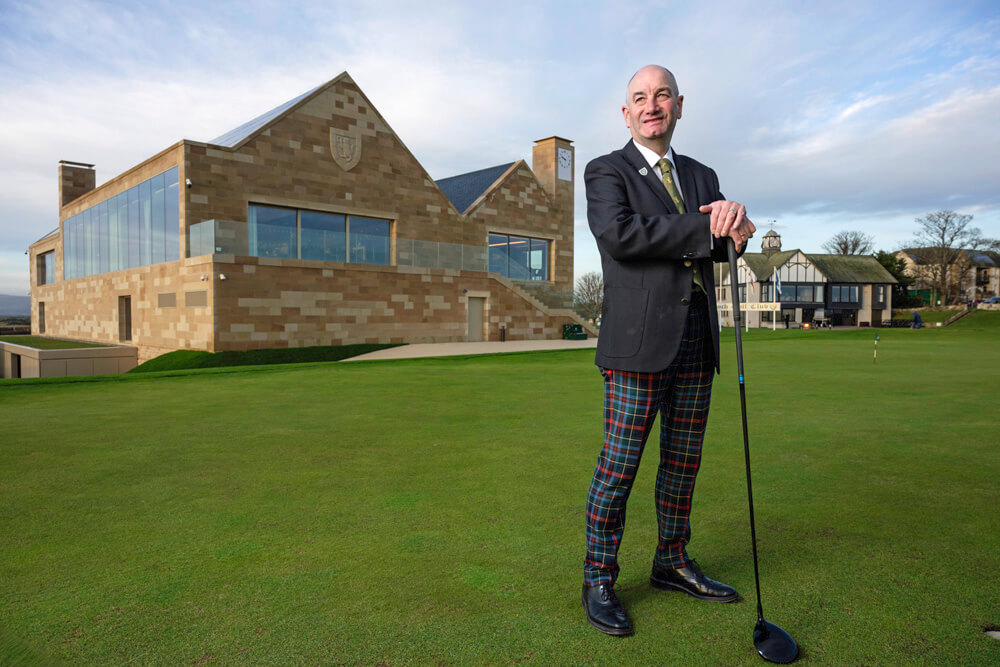
There is much that distinguishes Royal Dornoch and makes it one of the best-known places in golf.
Its acclaimed Championship course, for starters, and the fact that the game has been played on the links of this Scottish Highlands town since the 17th century. The architectural ancestry of Dornoch, on which King Edward VII bestowed a royal designation in 1906, is impressive as well. Old Tom Morris shares design credit for the layout that exists today with the club’s longtime secretary John Sutherland. The 1920 Open champion George Duncan added his own touches after the layout had been converted to an airfield during World War II.
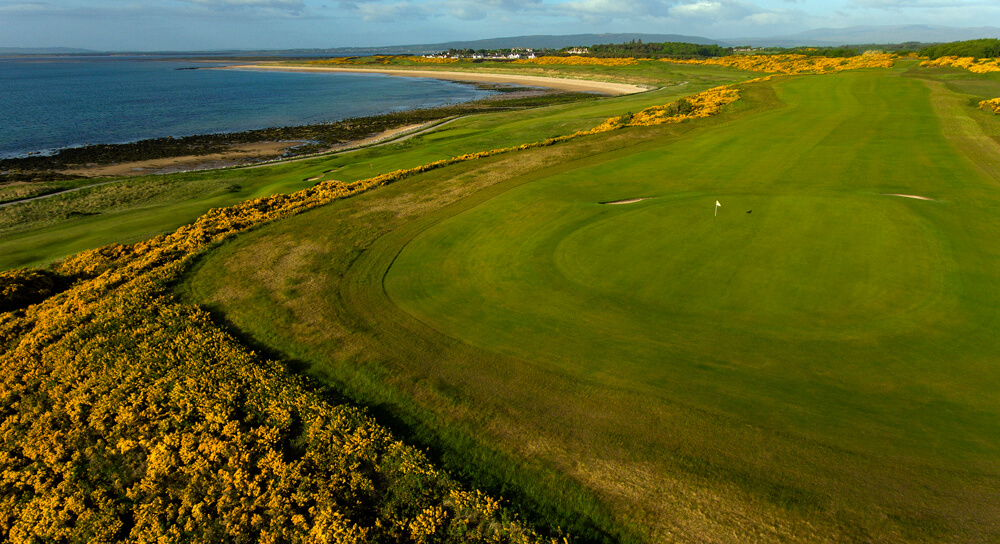
Equally enticing is the setting itself, starting with the physical beauty of the par-70 course that overlooks the Dornoch Firth and including an ethos that makes any visit here feel more like a spiritual experience than a simple golf trip.
Founded in 1877 and adding a second course, called Struie, in 1899, the club enjoyed a rather quiet existence during its first century, beloved by locals and well appreciated by a smattering of overseas golf aficionados. But by the late 20th century, Royal Dornoch had developed something of a cult following as more people discovered it, falling under its spell as they did so. Herbert Warren Wind of The New Yorker and Rick Reilly of Sports Illustrated wrote glowingly about it. Jack Nicklaus and Ben Crenshaw made pilgrimages to play the Championship course. So did Tom Watson, who described the layout as a “natural masterpiece” and said it represented “links golf at its best.” Greeting card magnate Mike Keiser was so inspired by Dornoch that he went on to build Bandon Dunes in southwest Oregon and after that an entire collection of hard-to-reach, links-style courses in the U.S., thinking that if Americans were inclined to travel all the way to the north of Scotland to play a great layout they might be willing to make similar treks in the States.

In time, that attention transformed Dornoch from a golf backwater into one of the sport’s most eminent getaways. And anyone with the slightest interest in golf as it was played and enjoyed in the Old World became aware of the club and the course that served as its centerpiece.
What is much less known, however, is that Dornoch, which is a private club that like most golf associations in Scotland allows visitor play, is as highly regarded from an operational standpoint. And that has everything to do with the talents of its longtime general manager, Neil Hampton.
Since he assumed that position in the fall of 2010, Hampton has proved to be one of the more capable executives in the game as he leads an enterprise of roughly 2,300 members – and makes it prosper like never before.
Consider that annual green fee revenues from this very profitable business have risen more than sevenfold since 2010, from $837,000 to $6.3 million. And that the club’s profile has grown to such a degree that four years ago it closed its membership, only admitting those who were permanent residents of Dornoch.
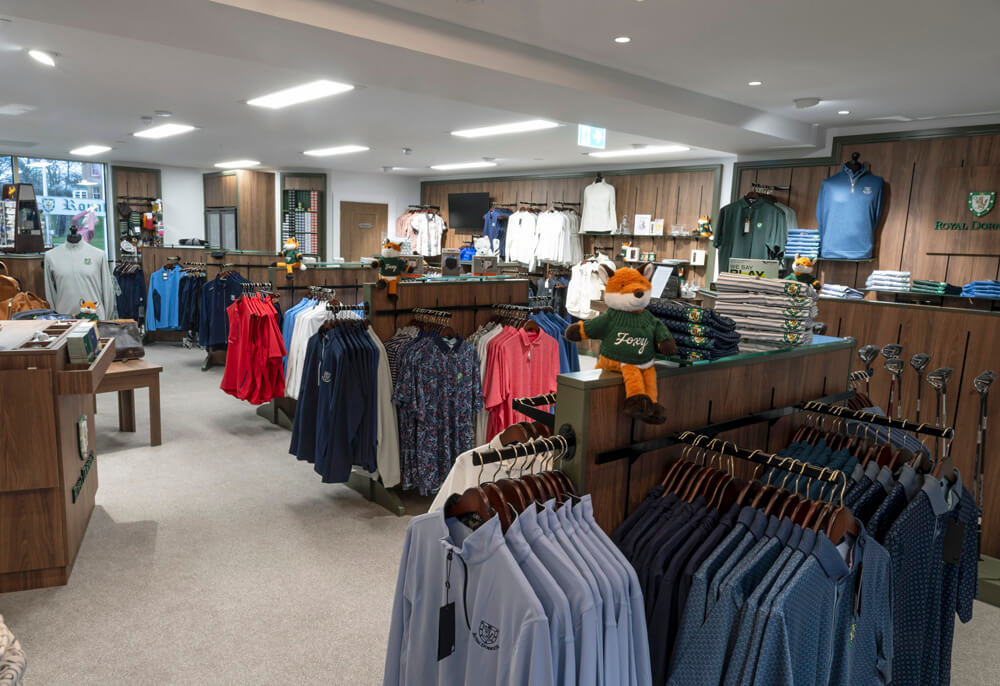
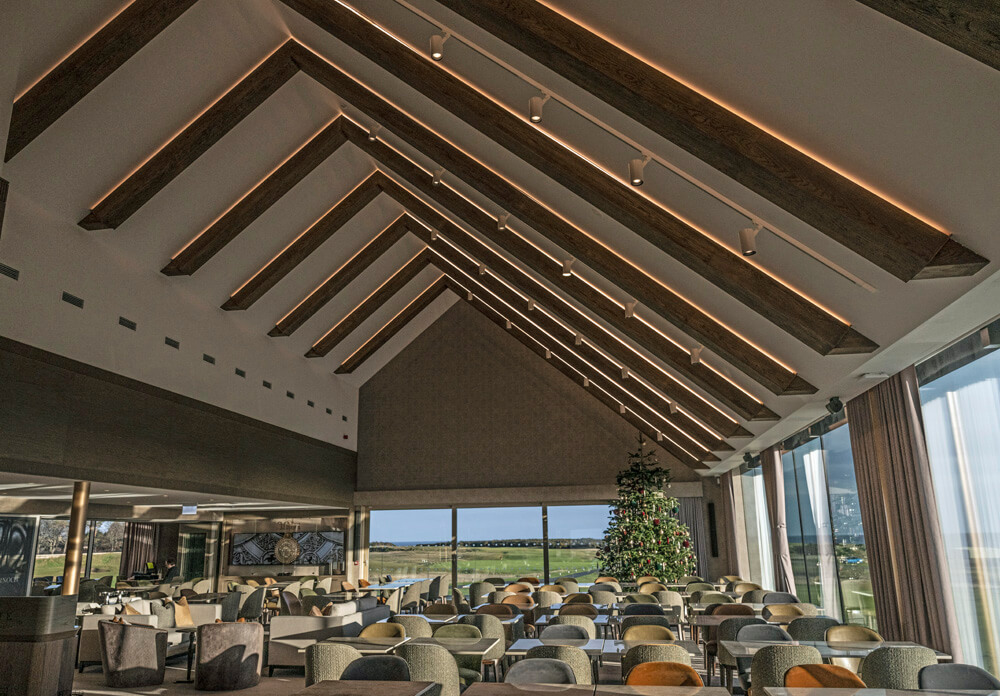
Over the past couple of years, Hampton has also shepherded a long-discussed scheme to construct a new, $18.6 million clubhouse to its successful conclusion and unveiled plans to build a third 18-hole golf course, to be designed by the American firm of King Collins Dormer, after acquiring some 50 acres of adjoining farmland and negotiating a new lease with the town for the linksland the club did not own – and on terms that were very favorable to the community.
At the same time, the club will add some new holes to the Struie as well as an 18-hole par-3 course, driving range, short-game area and practice putting green.
Hampton has also brought elite tournament golf back to Dornoch, first by staging the men’s and women’s R&A Senior Amateur championships at the club in 2022 and the Scottish Amateur a year after that. In 2028, Royal Dornoch will host the biennial Curtis Cup matches.
In addition, the GM has found a way to nurture relations among a diverse and far-flung membership that includes some 900 overseas members while also making sure that visiting golfers are welcomed warmly when they come for what is often a once-in-a-lifetime visit.
Along the way, Hampton has demonstrated another talent, and that is knowing exactly when to leave a party, having announced plans to retire on Halloween day in 2028, after the Curtis Cup matches are over and when he will be 61 years old.
“Neil has an amazing ability to balance a huge number of very different constituencies.” — Luke Reese, Royal Dornoch member
When he steps away, he will be leaving a legacy that is arguably as significant as that of Morris, Ross or Duncan – or even the industrialist Andrew Carnegie, who joined Dornoch before it was even a royal club and not only served for a spell as vice president but also donated a trophy for an annual event that is known as the Carnegie Shield – and that has become one of the great amateur invitationals in the game.
“Neil has been great at member outreach and communications and enhancing the membership experience,” said legacy member Andrew Biggadike, 47, the director of research and development for Broadcom, a U.S.-based semiconductor and infrastructure software company, as well as a competitive mid-amateur golfer and a member of the USGA’s Executive Committee. “He has also shown a lot of patience, determination and vision as he has looked to better the club through projects that included making some fairly significant changes on the Championship course, building the new clubhouse, making plans to build a new golf course and bringing more golf championships to the club.
“I give him a lot of credit for all he has done and being able to do all that while maintaining his friendly demeanor and single-digit handicap golf game.”
Luke Reese, another international member from the U.S., is just as impressed.
“Neil has an amazing ability to balance a huge number of very different constituencies,” said Reese, the one-time chairman of Peter Millar and now with Kjus, the premium golf outerwear company.
“Neil knows and loves golf and above all Royal Dornoch,” Reese added. “But he is also a business guy, and that is why he is able to get things done.”
The son of a golf professional and greenkeeper, Hampton started life in the town of Burntisland in the Kingdom of Fife, the middle child of three boys. He was a year old when his family relocated to Stornoway in the Outer Hebrides. Eight years later, they settled in Fortrose, just north of Inverness and some 40 miles south of Dornoch.
“There was a James Braid-designed course in town, and that is where I learned to play and understand golf,” Hampton said.
Obviously, he received quite an education in that realm from his father, as well as his mother, who worked in her husband’s pro shop during the week. And also about life and the value of hard work.
Hampton learned to play the game quite well, winning several regional tournaments and developing a swing that one newspaper account described as “the truest in the North.”
A graduate of Inverness College, he spent nearly a dozen years with the Fairways Leisure Group in Inverness, eventually becoming the golf and marketing director for the company, which included two courses, a driving range, a lounge and a restaurant, as well as serving as the secretary of the Loch Ness Golf Club.
Then, he applied for the general manager’s job at Royal Dornoch, beating out more than 50 other applicants.
“I was told that the club needed a young person with energy,” recalled Hampton, who has a son, Max, with his wife, Fiona. “It was a sleepy place, but you could see that it had so much potential. The great championship course. The location. It just needed someone who could capitalize on those things, who understood the game, who knew how to relate and deal with golfers and who could enhance and expand the golf experience and get more of them to come play.”
It was also clear to Hampton that Royal Dornoch needed to repair relations with the town in which it was located.
“The club had become a bit removed from the community,” he recalled. “And a bit aloof.”
Once on the job, Hampton undertook several initiatives. He created a newsletter to keep members apprised of what was happening at Royal Dornoch. He organized events for those who lived in the States when he came to the U.S. for the PGA Show each January to better keep them connected to the club and each other. In addition, Hampton endeavored to greet as many golfers as he could when they came to play Royal Dornoch, members and visitors alike. And he worked hard to improve relations with the town, most noticeably by increasing the lease money the club had been paying it annually for the land on which most of the championship course sits, from roughly $200 to $67,000.
“I feel we’ve accomplished something here. And the clubhouse, the new course, I see them not as the end but as the beginning of something even more special.” — Neil Hampton
“We need to reinforce those links with our members, our guests and also the town in whatever ways we are able,” said Hampton.
As Hampton prepares for his retirement, he can rest assured that those links are stronger than ever.
“One of the things that COVID taught us is that people want to come here,” he said. “They want great life experiences, and for many people, one of those is coming to Dornoch. It is something that they must have. And with that demand, we can plan, budget and forecast with a great deal of certainty, knowing what our costs and turnover will be without too much of a fright.”
He smiles when he utters those last words as he reflects on the work he has done in Dornoch the past 15 years and the quiet life he and Fiona are going to live in that town when he cleans out his general manager’s office in 18 months’ time.
“I feel we’ve accomplished something here,” he said. “And the clubhouse, the new course, I see them not as the end but as the beginning of something even more special.”
Top: Neil Hampton, general manager of the Royal Dornoch Golf Club, stands in front of the new clubhouse, which opened in December. Photo: John Paul
© 2026 Global Golf Post LLC