
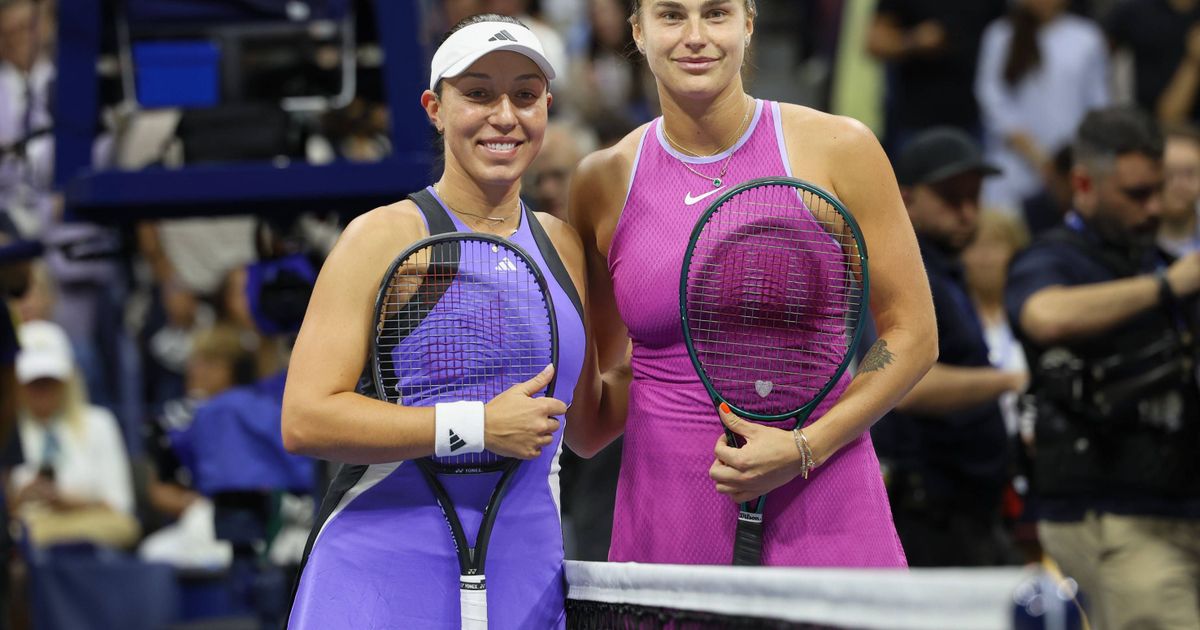
The match was consistent with the broader pattern of their rivalry, where momentum swings were frequent but rarely decisive. Keys won more total points, 86 to 83, yet Pegula once again proved more efficient in the key phases of both tie-breaks.
Across the match with Keys, Pegula repeatedly returned to the importance of adapting to grass-court variability, especially when facing players capable of controlling points from the first strike. “It was kind of such great tennis for grass,” she said in her post-match interview.
“Even if I lost, I would have been really happy”
Pegula framed the victory as a product of managing pressure points rather than sustained dominance, stressing that grass-court matches often collapse into isolated moments. The American highlighted the need to remain competitive even when momentum shifts, particularly after Keys pushed both sets into tie-breaks through aggressive returning phases.
“It was such great tennis for grass, playing against a big server, a big hitter, someone who does well on grass and has had good results. Being able to come out on the other side as the winner was kind of perfect.”
The second set followed a reversed structure, with Pegula leading 4-2 before Keys re-established parity and forced another tie-break. Pegula eventually closed the match on her fourth match point, relying on a combination of defensive resilience and selective aggression in extended rallies.
“Honestly, even if I lost, I would have been really happy with the fact that I really needed a match like that,” she said. “And it doesn’t get any easier going into a semi-final, especially if I play Aryna.”
“You’re banking on a lot of things” — Sabalenka looms large
Looking ahead, Pegula is projected to face Aryna Sabalenka in the semi-finals, a matchup she enters with a 3-9 head-to-head deficit. Their most recent meeting came at the 2025 WTA Finals round robin stage, where Sabalenka prevailed, with no encounters recorded between the pair earlier in 2026.
Pegula explicitly underlined the similarity between Sabalenka and Keys in terms of serve power and early-point aggression, suggesting that tactical continuity rather than reinvention will be required. “You have to take some risk and kind of change up your positioning. You got to kind of guess a little bit on their serves.”
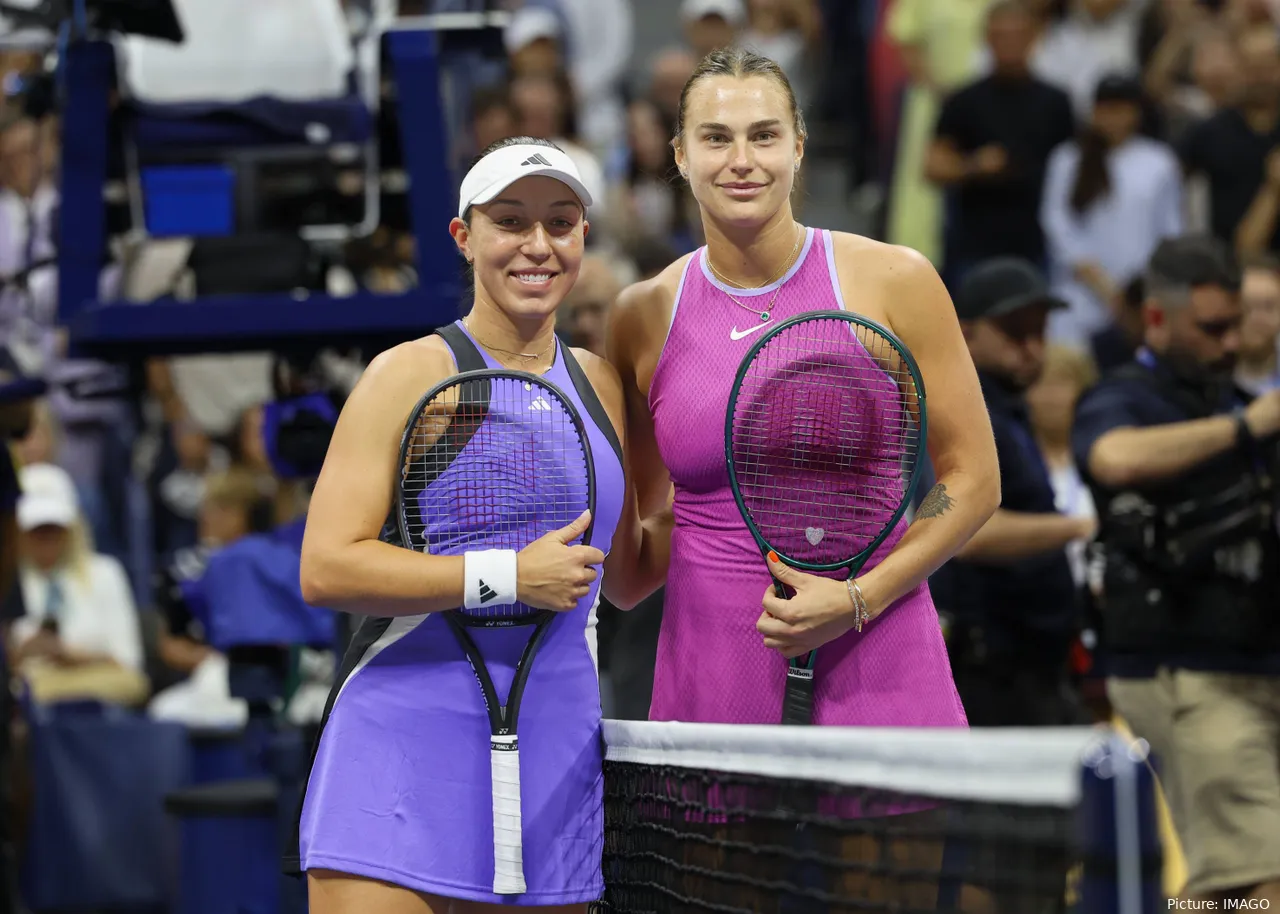
She also described Sabalenka’s level as a step change in difficulty, particularly on faster surfaces where serve and first-strike patterns dominate rallies. Pegula’s assessment was direct, focusing on structural challenges rather than narrative framing. “It’s going to be very similar to today in a way where I’m going to have to fend off a lot of really good serving.”
The semi-final places Pegula in another high-leverage encounter in a season marked by consistent deep runs. After adverse results at the end of the clay swing – including an opening-round defeat at Roland Garros – the world No. 5 is focused on re-establishing herself among the top names on grass courts, and against Sabalenka she faces a major test in search of her third final of the season, following titles in Dubai and Charleston.