
For years, NFL players have made one thing abundantly clear: they want to play on natural grass.
Now, thanks to FIFA’s requirements for the 2026 World Cup, seven NFL stadiums have proven that converting from artificial turf to grass isn’t impossible. It isn’t some futuristic concept. It can be done.
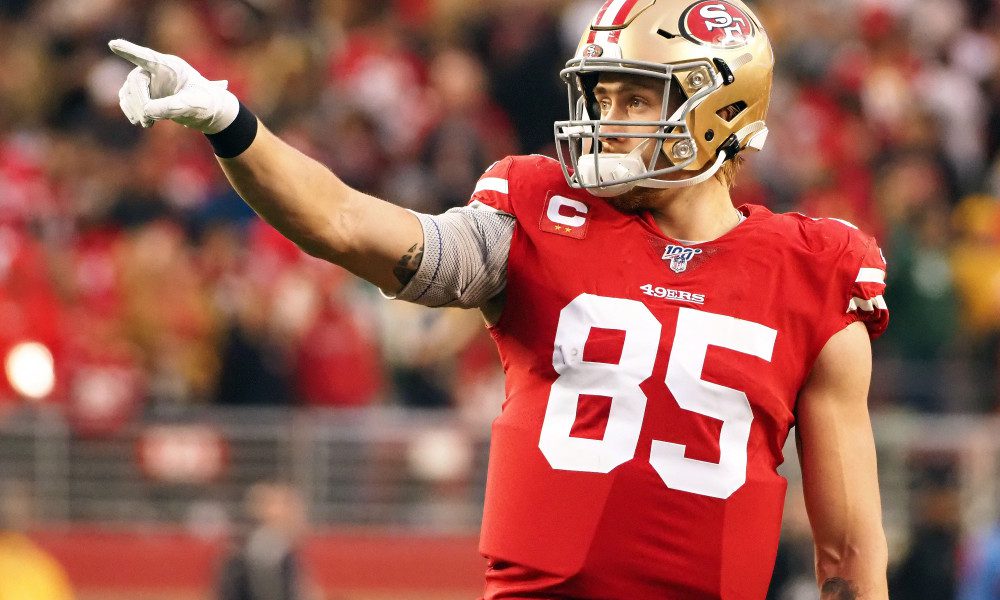
That’s exactly why San Francisco 49ers star George Kittle is frustrated, and why many players across the league share his feelings.
“We’ve made it clear that we prefer grass fields,” Kittle said in a statement released by the NFL Players Association. “We know it’s better on our bodies. And clearly, we know it’s possible based on everything that went into putting down grass fields for the World Cup.”
His point is difficult to ignore.
FIFA Gets Grass. NFL Players Get Turf.
When FIFA awarded the United States the World Cup, it required natural grass playing surfaces for every venue.
NFL stadium operators responded almost immediately.
Temporary grass systems were designed, installed, and maintained at enormous expense because FIFA demanded it.
The irony isn’t lost on players.
The same stadiums that insist permanent grass is too expensive or too difficult to maintain somehow found a way to make it happen for soccer’s biggest tournament.
If it can be done for a month-long international event, why can’t it be done for a 17-game NFL season?
The Players Have Already Voted
According to NFLPA Executive Director Lloyd Howell, an overwhelming 92 percent of NFL players prefer playing on grass.
That statistic shouldn’t be dismissed.
These are the athletes putting their bodies on the line every Sunday. They know how different surfaces feel after four quarters. They know how their knees, ankles, hips, and backs respond after years of punishment.
Whether the difference is supported by every injury study or not, nearly every player who has experienced both surfaces has an opinion—and that opinion overwhelmingly favors grass.
When 92 percent of your workforce agrees on one workplace issue, it’s worth listening.
The Debate Isn’t Just About Injury Statistics
The NFL points to research from Chief Medical Officer Dr. Allen Sills indicating there are no statistically significant differences in lower-extremity injuries or concussions between natural grass and synthetic turf.
That data deserves consideration.
But statistics don’t tell the entire story.
Players consistently report that grass is more forgiving, provides a more natural feel underfoot, and leaves them feeling less sore after games. Many believe turf increases wear and tear over the course of a season, even if every injury category doesn’t show a measurable difference.
Sometimes workplace improvements aren’t solely about reducing catastrophic injuries. They’re about improving the overall working environment.
No one would ignore employee feedback simply because a spreadsheet didn’t fully capture their experience.
The Cost Argument Is Becoming Harder to Defend
For years, owners have pointed to maintenance costs.
Artificial turf is cheaper.
It survives concerts, college football games, monster truck shows, and other stadium events with minimal upkeep.
Natural grass requires constant maintenance, irrigation, specialized equipment, and occasional replacement.
Those are valid concerns.
But the World Cup demonstrated that owners are willing to spend millions when an event is important enough.
The question becomes:
Why isn’t protecting NFL players considered equally important?
The league generates well over $20 billion annually. Compared to that figure, investing in permanent or hybrid grass systems represents a relatively small expense if it improves player satisfaction and potentially extends careers.
Public Perception Matters
Fans notice.
Whenever a player suffers a non-contact injury on turf, social media immediately fills with criticism of artificial surfaces—whether the field actually contributed or not.
That perception has become part of the NFL’s image.
Switching to grass would show players that the league is willing to respond to one of their longest-standing concerns rather than simply acknowledging it.
It would also eliminate one of the league’s most persistent public-relations battles.
A Step in the Right Direction—But Not the Finish Line
Beginning with the 2026 season, the NFL will implement stricter standards for both grass and synthetic surfaces.
That’s progress.
Higher-quality fields, regardless of surface, should benefit players.
But those standards stop short of requiring natural grass.
For many players, that’s the disappointing part.
If stadiums can install world-class grass fields for FIFA, many believe they should be able to maintain similar playing surfaces for the athletes who generate billions of dollars for the league every year.
The Bottom Line
The debate over grass versus turf isn’t likely to disappear anytime soon.
Medical studies will continue. Owners will continue weighing costs. Stadium operators will continue balancing multiple events.
But one fact remains difficult to ignore.
NFL stadiums have already demonstrated that natural grass is possible when the world’s biggest soccer tournament comes to town.
George Kittle’s criticism isn’t simply about turf versus grass.
It’s about priorities.
If the NFL can make massive investments to satisfy FIFA’s standards, players are asking a reasonable question:
Why can’t the league make that same investment in the people who make the NFL successful every Sunday?

NFL Draft Diamonds was created to assist the underdogs playing the sport. We call them diamonds in the rough. My name is Damond Talbot, I have worked extremely hard to help hundreds of small school players over the past several years, and will continue my mission. We have several contributors on this site, and if they contribute their name and contact will be in the piece above. You can email me at nfldraftdiamonds@gmail.com