
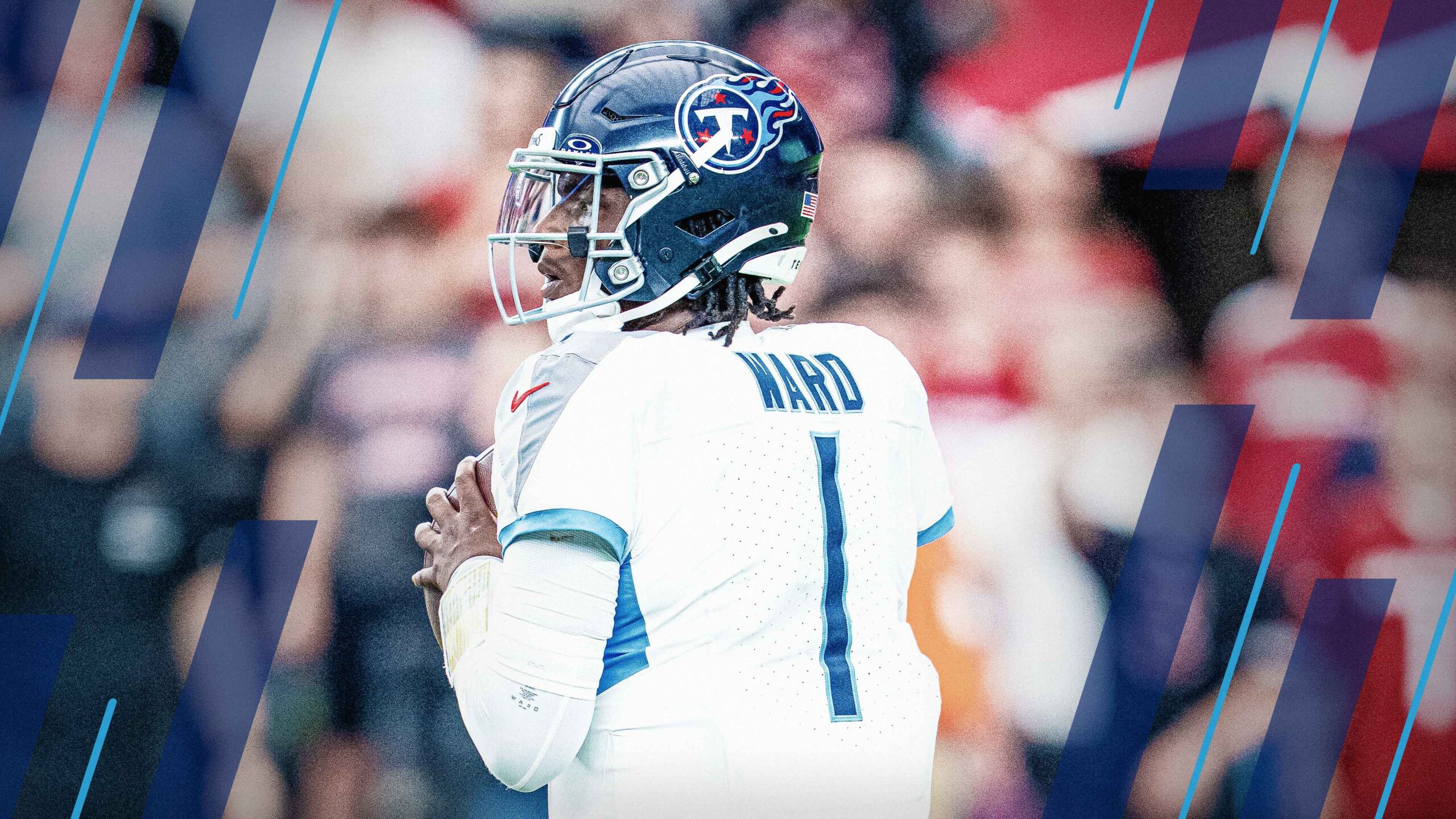
- Cameron Ward‘s surroundings should catalyze growth: The No. 1 overall pick displayed his playmaking ability and now has two legitimate receivers to augment his play.
- Young Ravens defenders should learn under Jesse Minter: Malaki Starks and Teddye Buchanan are up-and-comers who can take another step in 2026.
Estimated Reading Time: 15 minutes
With NFL rosters beginning to crystallize after the draft, visions for both player roles and performance are coming into focus. That certainly applies to young names looking to establish themselves at the pro level.
Every season, formerly unproven talents make a leap to stardom. It’s never easy to forecast with 100% certainty, as last year’s version of this list demonstrated, but there were several hits with the Bears’ Caleb Williams, Colts’ Laiatu Latu, the Seahawks’ Byron Murphy II and the Steelers’ Troy Fautanu.
Who might fit the bill to qualify for the 2026 team? Below are worthy options at every position, compiled in the form of a traditional roster.
Note: Any player that has earned at least a 75.0 overall season grade was ineligible for this exercise — disqualifying the likes of Jihaad Campbell, Luther Burden III and Colston Loveland.
Quarterback: Cameron Ward, Tennessee Titans
The 2025 quarterback class wasn’t as star-studded as the one prior, but it’s already produced three starters with upside going into 2026. Picking any of Ward, Tyler Shough or Jaxson Dart to excel in Year 2 would be valid, but Ward feels like the most logical selection.
Ward’s rookie campaign didn’t go quite as expected, finishing with a 56.4 PFF passing grade and more turnover-worthy plays (23) than big-time throws (21). Yet Ward showed real flashes, including compiling three games with at least a 78.7 overall PFF grade in Week 12 or later. Plus, Ward’s receiving corps earned just the 27th-best PFF receiving grade.
The circumstances are now significantly better for the former No. 1 overall pick going into his second season. Ward has two major assets at receiver in No. 4 selection Carnell Tate as well as former Giant Wan’Dale Robinson, who can help attack every area of the field. Add in new offensive coordinator Brian Daboll, and the pieces should be there for Ward’s sky-high talent to consistently materialize.
Running Back: Ashton Jeanty, Las Vegas Raiders
The sixth overall pick in last year’s draft may be another obvious candidate to break out, but the Raiders’ offseason has only reinforced what should be a major jump.
Jeanty’s rookie year didn’t reach his lofty expectations, as he finished with a 73.1 PFF rushing grade and 3.06 yards after contact per attempt. However, there were still silver linings in 2025. Consider that his 61 missed tackles forced were the sixth-most among qualified rushers, and Jeanty still netted 24 carries of at least 10 yards.
Under new head coach Klint Kubiak last year, the Seahawks led the league in rushing play rate (47.1%) and finished fourth in first downs gained on the ground. On top of that, new center Tyler Linderbaum has produced at least a 78.6 PFF run-blocking mark in every season of his four-year career. Kenneth Walker III entered elusive territory (pun intended) working with Kubiak last season, and Jeanty could be next in line.
Wide Receiver: Matthew Golden, Green Bay Packers
Based on Golden’s talent and the Packers’ new-look receiving corps, all signs point toward him being counted on much more — and producing improved results.
Golden’s rookie season was relatively pedestrian, with the first-round pick playing to a 72.7 PFF receiving grade with 1.53 yards per route run. However, he peaked in his final game of the year when he notched a 90.0 receiving mark, 3.50 yards per route run and 42 yards after the catch in Green Bay’s wild-card defeat vs. the Bears.
With the Packers losing Romeo Doubs in free agency and trading Dontayvion Wicks, the team is firmly placing its faith in Golden, whose premier route-running and ball-tracking skills should carry over from his time at Texas.
Wide Receiver: Emeka Egbuka, Tampa Bay Buccaneers
Another touted prospect whose first season didn’t live up to the hype, expect superior outcomes for Egbuka in 2026.
Egbuka started off his NFL career red-hot: Through the first five weeks of 2025, Egbuka’s 75.8 PFF receiving grade was 12th at the position, and his 2.49 yards per route run placed seventh. However, the Ohio State product subsequently struggled, registering a 61.9 receiving grade. His issues were mostly fueled by drops, with his 11.6% drop rate the second-highest among qualified wideouts.
With the legendary Mike Evans now in San Francisco, the Buccaneers are assuredly expecting Egbuka to help shoulder much of that vacant production. The smoothness, versatility and sure-handedness that Egbuka put on display in Columbus figure to catalyze a second-year breakout.
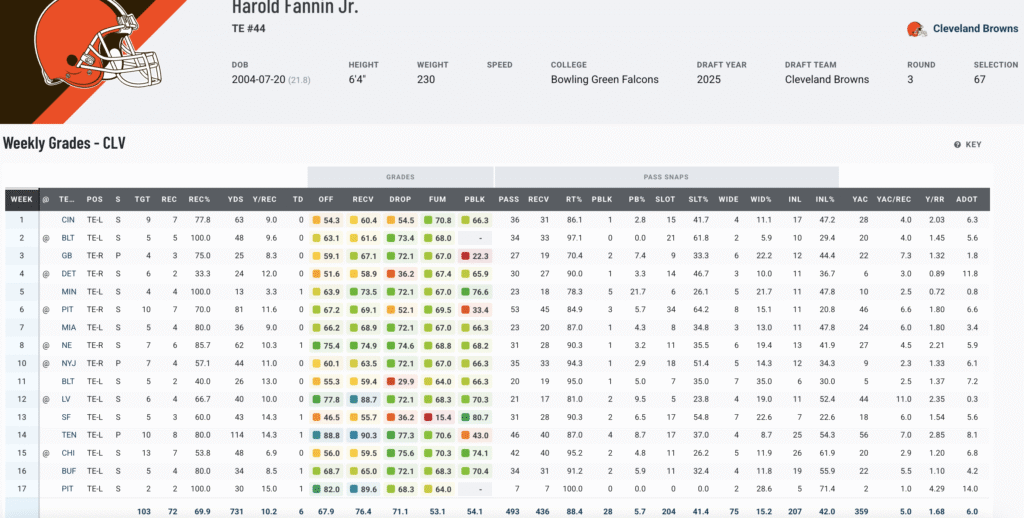
Tight End: Harold Fannin Jr., Cleveland Browns
Going into last year’s pre-draft process, pundits pondered what Fannin’s NFL position and stock would look like. Two years later, he’s certainly trending in the right direction.
As a rookie in Cleveland, Fannin put his elite receiving acumen on display with a 76.4 PFF receiving grade and 1.68 yards per route run, both of which were no worse than 13th among qualified tight ends. Also encouraging was Fannin’s 70th-percentile separation rate against single coverage.
With David Njoku heading to the Chargers, Fannin is positioned as the Browns’ clear top tight end. New head coach Todd Monken has a sturdy track record funneling targets through tight ends in his system, which should benefit the Bowling Green alum.
Tackle: Amarius Mims, Cincinnati Bengals
When Mims came out of Georgia, he was a talented but raw prospect at the tackle position. As he heads into his third pro campaign, the arrow is definitely pointing up.
Mims’ second season in Cincinnati was decent on the surface with a 67.6 overall PFF grade, finishing with no higher than a 66.6 mark in both pass- and run-blocking. But Mims really hit his stride in the second half of 2025, earning an 81.0 overall grade from Weeks 12-18. In those seven weeks, Mims didn’t give up a sack and produced a 76.6 PFF run-blocking score.
With all of the Bengals’ starting offensive line set to return in 2026, that gelling will only help Mims — who has the tools to become a very well-rounded player.
Guard: Grey Zabel, Seattle Seahawks
Seattle’s draft picks were instrumental in the team winning Super Bowl 60. That certainly included Zabel, who’s now poised to be a step better in 2026.
Zabel finished his rookie season with a mediocre 61.7 overall PFF grade, sitting in the 48th percentile in PFF pass-blocking grade and no better than the 37th percentile in run-blocking mark on both gap and zone concepts. But when the stage got brighter, Zabel thrived: His 86.8 overall grade from Week 17 onward led all guards, and he permitted just nine pressures over those six contests.
With a full playoff run under his belt — and one featuring very strong competition from standouts like Milton Williams, Kobie Turner and Christian Barmore — Zabel could very well be a 2026 All-Pro candidate.
Center: Jared Wilson, New England Patriots
Even after the Patriots’ offensive line grew during New England’s run to the Super Bowl, it figures to be even steadier this year with Wilson up the middle.
Wilson experienced growing pains in his first pro season, playing almost exclusively at left guard — where his 52.2 overall PFF grade was the eighth-worst among qualifiers. However, Wilson showed signs of progress later in the year with a 73.6 PFF pass-blocking grade from Week 11 through the Super Bowl.
Moving back to center should do wonders for Wilson, who compiled a 79.6 overall grade during his time there at Georgia in 2024. Adding veteran Alijah Vera-Tucker to man left guard and retaining the likes of Mike Onwenu, Will Campbell and Morgan Moses creates a relatively ideal situation for Wilson.
Guard: Mason McCormick, Pittsburgh Steelers
The Steelers have developed several homegrown offensive linemen on the rise in recent years, and McCormick could be the next breakout candidate.
The South Dakota State product was significantly better in his second year, with his overall PFF grade jumping from 57.7 to 72.9. Much of that improvement was fostered by late-season success. From Week 10 and later, McCormick was the 10th-best guard by overall grade (79.2), powered by his 81.0 PFF pass-blocking mark.
McCormick still has room to grow in the run game and in playing more steadily, but his work in pass protection could have him in improved standing under Mike McCarthy.
Tackle: Kelvin Banks Jr., New Orleans Saints
Several prized tackles from last season’s rookie group could be even better in 2026, but Banks seems to have the best odds of any.
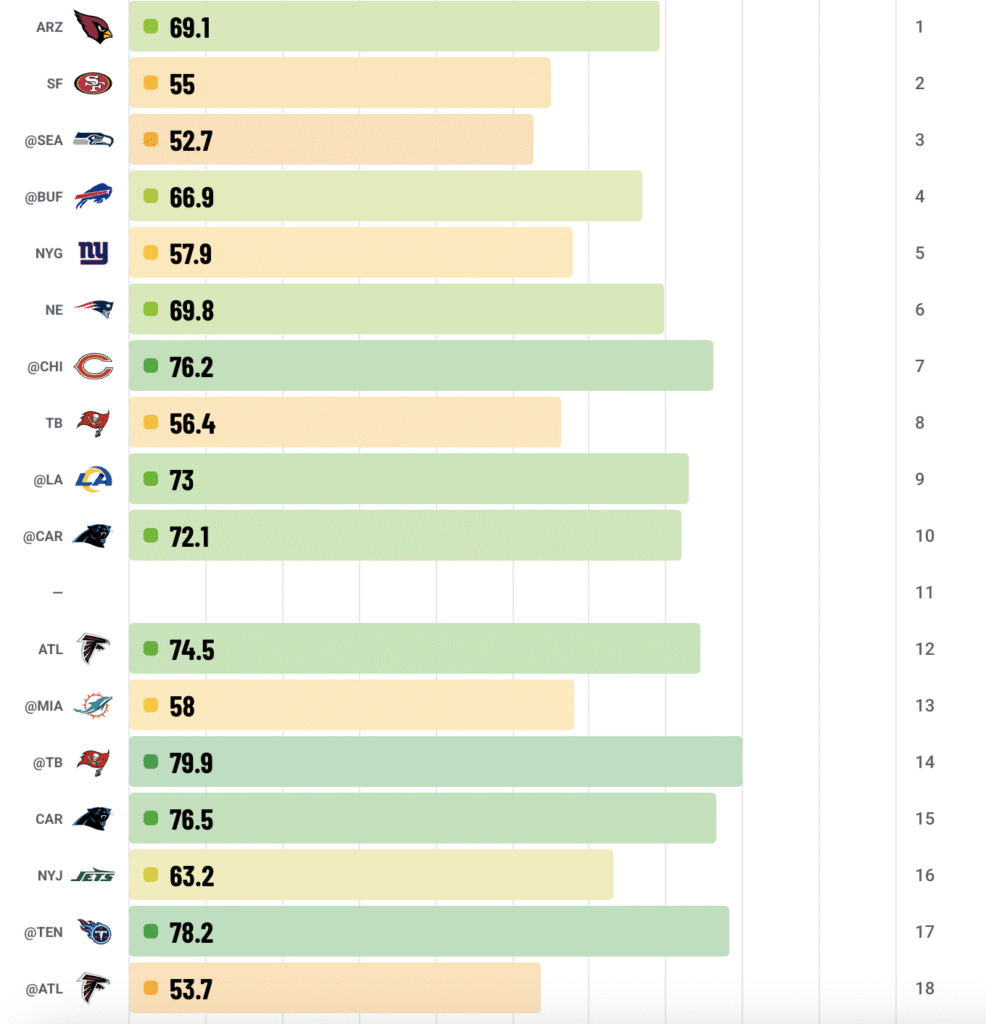
Banks was solid during his first year in New Orleans with a 73.5 overall PFF grade, although he surrendered five sacks, 34 hurries and 46 total pressures. His first year can effectively be split into two halves, with the second a very strong one. Indeed, Banks was the 15th-highest graded tackle after Week 8, where he paired an 82.6 PFF run-blocking grade with only two sacks surrendered.
New Orleans has continued to invest in its offensive infrastructure this spring, and that includes bringing in guard David Edwards to play next to Banks. That newfound veteran presence, paired with further additions on offense, might put Banks in a higher tier by the end of 2026.
Kelvin Banks Jr.’s PFF Grades by Week
Edge Defender: Dallas Turner, Minnesota Vikings
Turner’s first two seasons with the Vikings haven’t seen him become an outward star. That could look different in 2026.
The former 17th overall pick finished with 65.5 and 64.1 overall PFF grades in 2025 and 2024, respectively. But last year was a step in the right direction, as Turner accrued a 70.2 PFF pass-rush grade with 42 pressures and a 12.0% pass-rush win rate.
With Jonathan Greenard now on the Eagles, Turner has a clear runway to both meaningful playing time and improved production for Minnesota.
Interior Defender: Walter Nolen, Arizona Cardinals
After an injury-shortened first year, Nolen should be all systems go to dominate in 2026.
The Cardinals’ 2025 first-round pick was terrific when on the field, securing an 80.1 PFF pass-rush grade and 13.0% pass-rush win rate with 15 pressures generated. However, Nolen only played 169 total snaps because of calf strain and torn meniscus.
Nolen still has room to grow against the run after posting a 57.4 PFF run-defense mark, which makes his overall upside that much scarier after how effective he was getting after the quarterback last season. With Calais Campbell and Dalvin Tomlinson gone, Nolen is now the clear-cut top player inside for Arizona.
Interior Defender: Tyleik Williams, Detroit Lions
In addition to Nolen, there are at least four other worthwhile candidates to improve from last year’s interior defender crop. Williams may have the best track of any.
Williams settled in nicely to Detroit’s defensive line rotation, playing to a 68.2 PFF pass-rush grade on 446 total snaps. That effort against the pass is particularly encouraging considering his poor performance in that area in his final two collegiate seasons.
Somewhat perplexingly, Williams wasn’t effective against the run with a 5% run stop rate in 2025. But given his elite 88.6 PFF run-defense mark at Ohio State in 2024, expect an uptick in that category. Ultimately, the Lions not re-signing D.J. Reader indicates that the team is comfortable giving Williams an augmented role in his second year.
Edge Defender: Donovan Ezeiruaku, Dallas Cowboys
There were several second-year edge defenders pushing for this slot, but Ezeiruaku presents the best combination of a promising first season as well as upside.
Despite sliding to the second round, Ezeiruaku turned in a solid rookie campaign with a 66.8 PFF pass-rush grade, the second-best among qualified newcomers at the position. What’s also appealing about Ezeiruaku is how good he looked against the run, sitting in the 85th percentile in run stop rate (8.1%) and the 73rd percentile in PFF run-defense grade (62.8).
The Cowboys traded for Rashan Gary and drafted Malachi Lawrence in the first round, but they clearly still have a plan in place for Ezeiruaku. Based on his Year 1 metrics, tremendous bend and quick hands, he could take things up a notch in his second pro season.
Linebacker: Ventrell Miller, Jacksonville Jaguars
After playing well in a much smaller opportunity, Miller might finally have the chance to establish himself as a household name in 2026.
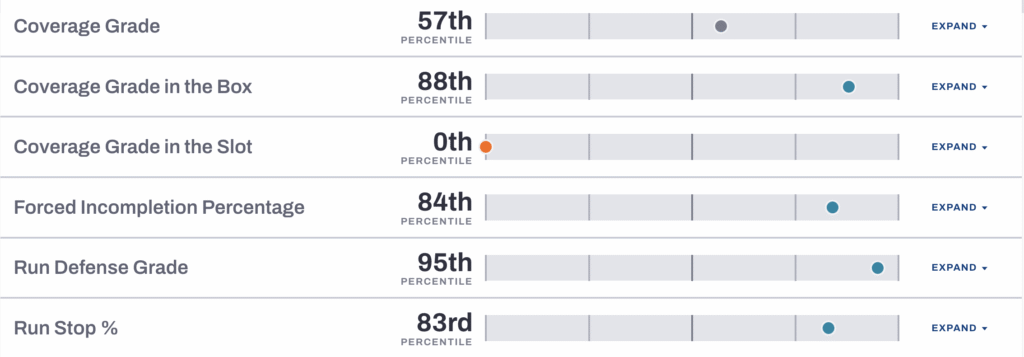
Working as a backup last season, Miller was very effective, netting a 72.6 overall PFF grade on 220 snaps. His best work came against the run, where he secured an 82.8 PFF run-defense mark that sat 15th among all linebackers. While Miller was diminished against the pass throughout his larger body of work, he earned at least a 69.2 PFF coverage grade in three of his last four games —suggesting he has more in the tank.
With Devin Lloyd now in Carolina, the Jaguars are searching for a legitimate complement to Foye Oluokun. Based on the team’s roster construction, it seems like that’s poised to be the third-year Miller.
Ventrell Miller’s Stable 2025 PFF Grades
Linebacker: Teddye Buchanan, Baltimore Ravens
Growth feels like the name of the game on Baltimore’s defense, and it should permeate to Buchanan over the middle.
Even as a fourth-round rookie, Buchanan garnered significant playing time with 652 snaps across the team’s first 14 games. Prior to suffering a torn ACL, Buchanan showed promise with an 8.6% missed tackle rate and a 70.8 PFF run-defense grade.
The Ravens have hardly adjusted their linebacker room, which means that Buchanan should obtain another year of starting next to All-Pro Roquan Smith. With Jesse Minter now calling the shots, Buchanan could experience a similar elevation to what we saw with the Chargers’ Daiyan Henley in 2024.
Cornerback: Nohl Williams, Kansas City Chiefs
A well-kept secret in 2025, Williams could swiftly become a commonplace name in 2026.
Even with the Chiefs fielding two outstanding cornerbacks in Trent McDuffie and Jaylen Watson, Williams earned his right to stay on the field. Playing 458 total snaps, Williams registered a 74.5 overall PFF grade with a 75.6 PFF coverage mark, which placed 15th among corners with at least 250 coverage snaps. Impressively, Williams placed in the 93rd percentile in single coverage grade and the 89th percentile at outside corner.
Mansoor Delane, Kansas City’s top draft pick, should command at least one perimeter spot for Steve Spagnuolo. But the Cal product Williams has the traits to not only seize that role, but to also be a burgeoning player on a greater stage.
Cornerback: Trey Amos, Washington Commanders
There were a slew of names worthy of this second spot on the team, but Amos is just a hair above the rest.
Last year’s second-round selection didn’t enjoy the kind of rookie showcase he desired, concluding with a 55.8 overall PFF grade with a 58.8 PFF coverage mark. While Amos was certainly victimized at times, he reflected his talent by earning at least a 68.5 coverage grade in five of his 10 contests, and his 51.43% lockdown rate was 26th among all cornerbacks. Further, Amos broke up an eye-catching 17.6% of his targets.
Washington’s defense should be considerably better at all three levels in 2026 after the team’s offseason overhaul. With new defensive coordinator Daronte Jones specializing in the secondary, that marks another boost for Amos.
Safety: Malaki Starks, Baltimore Ravens
Starks is another young Ravens defender working under Minter makes a second appearance on the list, and one boasting rare talent at that.
After falling to the Ravens with the 27th overall pick in last year’s draft, Starks was decent as a rookie. The Georgia alum played to a 67.9 overall PFF grade, in part because he missed 13.3% of his tackles. But looking further reveals a good 66.4 PFF coverage grade at free safety as well as elite play against the run, featuring a 79.9 PFF run-defense grade.
Minter’s calling card in the NFL has been his ability to develop defensive backs, and not many have the abilities that Starks possesses. With the 22-year-old getting another year to work next to Kyle Hamilton and newcomer Jaylinn Hawkins, it feels unwise to bet against his breakout.
Safety: Cole Bishop, Buffalo Bills
Like Starks, Bishop is an ascending safety who now has the privilege to be coached by a sage voice at the position.
Bishop took a step last season, bolstering his overall PFF grade from 52.0 to 66.5. Much of that was galvanized by better coverage work, where Bishop allowed only a 45.7 passer rating when targeted. Along similar lines, the Utah product ranked in at least the 67th percentile in coverage grade in both the box and slot.
Having suited up on 159-plus snaps at free safety, in the box and in the slot throughout his two-year career, Bishop is a versatile chess piece for new defensive coordinator Jim Leonhard. The former second-round pick has looked the part at times in the past, and Leonhard — who’s developed players like Ja’Quan McMillian and Brandon Jones — can help make him more refined.