
Tire pressure calculators are everywhere these days, and for good reason: We all know not to inflate our tires to the max. pressure indicated on the sidewalls—but what is the right pressure? If we inflate our tires too hard, we give up comfort and—depending on the road surface—speed. Inflate too low, and we risk collapsing a tire sidewall during hard cornering.
As pioneers of the wide-tire revolution, Bicycle Quarterly was one of the first to publish a tire pressure calculator, way back in 2007. It was based on Frank Berto’s measurements of tire drop of dozens of different tires—and it was still a series of graphs on paper…
Version 2.0 was an online tool that combined this data with our real-road tests of tire performance, in a simple calculator for optimizing the rolling resistance of our tires. This is the calculator that Tadej Pogačar apparently uses—last we heard, he ran his tires at exactly the pressure our calculator recommended.
Now we’re excited to present our Tire Pressure Calculator 3.0, developed in collab with the engineering department of Cal Poly Pomona. It builds on those decades of experience and adds some exciting and important new features:
New Data
Any tire pressure calculator is only as good as the data it’s based on. For 20 years, we’ve been measuring the speed of tires on real roads, with a rider on the bike. Different methods (roll-down, power meter), different speeds, different bikes—always checking and rechecking our results to remove any remaining doubts. That means our tire pressure calculator actually tells you how to make your bike faster.
In collaboration with Cal Poly Pomona, we’ve measured tire deflection under a wide range of pressures and loads. This means we’ve got reliable data not just for average male racers, but also for riders who are much lighter and much heavier. Most calculators extrapolate from ‘known values’ (i.e., those male racers): The further you extrapolate, the less reliable the pressure recommendations become. The RH × Cal Poly Pomona Tire Pressure Calculator 3.0 provides reliable recommendations for riders of all weights.
Simple and Pro Calculators
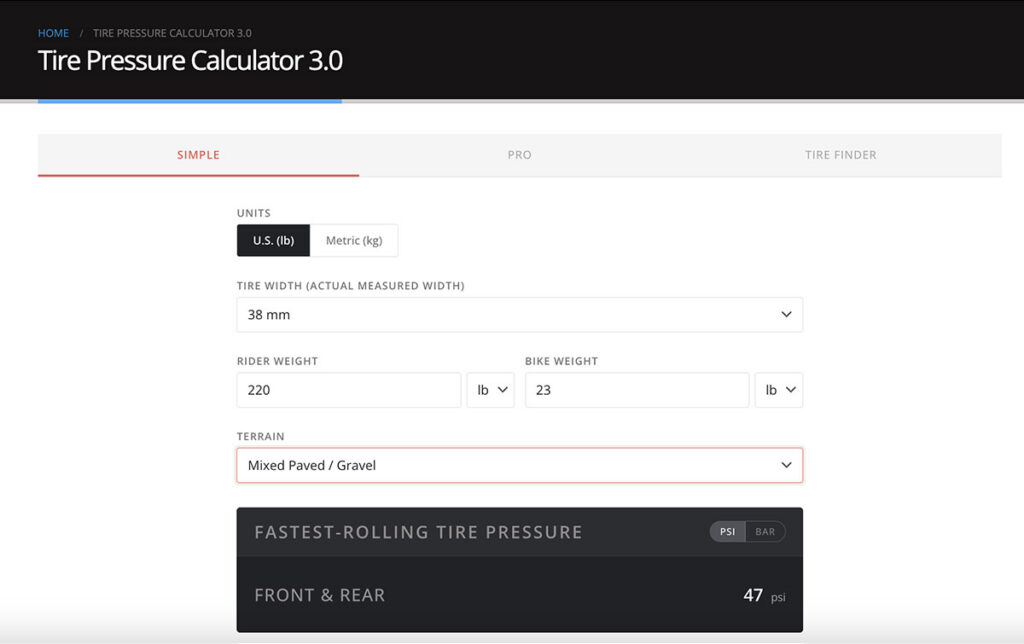
We give you a choice between two calculators: ‘Simple’ asks only for a few essential inputs (tire width, rider and bike weights, terrain) and recommends a tire pressure that’ll make your bike fast, comfortable and safe (above). This is perfect for riders who don’t want to overthink it.
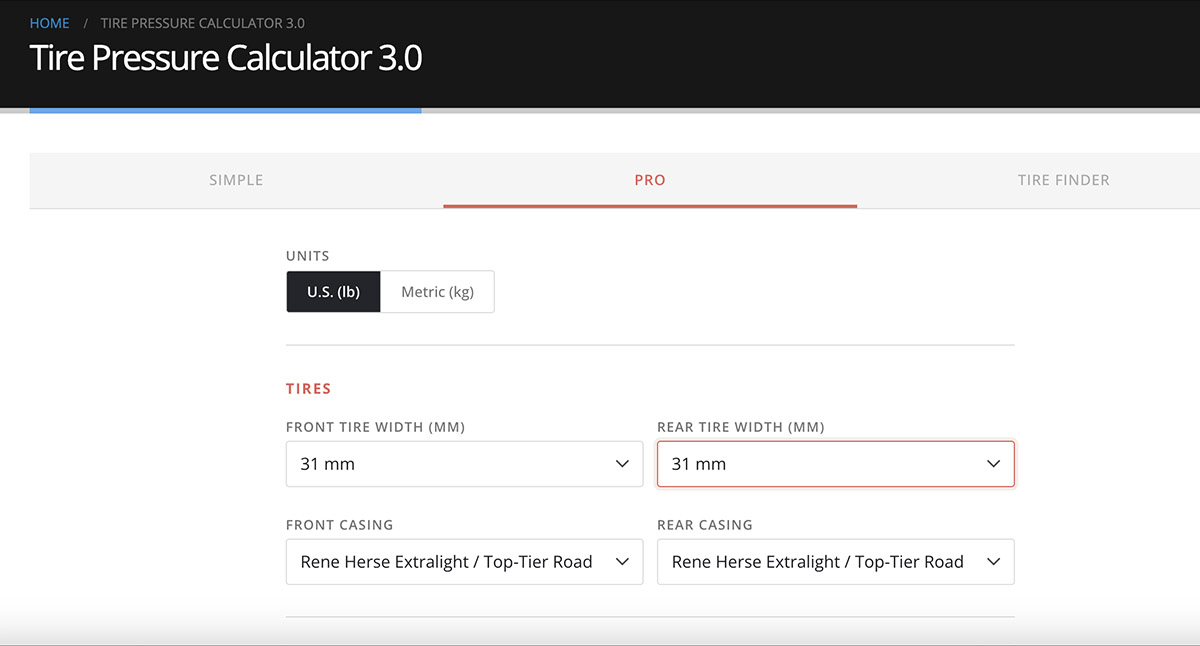
For riders who like to optimize every last percent of their bikes—or who don’t fit the norm because they carry luggage or run different tire widths front and rear—the ‘Pro’ calculator allows many inputs for a more precise recommendation. Among others, these inputs include variables that tend to be overlooked:
Frame Size
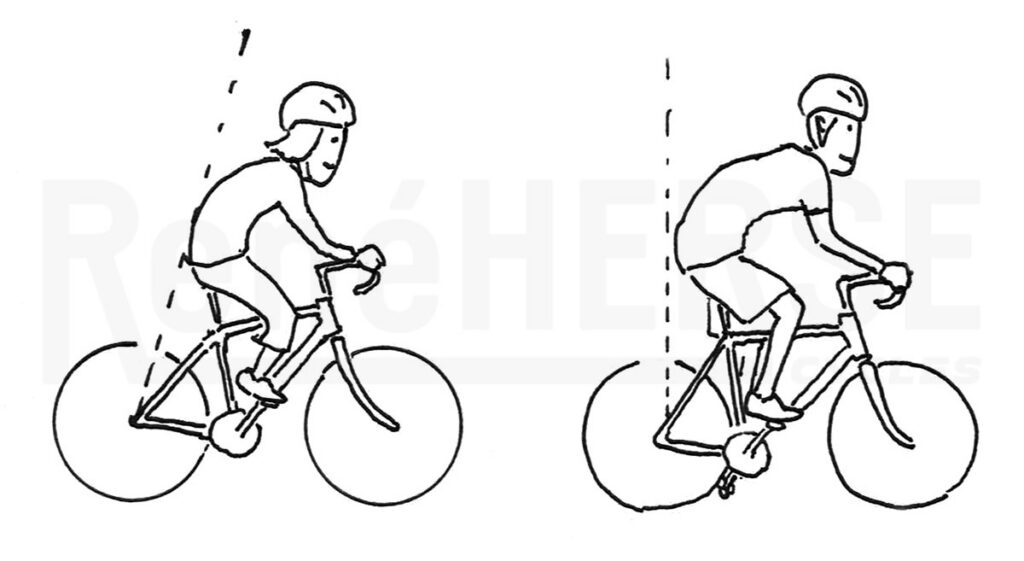
On most bikes, the front wheel carries less weight than the rear. That’s why it makes sense to inflate the front wheel to a lower pressure. Weight distribution changes with frame size, because seat and head tubes are inclined: Short riders sit further forward on their bikes than tall riders. Our calculator factors this in.
Riding Position
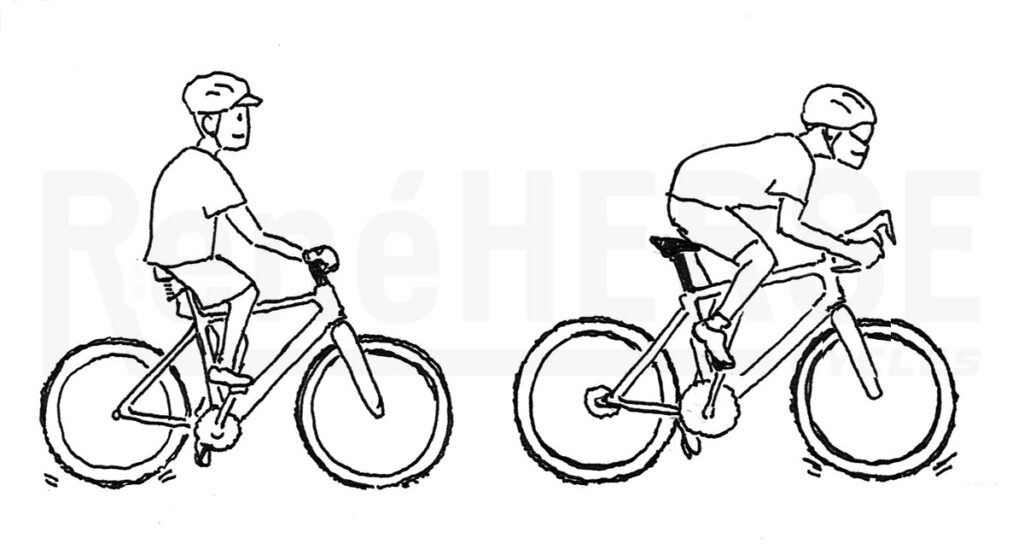
A rider with an upright position has a more rearward weight distribution than a rider with a lower position. The ‘Pro’ calculator adjusts the tire pressures for front and rear tires accordingly.
Luggage
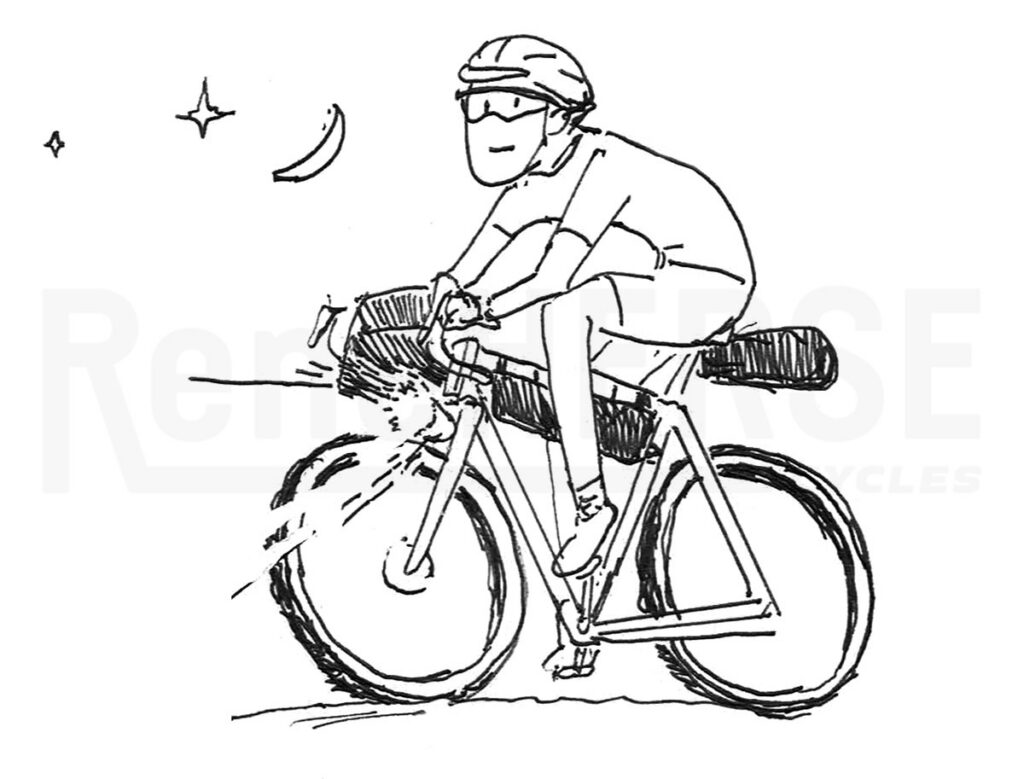
Whether bikepacking, touring with panniers, or carrying the essentials for a race like Unbound XL, many of us carry luggage on our bikes. The ‘Pro’ calculator considers bag weight and location as it calculates the weight distribution of the bike. It makes a big difference whether we carry our weight in front panniers, in a frame bag, or on a rear rack. The tire pressure recommendations reflect this.
Tire Casing
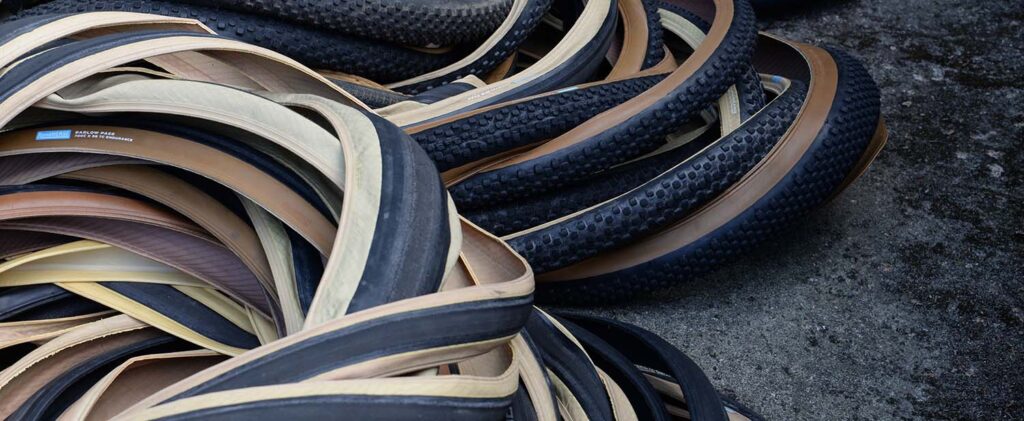
Tires are effectively two springs: One is the rubber of the tire; the other is the air inside. Depending on how stiff the rubber is, you need more or less air to get the same overall spring rate.
Together with Cal Poly Pomona, we’ve tested the stiffness of various casings at different pressures and loads. The ‘Pro’ calculator factors in casing stiffness and adjusts tire pressure accordingly. It works not just for Rene Herse tires, but also can be used with other tire brands.
Preferred Feel
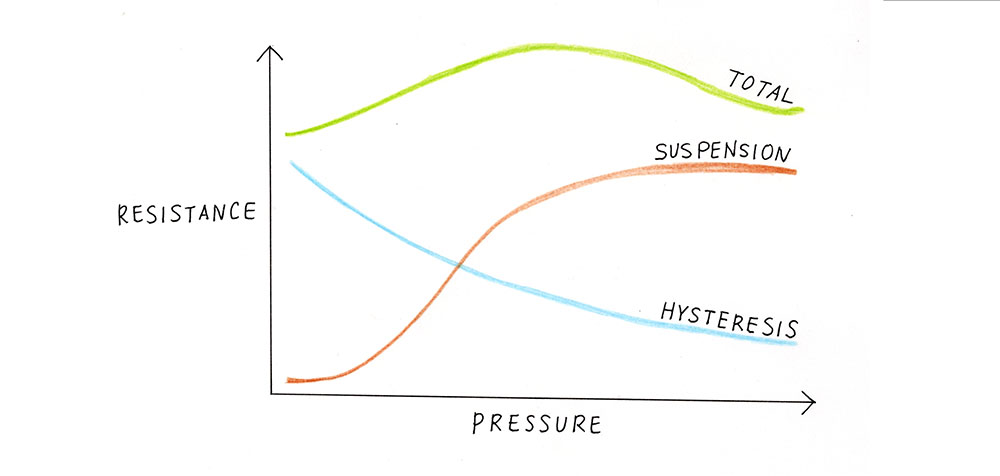
On smooth roads, there are actually two tire pressures that both are fastest:
- A ‘soft’ pressure that minimizes vibrations (suspension loss).
- A ‘firm’ pressure that minimizes tire flex (hysteretic loss).
- In-between pressures roll (a little) slower, because the two factors are non-linear: At in-between pressures, vibrations (suspension losses) go up faster than tire flex (hysteresis) goes down.
To optimize speed, you need to choose ‘soft’ or ‘firm.’ The ‘Simple’ calculator factors this in automatically, based on the terrain you select. The ‘Pro’ calculator allows you to select your preferred ride feel:
- ‘Soft’ is more comfortable.
- ‘Firm’ minimizes tire flex during high-speed cornering on smooth pavement.
- On rough surfaces, vibrations dominate, and ‘soft’ pressure rolls fastest and grips best. Both calculators default to ‘soft’ for rough surfaces.
Safety
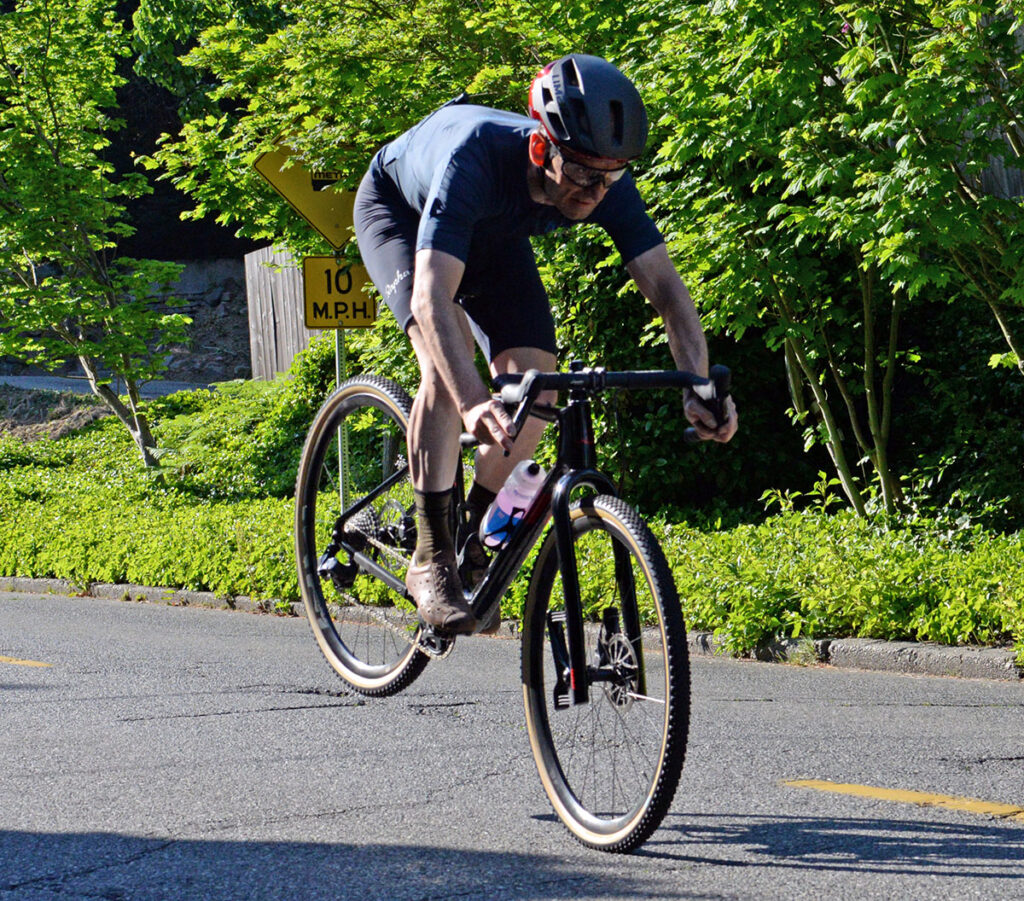
Simple calculations can overlook important factors. For example, if we only look at our weight distribution on the bike, especially tall riders with upright positions often have very little weight on the front wheel. They may be tempted to run their front tires at low pressures. That works great until we brake hard, and almost the entire weight of bike and rider shifts forward, onto the front wheel. Now the front tire is,m overloaded and risks collapsing.
That’s why we’ve built in factors of safety. Our calculator makes sure there’s always enough pressure in the front tire to support the entire weight of bike and rider during hard braking.
Similarly, our calculator keeps the pressure of stiff tires high enough to prevent a collapse of the sidewalls when the tire flexes as it hits a big obstacle. Here is why: The tire rubber becomes more flexible as it bows outward under deflection, creating a ‘regressive’ spring that gets softer the more it compresses. Contrasting this, the air pressure goes up (slightly) as the tire compresses, so it’s a ‘progressive’ spring that becomes firmer the more it compresses. With a regressive spring, you need a greater factor of safety.
In our ‘Terrain’ selection, tire pressure increases slightly if you select ‘Rough Gravel / Large Rocks.’ This avoids bottoming out and damaging our rims.
These safety factors are another area where decades of experience make a difference.
Tire Finder
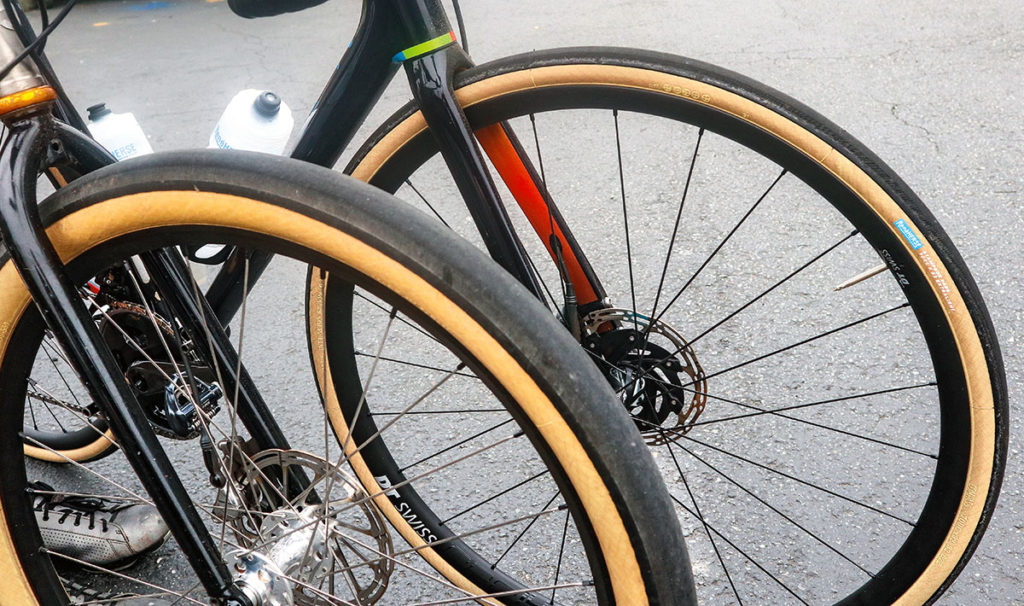
The third part of the new calculator started with a question: Does it really make sense to talk about tire widths as absolutes? Like “A road bike has 30 mm tires”? Let me explain: If Tadej Pogačar weighs 66 kg (146 lb) and races on 30 mm tires, what does that mean for the rest of us? Even if we adjust tire pressures, 30 mm tires will feel totally different for Natsuko (48 kg / 105 lb) and for Brennan Wetz (90 kg / 200 lb). What tires should Natsuko and Brennan ride if they want the same ride feel as Pogačar?
To answer that question, it helps to think in terms of ‘air volume per weight.’ Turns out that Natsuko will get the same ride feel as Tadej with 26 mm tires, while Brennan might consider upping his road tires to 35 mm.
We then took this idea and added a ‘casing finder’ that considers terrain and riding style. We integrated the ‘Simple’ tire pressure calculator. The result is our ‘One-Stop Tire Finder’ that recommends a tire width, casing, tread pattern and pressure. We’re not saying that you should run the tires it recommends—if you have your heart set on a road bike with 28 mm rubber, you should absolutely try that. The ‘Tire Finder’ is a good starting point if you’re curious and open to new ideas. (Just be prepared for blank stares when you try to explain this concept during your next club ride!)
Real-World Tested
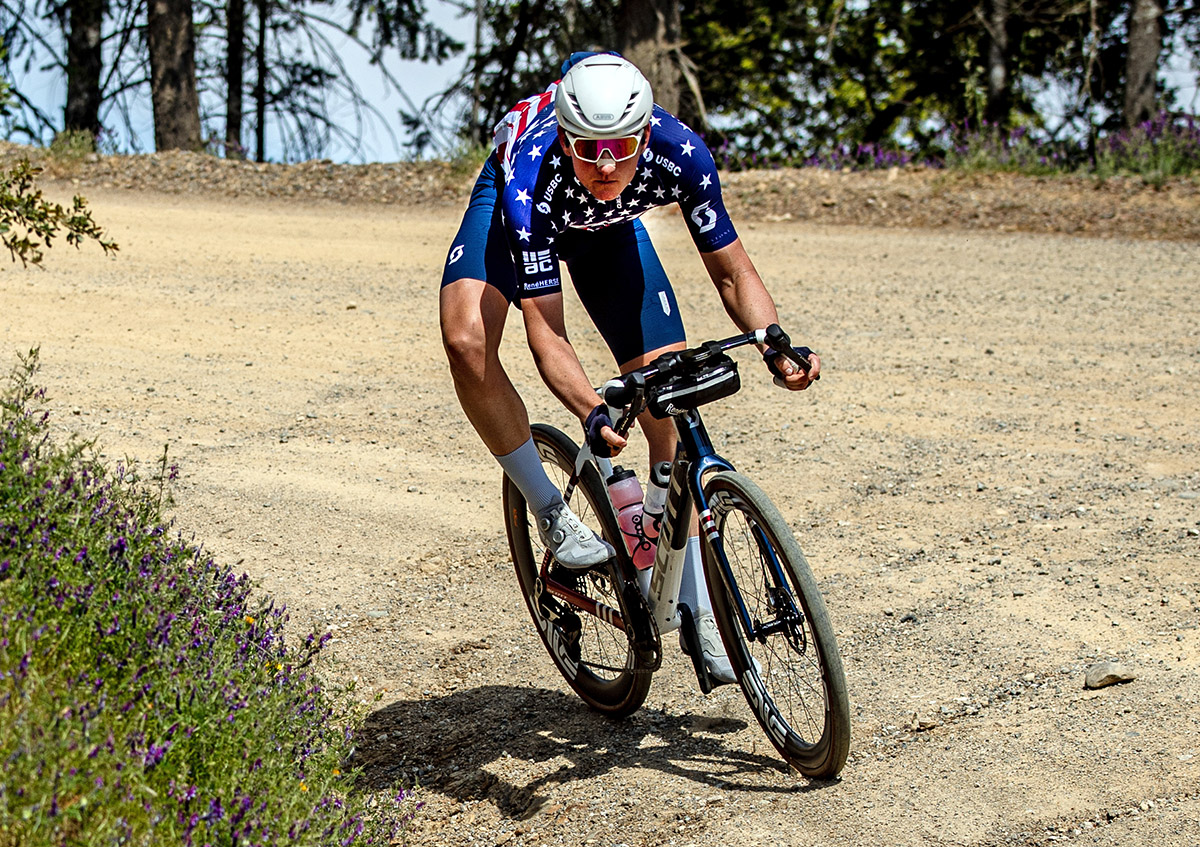
Our team of racers has tested the beta version of the new Tire Pressure Calculator 3.0 in the field: Meaghan Hackinen (who is using the data for her ride in the Tour Divide right now), Ted King, Brennan Wertz, Jenna Rinehart, Sofiane Sehili, Adrien Liechti, Becca Book, Francesca Selva… they’ve all run their tires with the recommended values and provided feedback.
We’re not just working with racers: Natsuko, who is at the light end of the spectrum, has tested the calculator on her bikes with tires between 25 and 55 mm wide. We’ve even tested the calculator on our tandem to make sure it works at the heavy end of the spectrum. All this real-world testing gives us confidence that the Tire Pressure Calculator 3.0 doesn’t just optimize your speed in our controlled tests, but actually works in the real world.
Enough words—try the new calculator for yourself!
More Information:
Image credits: Miyoshi (Drawings from The All-Road Bike Revolution); Jim Merithew (Brennan in stars-and-stripes jersey)