

A last chance for the breakaway. Today’s stage is hillier than it looks.

The Art of the Breakaway: the best actors can have great scripts, the best comedians great lines but what makes them stand out is timing. Michael Valgren made his winning attack with 1,200m with such exquisite timing that he could try the stage, or if not then talk to Tudor about a contract.
It was a lively day with a breakaway up the road and a counter move chasing hard for a long time, all while the bunch didn’t want to give them any room either. Hot sunshine turned to a downpour when Rémi Cavagna floated away solo and took two minutes but he seemed to crack and was hauled in.

In the hilly finish riders kept attacking, more would jump across. Einer Rubio and Michael Valgren were away but with only a few seconds on Damiano Caruso, Igor Arrieta, Andreas Leknessund and Aleksandr Vlasov. Arrieta bridged across and then the rest came back. Valgren had a thespian touch when shaking his head towards Rubio so say he was, unwilling or unable to take a pull on the climb to the finish in Andalo. With the climb done they were spread across the road, each looking for someone else to lead.
Just as the road flattened out with 1,200m Valgren hit them with a perfect attack. Starting at the back of the group, and just as others were looking at each other and tired, it felt like Valgren couldn’t have found a better microsecond to make his move.

Damiano Caruso moved up to ninth overall, continuing his tradition of soaring on GC in the third week. And Jhonathan Narvaez now leads the points competition with 12 points on Paul Magnier. The final stage in Rome offers 50-35-25-18-14-12-10-8-7-6-5-4-3-2-1 points.
The Route: a stage out of the mountains and there are some passes to climb but they’re not even marked. Today’s stage is hilly with plenty of unmarked climbs, starting with the road to Cicezzano, 6km at 5%.
Once out of the Alpine valleys and into the Valdobbiadene and its prosecco-producing vineyards there are several hills. The one after the sprint point is hard going at times with some 7%.
The Ca’ del Poggio is a wall-like climb, one kilometre at 12% and with a 20% section halfway. It’s a famous local climb and has been in the Giro and other races before.
The Finish: a flat run into town. There’s a sharp right bend with 300m to go and then it’s downhill to the line; unadvisable for a sprint finish but the field should be thinned out by now.
The Contenders: a stage open to plenty as long as they can cope with the sharp climbs and better still, profit from them. Alberto Bettiol (XDS-Astana) has already proved this but as mentioned before he’s far from a prolific winner. Jhonatan Narvaez (UAE) feels like a copy-paste pick but suited to the course while team mate Antonio Morgado feels like the UAE rider we’ve barely seen but this stage ought to be good for him.
Toon Aerts (Lotto-Intermarché) has shown he can handle brief climbs and win, we’ll see if he can do this into the third week of a grand tour.
Michael Valgren (EF) could try again but he showed how heavier riders can still score so Jasper Stuyven (Soudal-Quickstep) is worth watching.
 |
– |
 |
Narvaez, Bettiol, Stuyven |
 |
Aerts, Morgado, Ulissi, Zambanini, Sheffield |
Weather: 30°C and sunshine but with clouds building during the day.
TV: KM0 is at 12.20pm and the finish is forecast for 5.15pm CEST.
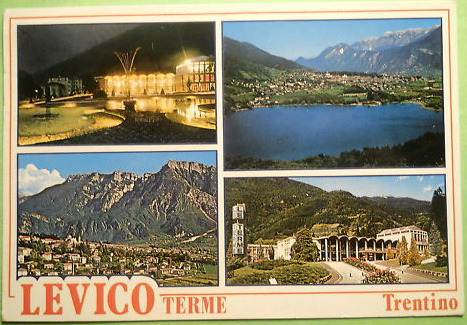
Postcard from Levico Terme
Today’s stage is in the Dolomites. No high mountain passes today but the Sugana valley used by much of the route today tends to mark the southern border of this mountain range topped by the Marmolada at 3,343m.
The Alps form an arc spanning several countries and there are many subdivisions, often labelled because of geology. The Dolomites, dolomiti in Italian, are made of, wait for it, dolomite rock. It is named after Gratet de Dolomieu, a French mineralogist who discovered the rock was different to regular limestone on account of its high magnesium content. A cousin of sedimentary limestone, it’s different to, say, the volcanic basalt and granite that form other parts of the Alps.
You’ll find dolomite all over the world, from Kansas to Tochigi. And not all the Italian Dolomites are made out of dolomite. Plus the exact map of the Dolomites is hard to pin down, the Italian Alpine club’s Alpenvereinseinteilung der Ostalpen says it is Zones 51, 52 and 53 in the map below, highlighted here in Giro-pink for you:
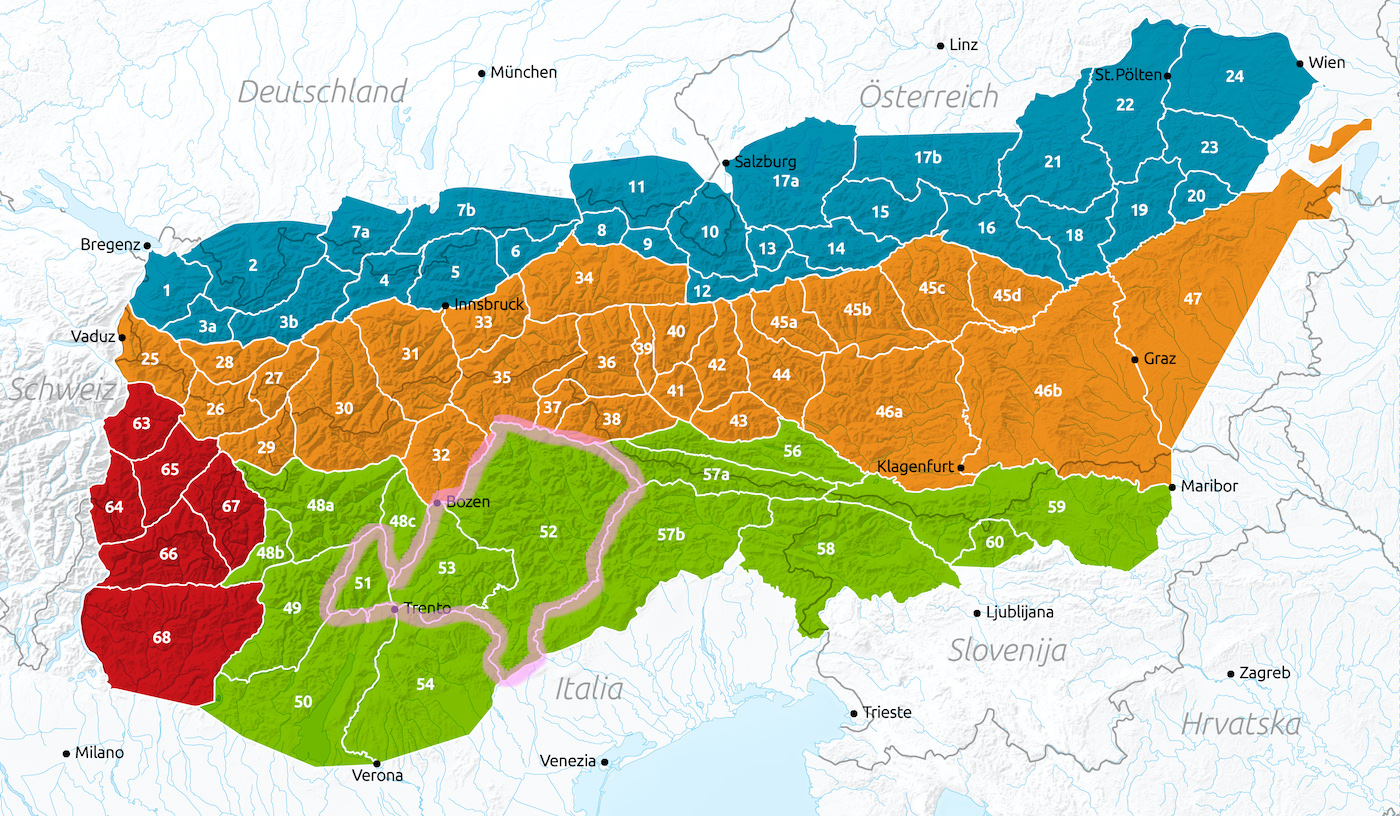
Pro cycling is heavily reliant on geology. All the mountain passes, climbs and even the flatlands we celebrate are the result of millions of years of terra-formation. But rarely mentioned, except in the Giro when the Dolomites appear on the horizon. Nobody speaks of the Carnic Alps or the Julian Alps, two nearby ranges; ditto in the Tour de France, the two day visit to Alpe d’Huez will happen without a mention of the Grandes Rousses range. If you want to be a pedant the Dolomites have subdivisions too: today’s stage is in the Brenta Dolomites, the western side.
Instead what if the Dolomites were also a social construction? The magnesium content can give the rocks a more pinkish hue which is appealing at sunrise and sunsets, it has attracted poets and painters before, today Instagrammers. There are popular ski resorts here that bid for the Giro. Also they’re close to some of Italy’s cycling heartlands with nearby industry and population centres. Some of the passes are old routes from Italy to Austria, and not the 1930s onwards ski resorts custom-built for car and bus access – think Sestriere – and so the passes twist and turn up the mountain more than usual which gives the roads more appeal and a greater sporting challenge. All these factors combine to make them a popular and rewarding outdoor destination.