
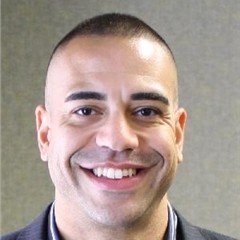
After knocking out Derrick Lewis, igniting a national controversy, and becoming a millionaire in seven months, Josh Hokit explains the strategy behind “The Incredible Hok.”
NEW YORK — Ten months ago, Josh Hokit was still trying to prove he belonged on the UFC roster. Today, he sits at the center of nearly every major conversation in mixed martial arts. His undefeated rise through the heavyweight division, his headline grabbing performance at UFC Freedom 250, and one of the most controversial post-fight interviews in recent memory have transformed the former football player into one of the sport’s fastest rising stars. Now, after nearly 47 minutes with Ariel Helwani, Hokit peeled back the curtain on the man behind “The Incredible Hok,” revealing that much of what fans see is no accident at all.
The interview arrived just days after Hokit became one of the biggest stories to emerge from the White House card. While his knockout victory over Derrick Lewis elevated him closer to a heavyweight title opportunity, it was his post fight comments about former First Lady Michelle Obama that ignited a firestorm well beyond the MMA world. Politicians, media personalities, fellow fighters, and fans weighed in almost immediately, with UFC CEO Dana White publicly distancing himself from the remarks while defending Hokit’s right to speak freely. Even Joe Rogan, who interviewed Hokit inside the Octagon, later admitted the UFC probably should have anticipated the possibility of controversy before putting him on such a historic stage. Rogan described Hokit as a performer with a wrestling style villain persona and suggested the White House simply was not the ideal setting for that character to have a live microphone.
If Hokit expected the backlash to soften his stance, the interview made one thing abundantly clear: it had exactly the opposite effect. Throughout the conversation, he repeatedly insisted he would never apologize simply because public opinion turned against him. He pointed to other fighters who later admitted they regretted their promotional antics and said that would never be his path. Whether people agreed with him or not, he argued, he had no intention of backtracking. In his mind, criticism is simply part of competing in an industry built on personalities, rivalries, and attention.
Perhaps the biggest revelation was not the controversy itself, but the strategy behind it. Hokit openly acknowledged that modern prizefighting has become a numbers game, where attention often translates directly into opportunity. He admitted he does not particularly enjoy media appearances and would rather disappear after fights, but he also understands today’s reality. The biggest personalities attract the biggest audiences, and the biggest audiences attract the biggest paydays. Rather than pretending otherwise, Hokit embraced the business side of the sport, explaining that he studies battle rap, performance, poetry, and entertainment to develop ideas that make people react. Some fans view the character as authentic. Others believe it is calculated theater, but Hokit appears perfectly comfortable letting both sides argue while his profile continues to grow.
That philosophy, he says, has already paid enormous financial dividends. During the interview, Hokit revealed that he has already earned seven figures in roughly seven months as a UFC fighter and believes 2026 could ultimately become a three to four million dollar year. Instead of losing sponsorships because of his polarizing image, he claimed the opposite has happened, insisting the attention has generated even greater financial opportunities. For a fighter who was competing on Dana White’s Contender Series less than a year ago, the transformation has been staggering.
Inside the cage, Hokit remains just as confident as he is in front of the cameras. He dismissed concerns that returning so quickly after defeating Curtis Blaydes created unnecessary risks before facing Derrick Lewis, explaining that years of football and collegiate wrestling conditioned him to compete without extended breaks. Even though he admitted his right hand was still not fully healed entering the White House fight, he insisted injuries are simply part of the profession. If one weapon is not available, another takes its place. It is a mentality, he believes, that separates champions from everyone else.
One of the interview’s lighter moments came when Helwani revisited Hokit’s attempted armbar against Lewis. Many observers assumed the submission attempt represented a legitimate effort to end the fight, but Hokit claimed he never intended to finish it that way. Having already won by armbar earlier in his career, he said he wanted something more memorable on the White House stage. His goal was to knock out one of the greatest knockout artists in UFC history, even joking that “God forbid someone has a little fun.”
That mindset extends well beyond Derrick Lewis. Throughout the interview, Hokit repeatedly circled back to Alex Pereira, arguing that the former two-division champion benefited from stylistically favorable matchups and has never faced someone with his particular combination of wrestling pedigree and athleticism. While praising Pereira’s accomplishments, Hokit stopped short of placing him among the sport’s untouchable legends, insisting that wrestling remains the missing variable in many of Pereira’s biggest victories. Even after Pereira’s controversial loss to Ciryl Gane, Hokit maintained that the illegal strikes generated too much attention, arguing the fight was ultimately decided by the punch Pereira never saw coming rather than the shots that followed.
Ciryl Gane, meanwhile, remains firmly on Hokit’s radar. In the days following the interview, Hokit even joked that if they eventually fought, he specifically wanted Herb Dean assigned as referee despite the criticism Dean received after the Pereira fight. The remark was classic Hokit. Part confidence, part sarcasm, and entirely designed to keep the conversation going. He also continued targeting Tom Aspinall, questioned the heavyweight champion’s intentions, and made it clear that if a title shot does not materialize immediately, bouts against Gane or Pereira would gladly fill the void.
What separated this interview from Hokit’s previous media appearances was the willingness to occasionally step outside the character. Helwani repeatedly encouraged viewers to notice the contrast between the thoughtful, analytical fighter sitting across the desk and the loud, confrontational personality who dominates press conferences. Hokit acknowledged that distinction, explaining that much of what fans see publicly is performance designed to maximize attention. When fight week arrives, he prepares promotional material just as carefully as he prepares game plans inside the gym. The difference, he suggested, is that one battle takes place before the cage door closes and the other begins after it locks.
Whether fans view him as an entertainer, an elite heavyweight, or one of the sport’s most polarizing figures, Josh Hokit has undeniably accomplished what so many fighters spend years chasing. He has become impossible to ignore. Every press conference generates headlines. Every interview sparks debate. Every social media post fuels another round of conversation. In an era where visibility often carries as much value as victories, Hokit appears to understand the modern fight business better than almost anyone on the roster.
For now, the heavyweight contender insists he is not changing course. He believes the criticism, the headlines, the praise, and the outrage are all evidence that his plan is working exactly as intended. And, if the past ten months are any indication, the UFC’s newest lightning rod may just be getting started.
Andrew Carswell is a combat sports columnist and college writing professor, based in Las Vegas, NV, whose work examines the intersection of fighting, media, business, and culture. His commentary and analysis have been featured in various magazines, newspapers, and media outlets, including Yahoo! News, and USA TODAY. Blending journalistic insight and experience with a fan’s perspective, Carswell writes about the fight game as both a cultural phenomenon and a global business.