
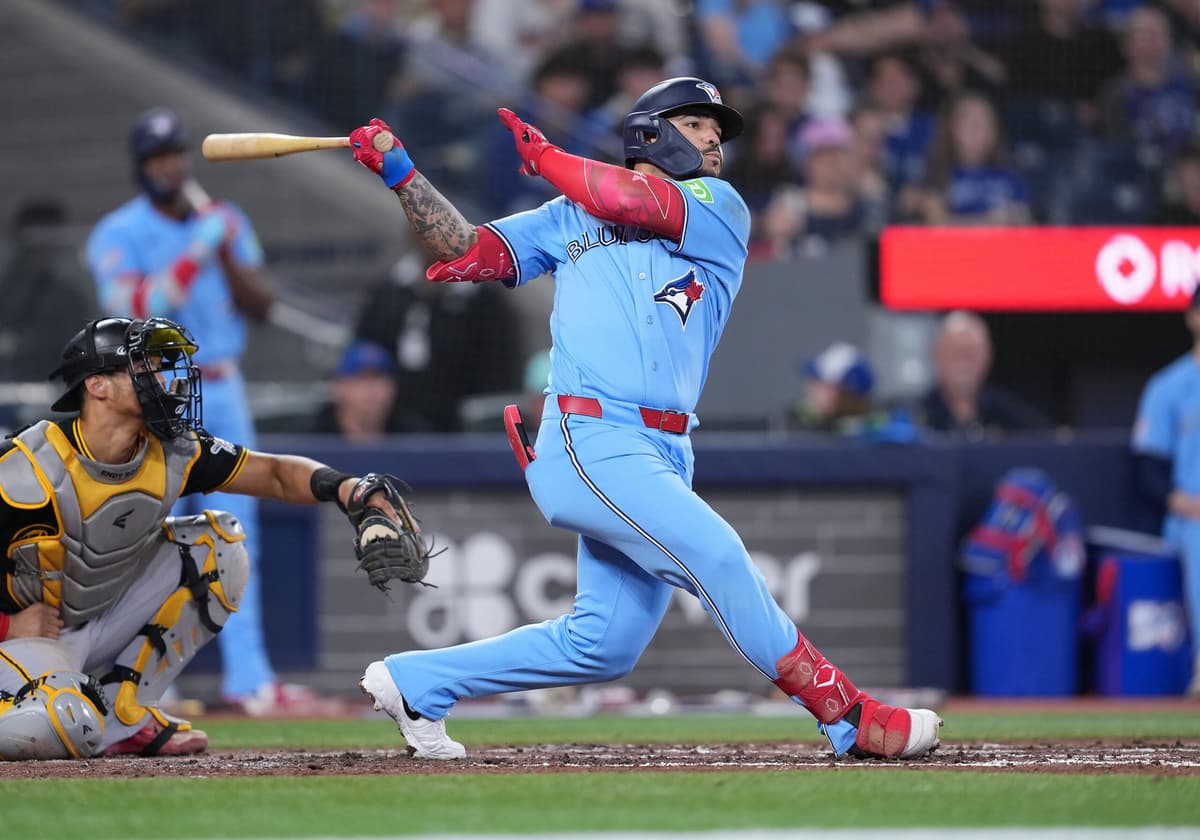
But Piñango’s value runs deeper than that. The underlying metrics are solid. Bat speed is important for power, and he averages 75.3 mph on his swings. Although he’s only hit one home run, he’s due for some more, as Piñango hits the ball hard. This past week, Piñango hit a ball 114.8 mph off the bat, one of the hardest-hit balls this season. That type of power tends to lead to extra-base hits, something the Jays need moving forward.
He doesn’t sell out of power either. There’s some chase in his game (32.1%), but Piñango has a 20% whiff %, above the 75th percentile if he were a qualified hitter. Piñango also passes the eye test in terms of the quality of his at-bats.
Last season, the Blue Jays were as successful as they were because they had long at-bats by fouling off pitches, working the starter’s pitch count and trying to knock him out of the game early, and I’d go as far as to say his plate appearances have been very 2025 Blue Jays-esque.
This was a classic 2025 Blue Jays plate appearance, and it came against the best pitcher in baseball.
It’s also important to remember that a big reason for the Blue Jays’ success last season was adding younger players like Addison Barger, Braydon Fisher, and Mason Fluharty on their roster. Piñango has shown that he can hit big league pitching, at least so far in his short big league career.
Yes, the returning Nathan Lukes is a left-handed batting outfielder, and so is Addison Barger. But at a certain point, there are less-deserving players to be on this roster, even if those hitters bat right handed.
At this point, Piñango should have to play himself off the roster thanks to a strong performance since joining the Blue Jays.