
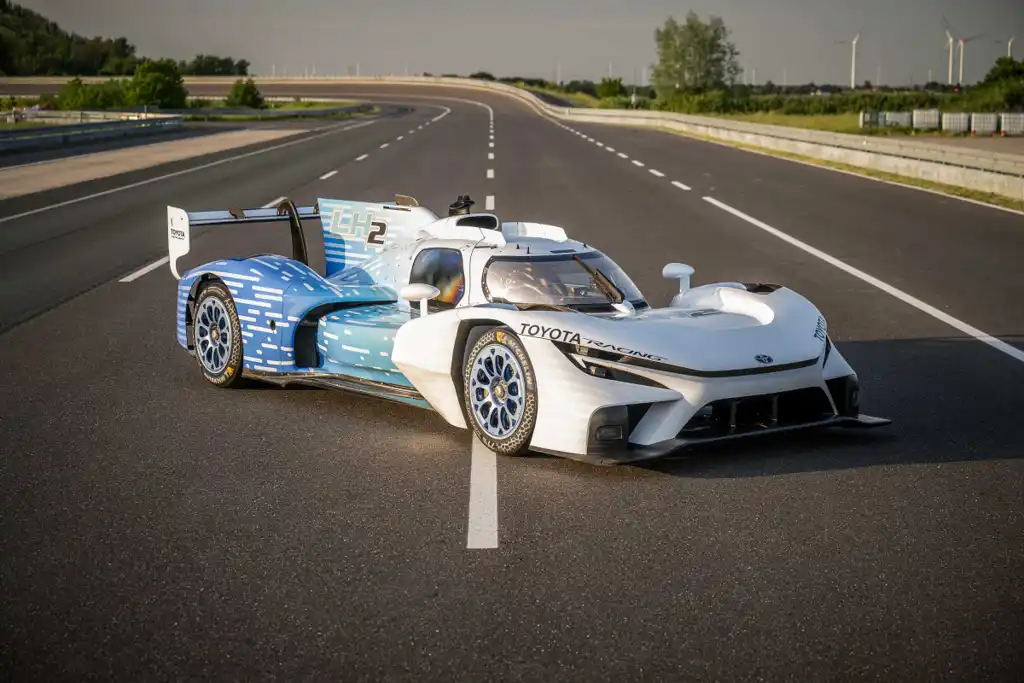
Toyota is to demonstrate their liquid hydrogen-fueled TR LH2 Racing Prototype at Le Mans this year and I have all the details in this week’s Sustainable Motorsport Roundup. I also have details on what it is like to drive the Formula E Gen4 race car, two conferences to attend and more.
Sustainable Motorsport News
Le Mans Demonstration for Liquid Hydrogen-Fuelled TR LH2 Racing Prototype
TOYOTA RACING will conduct the first public demonstration drives of its liquid hydrogen-fuelled TR LH2 Racing Prototype next week at the Circuit de la Sarthe, venue for the 94th edition of the Le Mans 24 Hours.
The TR LH2 Racing Prototype is based on the same chassis as the TR010 HYBRID Hypercar which will compete in the Le Mans 24 Hours on 13-14 June. It is intended to advance the development of hydrogen technology in motorsports.
On Thursday 11 June (12.50pm) and Saturday 13 June (12.45pm), the TR LH2 Racing Prototype will complete demonstration laps of the 13.626km Circuit de la Sarthe, bringing the sound and sensation of a hydrogen combustion engine to fans around the circuit. This activity supports Toyota’s continuous development of hydrogen technology and infrastructure, as well as helping build relationships to expand the possibilities of hydrogen through the challenge of motorsports.
Toyota has taken on the challenge of hydrogen engine development in motorsports, initially through Rookie Racing’s participation in the Japanese Super Taikyu series with the ORC ROOKIE GR Corolla H2 Concept. This vehicle used gaseous hydrogen from 2021, before the introduction of a liquid hydrogen-powered car from 2023.
The potential of hydrogen engines in rallying was initially showcased in 2022 when the GR Yaris H2 completed demonstration runs on Ypres Rally, a round of the FIA World Rally Championship. Further development was highlighted when the GR Yaris Rally2 H2 Concept conducted demonstrations at the 2025 Rally Finland and this year’s Rallye Monte-Carlo.
In 2023, the ORC ROOKIE GR Corolla H2 Concept completed a demonstration lap of the Circuit de la Sarthe, while a hydrogen engine concept car, the GR H2 Racing Concept, was presented to preview a potential future hydrogen category at Le Mans. Since then, development of the technology intensified, reaching a further milestone with the unveiling of the liquid hydrogen-powered GR LH2 Racing Concept last year at Le Mans. A year later, TOYOTA RACING takes the next step in that journey with the first public demonstration of the TR LH2 Racing Prototype.
Prior to its demonstration laps, the TR LH2 Racing Prototype will be displayed for fans in the Hydrogen Village, an exhibition of hydrogen technology which includes information and vehicles illustrating TOYOTA’s commitment to a carbon-neutral society. The Hydrogen Village is officially opened on Wednesday 10 June.
You can find more details of the schedule from the ACO here.
Formula 1 vs Formula E: Two Visions of Motorsport’s Future
The debate around Formula 1 vs Formula E is no longer just about speed, but about what the future of motorsport should look like. As technology, sustainability and entertainment continue to reshape sport, these two series have become symbols of very different philosophies. The Slipstream Effect looks at the two visions of motorsport’s future demonstrated by both Formula E and Formula 1.
Speed vs Sustainability: The Contradictions of Sustainable Motorsport
A Formula 1 car can travel at speeds exceeding 350 km/h, generating forces that push both machine and driver to their limits. It is a sport built on performance, innovation and the relentless pursuit of marginal gains. Yet as industries around the world face growing pressure to reduce their environmental impact, motorsport finds itself at a crossroads. The debate around sustainable motorsport has become one of the defining challenges shaping the future of Formula 1.
The question is no longer whether sustainability matters. It is whether a sport built on speed can truly reconcile itself with a world increasingly focused on environmental responsibility. Amy Laun-Achenbach of The Slipstream Effect explores whether Formula 1 could ever really be sustainable.
Spark the Future Returns for the Fourth Time – International Sustainability Seminar to Be Held as Part of Secto Rally Finland’s Anniversary Year
The international sustainability seminar Spark the Future will be organised for the fourth time in summer 2026 as part of Secto Rally Finland, a round of the FIA World Rally Championship. The event will take place on Friday, 31 July 2026, at Jyväskylä Paviljonki.
The 2026 edition will be held in a special setting as Secto Rally Finland celebrates its 75th anniversary. As one of the world’s most prestigious motorsport events, Secto Rally Finland attracts tens of thousands of visitors to Central Finland every year and generates extensive international media attention.
Full details can be found here.
Two Sustainable Motorsport Events to Attend
FIA Sustainable Innovation Series – Le Mans
Change Accelerated Live: Shanghai, presented by FIA SIS
FIA’s Environmental Accreditation Programme
More than a certification, the FIA’s Environmental Accreditation Programme provides our mobility & motor sport stakeholders with the tools, guidance and support needed to drive meaningful environmental action and advance their sustainability goals. As participation continues to grow, so does our impact, turning ambition into action and delivering measurable progress across our network.
More details can be found here.
Sustainable Motorsport Tech
Sustain Fuels to Power More than Half the Formula Student 2026 Field
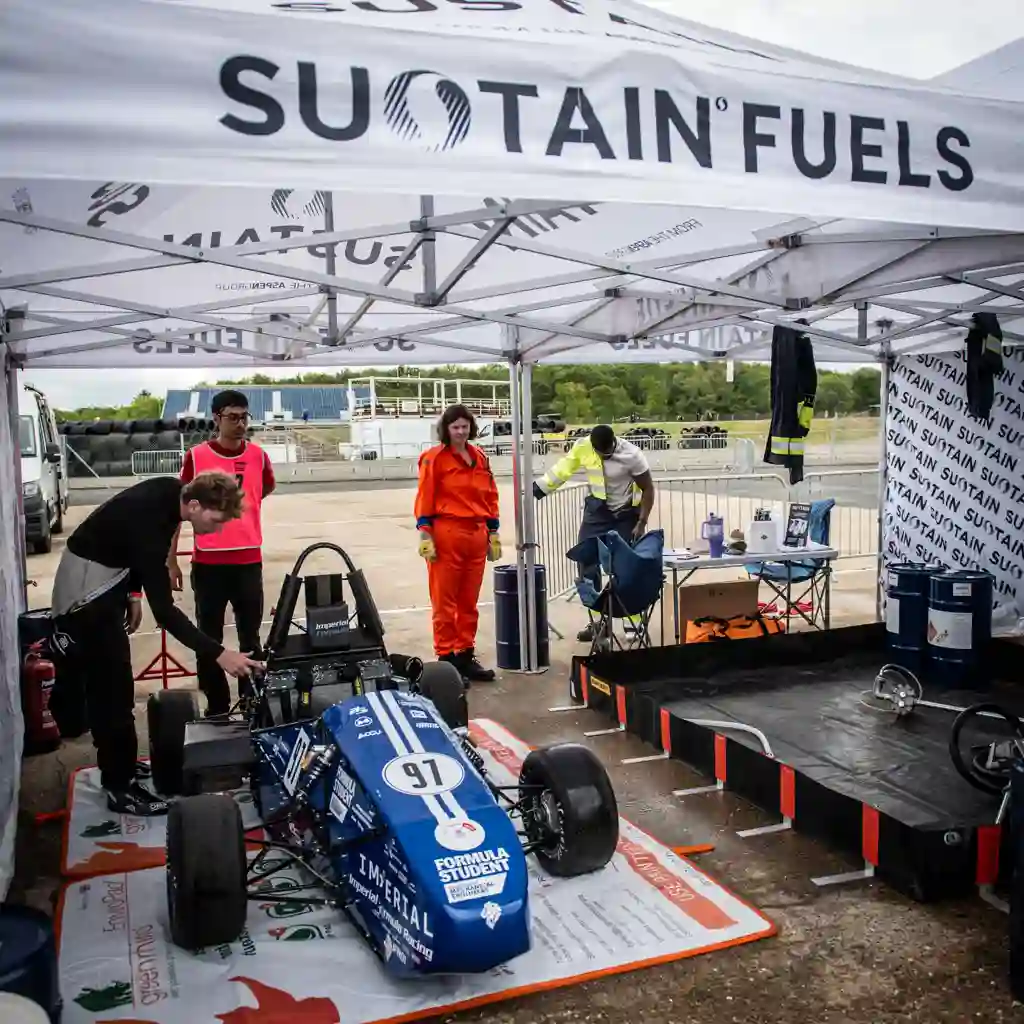
As sustainable fuels move further into the motorsport mainstream, SUSTAIN will continue its partnership with the Institution of Mechanical Engineers (IMechE) for Formula Student 2026, supplying sustainable fuels for all teams competing in an internal combustion engine or hybrid race car.
The finals, bringing together university teams from around the world, will take place in July at Silverstone. Of the 72 teams entered in Formula Student’s Class Teams category this year, 39 will compete in either an internal combustion engine or a hybrid car using SUSTAIN fuel – up from 35 in 2025. The remaining entries will be electric vehicles.
Suresh Nahar, Brand Manager at SUSTAIN, said: “We’re delighted to be returning to Formula Student for 2026 and continuing our partnership with IMechE. With motorsport increasingly embracing sustainable fuel technologies, including Formula 1’s move to advanced sustainable fuels this year, the competition is a valuable showcase for the role they can play alongside electrification. It also gives the next generation of engineers hands-on experience using more environmentally friendly liquid fuels in motorsport.”
Naomi Rolfe, Formula Student Project Manager, IMechE, said: “Working with SUSTAIN gives Formula Student participants the opportunity to engage directly with sustainable fuel technology in a competitive environment. Motorsport has always been a powerful testbed for engineering progress, and this partnership helps students understand how sustainable fuels can support the future of mobility while proving that performance and sustainability can go hand in hand.”
The Formula Student competition challenges engineering students to design, manufacture and run a single-seater race car. Complementing their academic studies with a real-world engineering project, the competition provides opportunities for students to broaden their knowledge, practical skills and teamwork abilities.
The 39 teams running internal combustion engines or hybrid powertrains will be fuelled with SUSTAIN Racing 100E (107 RON), which is 82% ethanol, or SUSTAIN 100 (95 RON), which is 10% ethanol. These fuels are made from 100% sustainable materials and will deliver an 85% reduction in greenhouse gas emissions compared to fossil fuel, when calculated using a full life cycle analysis.
SUSTAIN products use advanced second-generation biofuel manufactured from food and agricultural waste, such as straw, by-products or waste from crops which wouldn’t be used for consumption. This content utilises the carbon that already exists in our atmosphere, which the plants absorb as they grow, recycling it, rather than releasing additional CO2 that is currently locked underground in fossil fuel.
SUSTAIN has delivered strong results at Formula Student in recent years, fuelling all competitors racing with an internal combustion engine. SUSTAIN-fuelled teams from the University of Modena in Italy and Edith Cowan Racing in Australia won in 2023 and 2024, respectively. Edith Cowan Racing returns to this year’s competition following its record-breaking victory in 2024, in a bid to win the trophy again in Formula Student 2026.
It’s Legit Racing and Sustain Join forces for a Sustainable First in the Isle of Man TT
Sustain Fuels is also involved in this year’s Isle of Man TT. Ryan Garside was the first rider to race on a sustainable fuel blend in the Isle of Man TT
It’s Legit Racing will make its Isle of Man TT debut this May, with former British Supersport Cup podium finisher Ryan Garside at the throttle and a pioneering sustainable fuel blend in the tank.
In a historic first for the TT, the team powered its bike with a sustainable race fuel blend. Developed specifically for motorcycles, the 102 RON drop-in fuel SUSTAIN Racing Moto 40 includes less than 0.1% ethanol content. It also contains second-generation biomass such as food and agricultural waste, straw and other non-food by-products. Unlike conventional fossil fuels, where carbon stored underground for millions of years is released as CO2, these feedstocks recycle carbon already in the atmosphere.
F1 Technology in Focus – Biofuel
The new era of F1 for 2026 has seen the in the introduction of what is one critical piece of technology that has been generally overlooked by all the talk and discussion around the hybrid technology changes for the F1 power units. Motorsport Technology looks at the new biofuel used by Formula 1 in 2026.
Series News
WorldSBK Enters Global Top 10 in Sustainable Championships Index
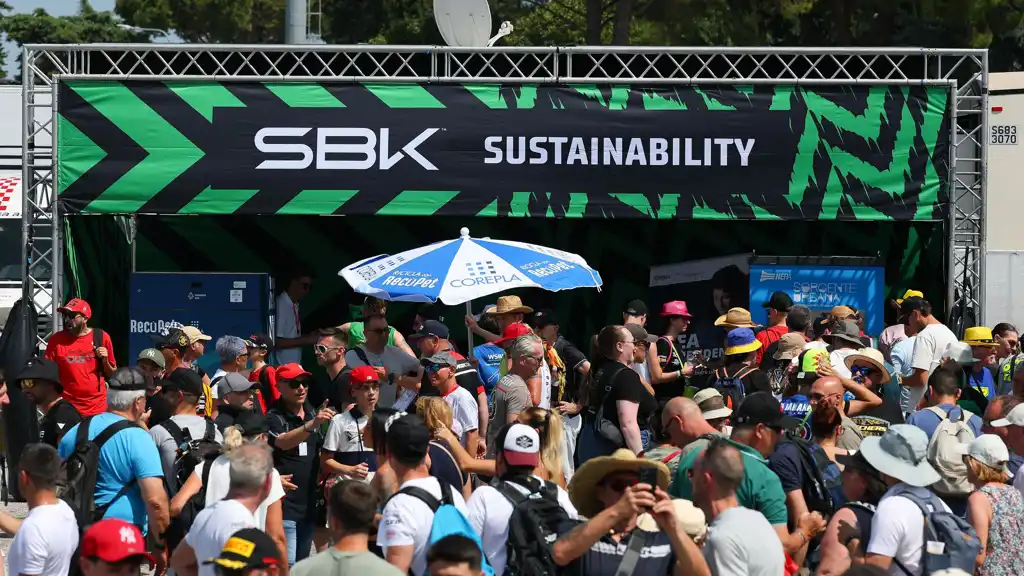
There has been an important milestone for WorldSBK, as it enters the top 10 in the Sustainable Championships Index.
During FIM Sustainability Week, WorldSBK is also celebrating its recent inclusion among the Top 10 most sustainable motorsport championships worldwide in the 2026 Sustainable Championships Index (SChI), marking an important milestone in the Championship’s sustainability development.
Published annually by Enovation Consulting, the index evaluates 89 international two and four-wheel championships across 25 environmental, social and governance (ESG) criteria.
The 2026 edition identified WorldSBK as one of the most improved championships in the rankings, with the Championship rising from 18th place in the previous edition to enter the global Top 10 for the first time.
Full details can be found here.
World Environment Day 2026: How Formula E is Accelerating Progress
Sustainability has been central to Formula E’s mission since the championship was founded. More than a decade later, that commitment remains at the heart of everything we do – from pioneering electric vehicle technology and reducing environmental impact, to empowering communities and inspiring the next generation.
This article on the Formula E website explains how Formula E is accelerating progress in sustainability.
Circuito de Madrid Jarama – RACE To Host Formula E Pre Season Testing For GEN4 Era
The FIA and Formula E have announced that Circuito de Madrid Jarama – RACE will host Formula E pre-season testing from 16 to 20 November 2026, where the new GEN4 race car, the most advanced, powerful and sustainable car in the championship’s history, will make its first appearance on track ahead of the 2026/27 ABB FIA Formula E World Championship season.
Oliver Rowland’s First Impressions on the Nissan Formula E GEN4 Car
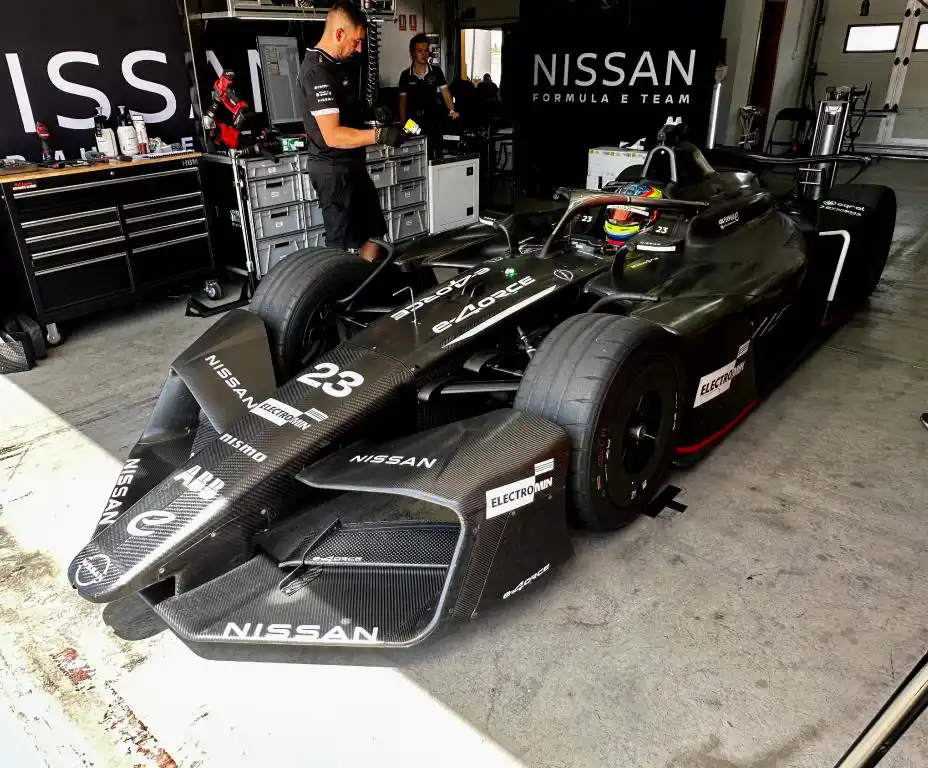
Just seven races remain of the ABB FIA Formula E GEN3 era, with the new and improved GEN4 cars set to be taking center stage later this year. In the build-up to Season 13, Nissan Formula E Team’s Oliver Rowland recently had his first experience of the GEN4 machinery.
The new car will feature major jumps in performance compared to the current GEN3. Race power increases from 300kW to 450kW, while drivers will receive a huge 600kW while in Attack Mode, compared to the current 350kW. Active All-Wheel Drive gives the car more grip, allowing for impressive cornering speeds.
“The power the GEN4 car has is quite eye-opening,” the Season 11 World Champion said. “A lot of that extra power comes from the front, which is pretty unique and something we need to get used to as drivers. The performance of the car is a big step up from GEN3.”
“Honestly, it’s really impressive. The high downforce offers lots of grip compared to what we’re used to and there’s so many new technical options, with the differential, four-wheel drive and more power on the front axle. We’ve got almost double the power, so the acceleration is incredible and everything happens a lot faster. The chassis has also been upgraded, which is a huge positive for us as drivers, because the GEN3 car is quite uncomfortable.”
McLaren Fined for Formula E Cost Cap Breach
McLaren has been fined €400,000 for breaching Formula E cost cap regulations, the FIA announced last week. As part of the completion of a review of the documentation provided by the team by the governing body’s Cost Cap Administration – ahead of the completion of the review of the other teams because of McLaren’s exit from the all-electric series last season – McLaren voluntarily notified the Cost Cap Administration of a 4.54% overspend, amounting to £555,628 (the cost cap being £12,246,766).
Phased Changes to F1 Power Units Agreed for 2027 and ’28
The FIA, Formula One Management (FOM), teams and power unit manufacturers have agreed to phased changes to the Formula 1 power units across the 2027 and ’28 seasons that will eventually comprise a 60/40 split between ICE and battery power.
“The proposed changes are intended to address issues related to energy management and fuel energy flow characteristics and make qualifying more flat-out while not impacting the positive and exciting racing generated by the new regulations,” an FIA statement read. “Supporting measures relating to power unit supply conditions, race operations and the relevant financial regulations are also included.”
Getting to the Track Sustainably
Mercedes F1’s EV Trucks For Sustainable Logistics in Europe
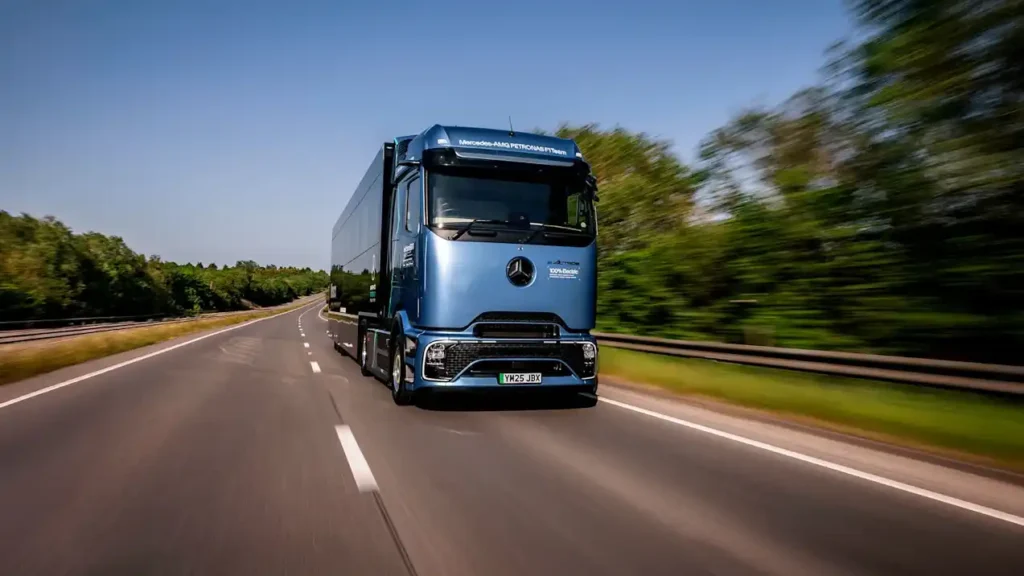
The Mercedes-AMG PETRONAS F1 Team is deploying the all-electric Mercedes-Benz Trucks eActros 600 to the nine European races in this year’s Formula 1 Championship. The eActros 600 is set to join the fleet of HVO100-powered race and marketing trucks, transporting race trailers.
This deployment builds on successful journeys during the 2025 season, including the initial pilot to the British Grand Prix, and an industry first when their W16 race cars were transported from Brackley to Zandvoort for the Dutch Grand Prix on electric power.
Alice Ashpitel, Head of Sustainability, Mercedes-AMG PETRONAS F1 Team: “We are realising our ambition of deploying the Mercedes-Benz Trucks eActros 600 across all nine European races, demonstrating our commitment to accelerating decarbonisation in some of the hardest‑to‑abate areas of our operations. As a team, we are committed to engineering change on and off the track, and it’s exciting to see how quickly we have moved from pilot journeys to a full rollout.”