
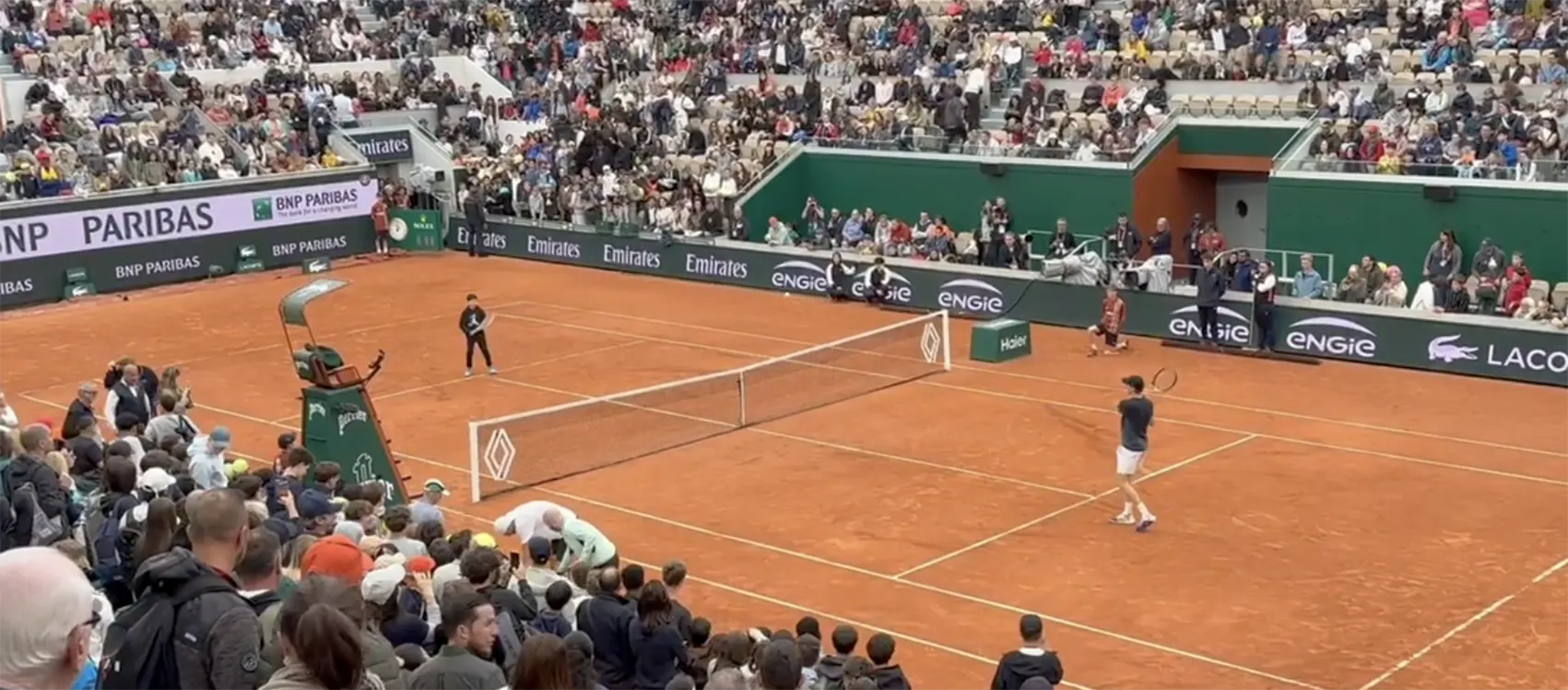
The French Open is, for many tennis fans, the tournament they want to attend at least once in their life. There is nowhere quite like Roland Garros in May, in so many ways. It is the only Grand Slam on clay, and after watching on screens for years, seeing it in person tends to land differently than people expect. The scale is more intimate than Flushing Meadows or Melbourne Park. The atmosphere is more charged than Wimbledon. And the city surrounding it is Paris.
Tennisnerd visited the tournament in 2025 and really enjoyed the atmosphere. Here are some of our best Roland Garros travel tips, photos from the event and basically everything you need to know to plan the trip properly.
The Basics
2026 dates: Qualifying runs May 18–23. The main draw runs Sunday May 24 to Sunday June 7, with the women’s final on June 6 and the men’s final closing the tournament on June 7. The tournament is always run around these dates, from mid-May to beginning of June.
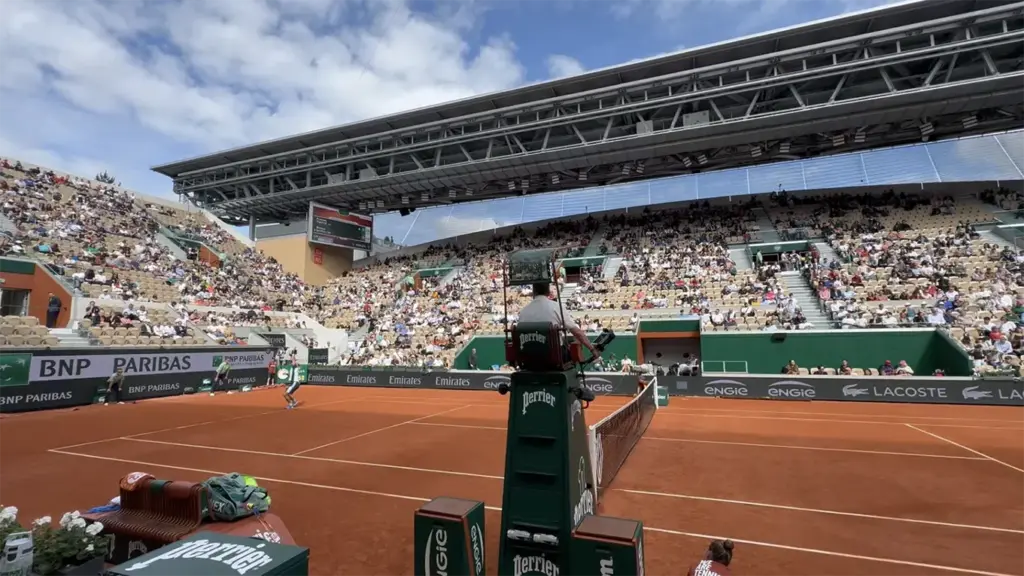
The venue: Stade Roland Garros is located quite centrally, in the 16th arrondissement, at the edge of the Bois de Boulogne near Porte d’Auteuil. The complex has 20 courts covering 21 acres, with three main show courts – Philippe-Chatrier (the main court, ~15,000 seats), Suzanne-Lenglen (~10,000 seats, with a retractable roof), and Simonne-Mathieu (~5,000 seats).
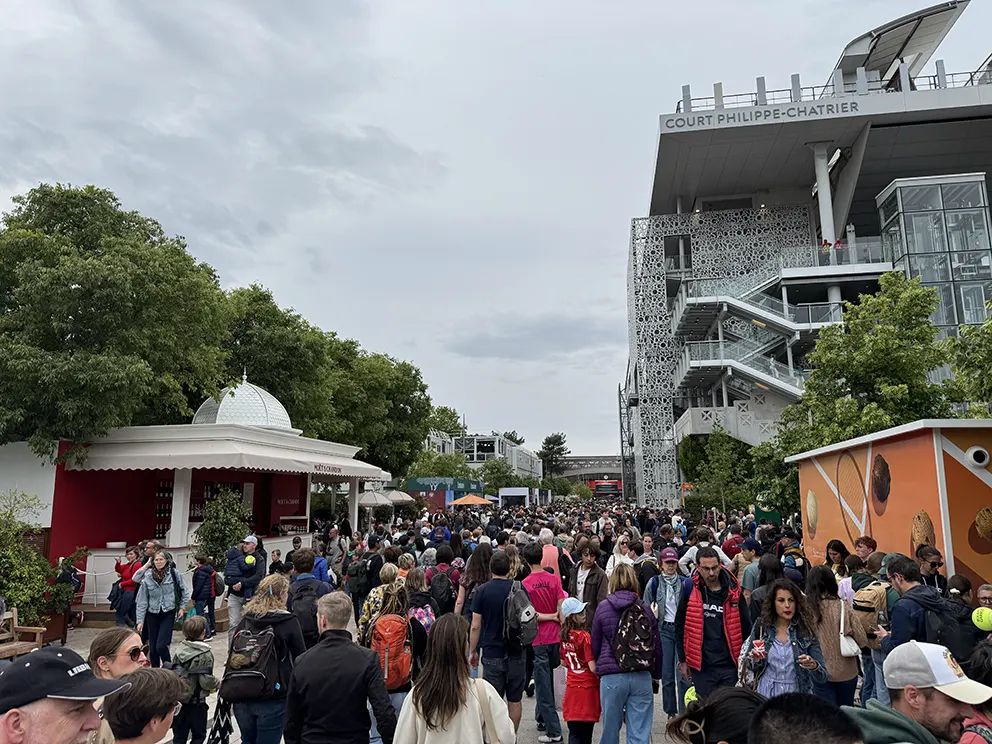
By Grand Slam standards, it’s compact and the smallest among the Grand Slam venues. I would not say it’s extremely crowded though, it depends a bit of timing of the day and tournament, but overall it’s a relaxing and easy experience for such a big event.
Getting Tickets
Tickets for Roland Garros are among the most in-demand in all of sport and the process can be frustrating if you don’t know how it works. The French Tennis Federation (FFT) runs a public ballot which opens each December. If you were selected in the ballot, you had a priority window in February to purchase. If not, you needed to plan for the general sale.
General sale: From March 31, tickets for the opening week outer courts went on general sale to everyone. These are the Grounds Pass tickets – no ballot required, just first come, first served from that date. They sell quickly.
What are your options?
- Philippe-Chatrier tickets (Day or Night session): Reserved seating on the main court. Day sessions run from 11am with up to three matches; Night sessions start at 8:15pm with one premium match under lights. These require either the ballot or the secondary market for the most popular sessions. Category Gold (rows 1–9, lower level) is the closest standard seating; Category 1 (rows 10–21) offers very good value.
- Suzanne-Lenglen tickets: Reserved seating on the second court, with its own separate ticket. Excellent atmosphere and you are slightly closer to the action than on Chatrier.
- Simonne-Mathieu tickets: The lower sections are ticketed; the upper level is accessible to Grounds Pass holders with general admission.
- Grounds Pass: Access to all outer courts (Courts 2–14), the upper level of Simonne-Mathieu, practice courts, fan zones and the general grounds. No access to Chatrier or Lenglen. Official prices start from around €30 for early-round weekday passes. The first seven days of passes for 2026 sold out quickly after the general sale opened.
One important rule: there is no re-entry at Roland Garros. Once you leave the grounds, your ticket does not allow re-entry.
Buying tickets: The only safe source is the official Roland Garros ticketing portal at tickets.rolandgarros.com. All tickets are digital and must be held in the official Roland-Garros app on your phone – download it before you arrive. Verified secondary market options exist (the official resale platform through the FFT is the safest route) but prices go up quite a lot for popular sessions. Watch out for fraudulent sites using the tournament’s branding, the FFT specifically warns about this usually.
Which Days to Go
This is the most important decision. Many fans are right away looking at the last few days when the “big” matches are happening. This is not necessarily the best time to visit though. Here is how to think about it:
Qualifying (May 18–23): The big crowds won’t come to the qualifying rounds, even though it’s more popular nowadays together with “Opening Week” type of events. This means you get to watch some of the best players in the world play on the same courts at Roland Garros with not much people. Tickets are very cheap or sometimes free. I would even go so far to say that qualifying rounds are severely underrated. It’s usually exciting as the stakes are very high for these players. The difference of qualifying and not, are big, not at least in financial terms.
First week, weekdays (May 25–29): The best value in professional tennis, according to many visitors. Dozens of matches run simultaneously across all courts, top players appear on outer courts in the early rounds, and a Grounds Pass gets you close to the action. Fields are full, the weather in late May is generally warm and bright, and you can genuinely spend a full day moving between courts watching different matches without a bad moment. Highly recommended.
First week, weekends: Busier and more expensive, but the atmosphere builds. Worth it if you want the crowd energy.
Second week: The draw narrows and the stakes rise. Most matches are on show courts with reserved tickets. The atmosphere on Chatrier and Lenglen in the second week (especially for quarter-finals and semi-finals) is among the best in tennis. Expect higher prices and harder ticket availability. Also, not as many matches to go around to.
Night sessions: Introduced in 2021, the night session on Philippe-Chatrier features a single premium match starting after 8:15pm. Tickets are sold separately. The atmosphere under the lights is an intense experience.
Special note for 2026: On Thursday May 21 (the last day of qualifying) Roland Garros is hosting “Gaël & Friends”, a special evening event conceived by Gaël Monfils blending sport and pop culture. It is described by the official tournament site as a must-see occasion. Note though, Opening Week daytime tickets do not grant access to this event.
Getting There
The metro is the standard and best way to reach the grounds. Line 9 and Line 10 both serve the area; the most convenient stop is Michel-Ange Molitor (about a 9-minute walk to the main entrance) or Porte d’Auteuil (Line 10, slightly closer to one side of the complex). The metro runs frequently and avoids the traffic that clogs the roads around the stadium on match days. Standard Paris Metro service runs daily from around 5:30 AM until about 1:15 AM (and until 2:15 AM on Fridays and Saturdays). Note that some stations close already at 10pm.
Biking into the venue is popular and genuinely recommended if you’re staying anywhere reasonably close.
Taxis drop off at designated areas, not directly outside the stadium. We used various taxi companies and it worked good, this area was generally less crowded than we imagined. If you are driving in, be aware that dedicated drop-off zones are on Route de Boulogne à Passy – do not attempt to be dropped at the stadium perimeter roads. It’s just a short walk into the courts from the drop-off zones.
There are three mandatory security checkpoints (PPO — Périphérie du Public Officiel) to enter the secure zone around the grounds. You must pass through one before reaching the actual entrance gates. PPO Boulogne, PPO Auteuil, and PPO Molitor serve different parts of the complex. PPO Molitor is recommended for most visitors arriving by metro from central Paris.
What to Bring (and What Not to)
Roland Garros is not as restrictive as some Grand Slams. Here is what the current rules allow:
You can bring in:
- A small bag or rucksack (standard security check applies)
- Your own food and non-alcoholic drinks – many visitors do this and it is actively recommended to avoid overpaying inside
- Sealed water bottles (not rigid metal or hard plastic bottles over 50cl though).
- A basic camera without a professional lens – camera lenses over 20cm are not permitted and this is checked
You cannot bring in:
- Professional cameras, tripods, monopods or selfie sticks
- Alcoholic beverages
- Umbrellas over 50cm in length (bring a small compact one)
- Audio-visual recording equipment
Mobile phones are obviously fine. All tickets must be in the Roland-Garros app – no printed tickets are accepted.
Food, Drink and the Grounds Experience at Roland Garros
We strongly recommend walking around the grounds and feel the atmosphere!
The food situation at Roland Garros is decent without being exceptional. Options range from traditional French café fare to casual sit-down restaurants and food stalls. Prices are event-level (expect to pay Paris restaurant prices with a tournament premium). The Fan Village near the entrance has the highest concentration of food stalls and entertainment options. When we visited, Mastercard was a sponsor, and if you had one of their credit/debit cards you could avoid some long ques.
A popular option is to bring your own lunch. A baguette, some cheese, a pastry, and water from a nearby boulangerie costs a few euros and outperforms anything you’ll find inside. There is no shortage of good bakeries within five minutes of the grounds.
For something more occasion-like, the official hospitality options include L’Orangerie (5-star, seated gourmet lunch or dinner), Le Pavillon (4-star, walking buffet in the first week, full meal in the second, near the players’ area), and La Mezzanine (4-star, gastronomic dining). These are pre-booked through Roland Garros Travel and are quite expensive.
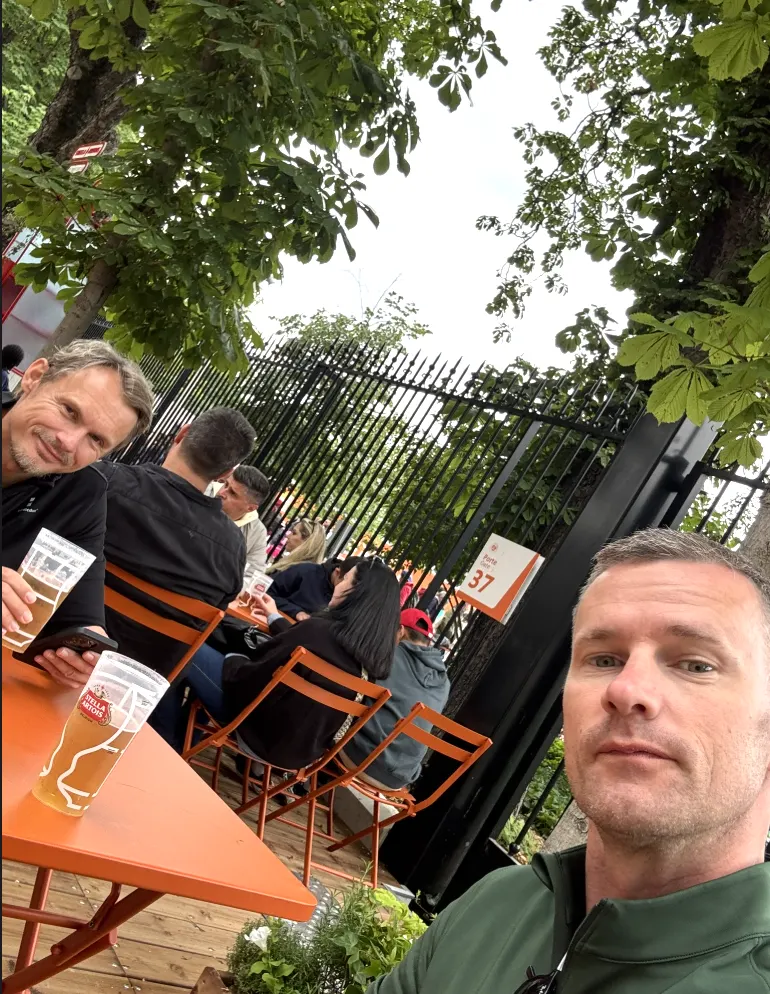
For those of you that just wants to have a beer or a coffee around the grounds, there are a few good options and at most times these areas are not overcrowded.
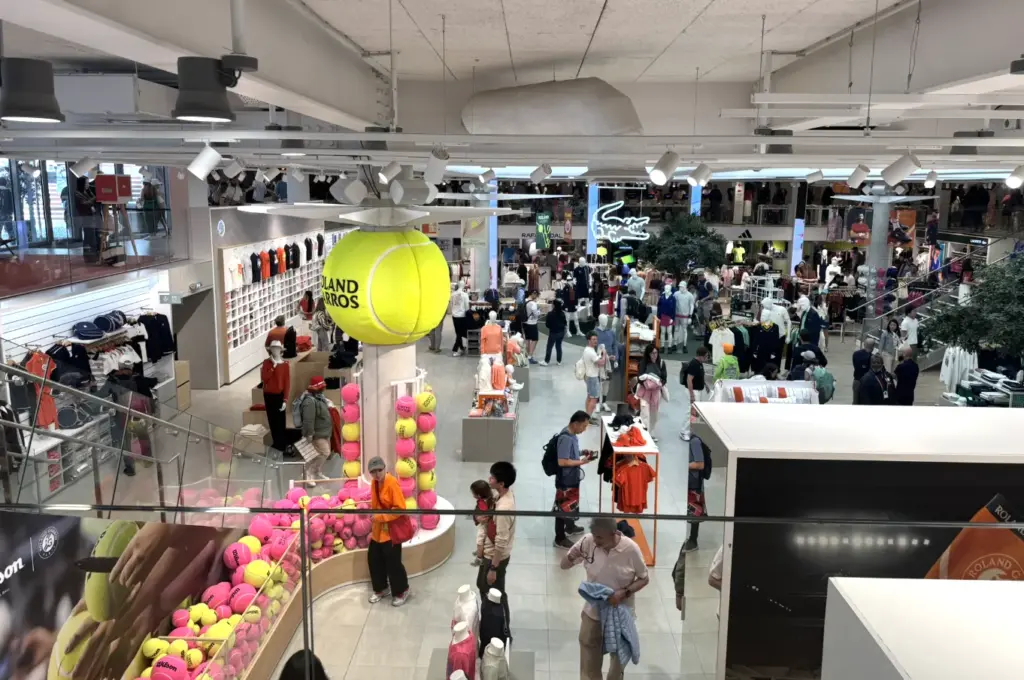
Merchandise: Roland Garros merchandise is genuinely good, the branded apparel and accessories are among the best of any Grand Slam. The main shop near the grounds is big but it gets busy, especially during the second week.
Watching Tennis on the Grounds
With a Grounds Pass, the strategy matters. A few things that experienced Roland Garros visitors know:
Arrive early for practice courts: The practice facilities are open from mid-morning, and top players often train in the hours before their scheduled matches. Getting to the practice area early (before 10am) can get you 10 metres from a top-10 player with no ticket upgrade required. We recommend this!
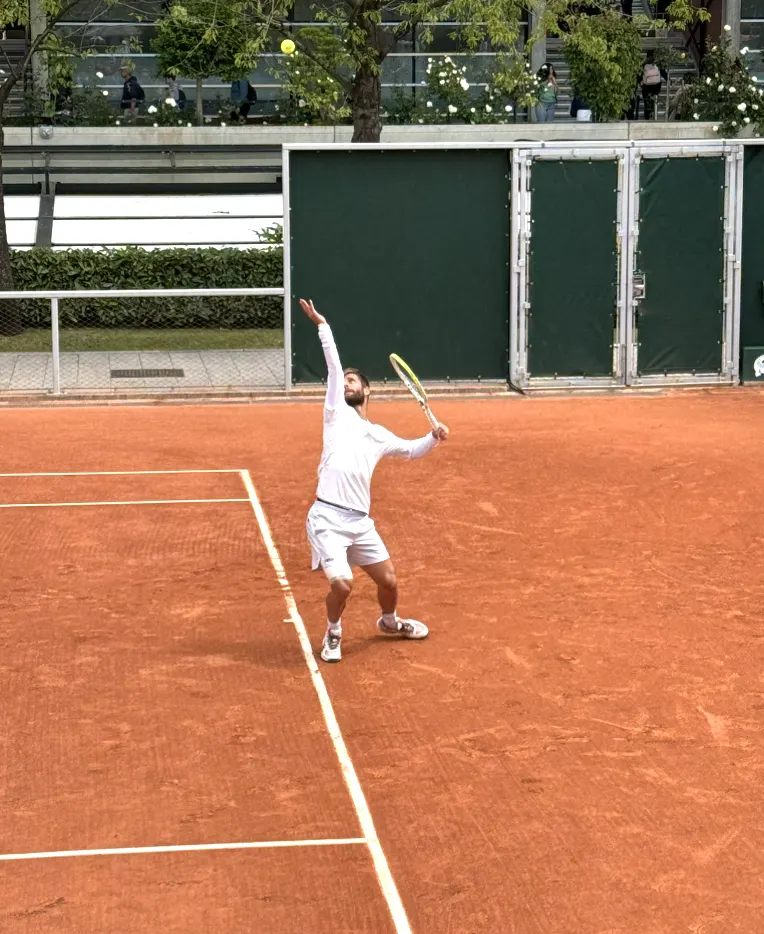
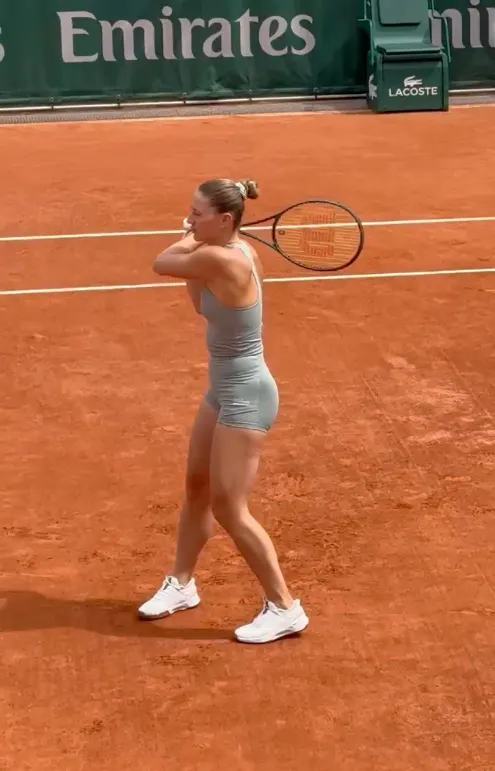
Walk the outer courts in the first week: Courts 6, 7, 9, 12, 13, and 14 are where you find standing-close tennis. In the first round, ranked professionals play here with small audiences. This is genuinely the best tennis-to-cost ratio in professional sport.
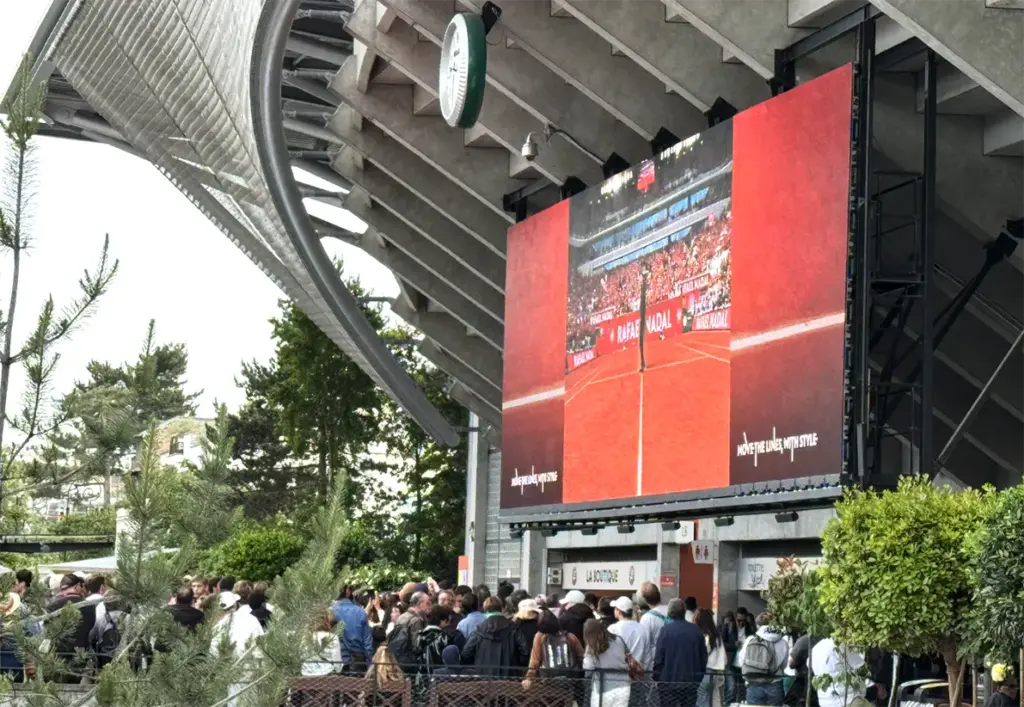
The main square: If a big match is happening on Chatrier that you don’t have a ticket for, the main square has large screens where fans gather to watch together.
The atmosphere on Chatrier: The crowd at Roland Garros skews French and knowledgeable. They appreciate clay-court tennis, they react to spin and footwork and tactical shifts, and they are loud when they want to be. The French crowd will back a French player to exhaustion, and will adopt any player who plays with style. It is one of the more emotionally engaged crowds in tennis.
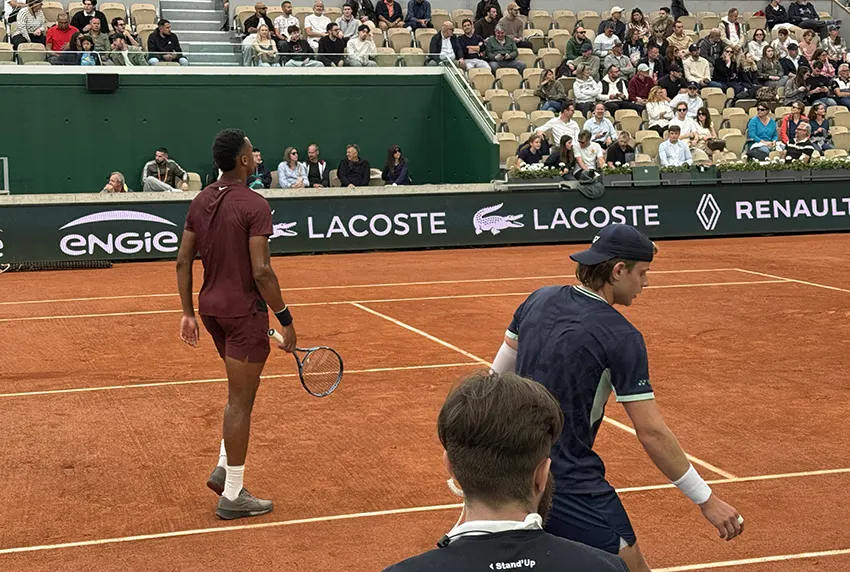
We we lucky enough to watch home player Mpetchi Perricard against Zizou Bergs in a good match and the crowd went wild when he turned around a 0-5 result in the tie-break!
Staying in Paris
The 16th arrondissement is pleasant and quiet but expensive and slightly removed from the city’s more vibrant areas. For most visitors, it is better to stay closer to central Paris and commute in by metro or taxi.
We stayed in the 15th arrondissement, near the Seine, and found it very convenient to go by taxi to the stadiums. A good option, unless you prefer the very central areas. It was not crowded, decent restaurants and not too “touristy”.
Other areas to stay for the French Open:
- Saint-Germain-des-Prés / 6th arrondissement: Excellent central location, close to the Luxembourg Gardens, good metro connections to Lines 9 and 10. The most pleasant base for combining tennis with classic Paris tourism.
- Marais / 4th arrondissement: Lively, well-connected, good restaurants, easy metro access. A favourite for younger visitors.
- 16th arrondissement: Walk to the grounds, but quieter and less central. Useful if your trip is entirely focused on tennis.
- 17th / Batignolles area: Less visited but convenient, good local restaurants and often more affordable than central options.
Paris Beyond the Tennis
If you are spending several days in Paris around the tournament, the French Open experience works best when it is balanced with the city rather than treated as the only destination.
The Bois de Boulogne is directly adjacent to Roland Garros and is worth a long morning walk before the courts open. The famous Musée Marmottan Monet is about 15 minutes from the tournament venue. The Palais de Chaillot across the river offers one of the best views of the Eiffel Tower in Paris.
For food: the neighbourhood around Rue du Commerce (15th arrondissement) and the streets around Place de la Sorbonne offer excellent everyday French food at reasonable prices compared to the more tourist-saturated areas. The Marché d’Aligre (12th arrondissement) on weekend mornings is one of the best markets in Paris if you want to assemble your own picnic lunch for a day at the courts.
Otherwise we recommend long walks in the various parts of the city and just try one of the many corner cafees!
A Few Final Tips
- Download the Roland Garros app before you leave home: All tickets live in it, the order of play updates live, and court assignments are published the evening before each day. It is genuinely useful.
- Check the order of play the night before: Published on the official site and app each evening after 6pm. This is how you know which matches are on which courts and can plan your day accordingly.
- Weather: Paris in late May and early June is generally warm but variable. Carry a light rain jacket – one unexpected shower can delay matches significantly, and waiting under the trees with no preparation is uncomfortable. We packed way too many shorts and not enough sweaters or light jackets!
- Clay court footwear: If you’re playing at Roland Garros or nearby, clay-specific shoes are essential. For watching, comfortable walking shoes are the priority – you will cover a lot of ground across a full day.
- Fraud warning: The FFT actively warns that fraudulent ticketing sites using Roland Garros branding are widespread. Only purchase through tickets.rolandgarros.com or the official resale platform. If it seems too easy or too cheap, it probably is.
More reading:
Did you visit Roland Garros? Let us know your experience in the comments below.