

On May 6, Canadian Cycling Magazine web editor Matt Hansen broke the news that Cycling Canada would not be sending a women’s team pursuit squad to this year’s world championships in Shanghai, China. With that information was an open letter by the Canadian women’s track endurance team to Cycling Canada. A letter to the athletes from the federation followed. It was also shared with Canadian Cycling Magazine. On social media, current and past endurance track athletes voiced their frustration with Cycling Canada’s decision.
Early this week, Cycling Canada offered to take questions on its decision. What follows is my conversation with the organization’s CEO, Mathieu Boucher. The topics we covered were the communication of the decision, the athletes’ trust in the organization and Cycling Canada’s plan for the women’s team pursuit program. It has been edited for clarity.
Matthew Pioro: I want to get some background first, just for clarity. In your letter to athletes that followed their letter, you say that “after conducting an in-depth performance analysis and forecasting, Cycling Canada remains of the view that it was the right strategic decision for the long-term viability of the women’s team pursuit program and Cycling Canada’s performance objectives.” The “decision” is not sending athletes to worlds this year. When was this in-depth performance analysis performed?
Mathieu Boucher: The one that led to the final decision was after the last two World Cups. But this is an ongoing process. So there was an analysis done, following the world championship last year. That was also part of how we built our plan for the following year, and also how we presented our plan for our funding application to Own the Podium. Obviously, following the first races of the season, there was another assessment that was conducted for, again, for both disciplines.
What do you mean by both disciplines?
Well, I mean, the men and the women, but there’s also the same kind of gap analysis happening with track sprint. When we come back from projects like this, we have data scientists that work with us. We look at the competition; we look at our results; we look at how our athletes are performing and try to mitigate and identify gaps. That’s the same process that we went through with the track endurance program.
OK. So it’s a process, not a one-time analysis that made you come to this decision. Is that fair?
Absolutely. I think there is the identification of the competition and where we sit from a competitiveness standpoint. What is the gap that we need to fill to be competitive? So there’s the competition as a team. And then there’s also individual performance. What is the gap that needs to be addressed for us to be competitive, right?
Was there then a moment, an ah-ha moment, where you said, “Oh, this is the decision we have to make now. The numbers are saying this is the right decision.”
Just to be clear, I’m the CEO. It’s not what I’m doing on a day-to-day basis. We have coaches and we have data scientists that are looking into this. But the reality is that the situation we are in right now with less funding with the track endurance program, it’s because we haven’t performed and we haven’t been able to objectively demonstrate a credible path to show medal potential to our funding partners, right?
That work is something that we do with every program. We ask who we have in the pipeline? Who do we have that is tracking toward medal performance?
This is part of high performance. When the team looked at the gap to be competitive with the top four squads, the top six, and the pool of athletes that we have, it was determined that with the current team composition, the gap is too big to fill. Strategically, we’ve made the decision based on this evidence that we need to go back and work on the development part and make sure we increase the pool of athletes who we have available. Then we work toward the future of the program.
If this data collection is ongoing or this assessment is ongoing, why is the news coming out now? Like I’m assuming this isn’t a surprise to you or the people working at Cycling Canada of this gap?
There are two reasons as to why this has been communicated to the athletes now. This has been communicated to the athletes because we, when the decision was made, we didn’t want the athletes to wait until we announced the team for worlds to say, hey, by the way, we’re not entering a team for the world championships. So there was an element there of trying to be proactive and transparent about this assessment. We’ve made a determination that, you know, that as it is, we’re not competitive. We want to go back and shift our focus to development.
So that’s one part. And I heard a few times on social media and some of the feedback around the lack of clarity about the objectives for the team. From a communication standpoint, it certainly something that I’m taking very seriously. It’s something that needs to be addressed. I mean, my expectation as a CEO is that each program or competition project should have clear performance expectations. Then coaches need to communicate these expectations to the athletes.
We got that feedback and it’s certainly something that we need to take as a learning and say, OK, what do we need to put in our process if athletes feel that they don’t know why we’re doing this or they don’t know what’s the objective of the program? There’s a communication issue there. I’ll take that as a learning and something that we absolutely need to address.
Where does the data come from for this analysis?
We have a group of data scientists that work with the team and provide some performance forecasting and provide some analysis of races.
Is it race data? Is it training data? I’m just trying to get a picture. Do athletes upload their power numbers somewhere?
I think it’s not necessary for me to get into the details. This is more a discussion for our team. But we gather data in training camps and in competition. This is also how we work to help the team to perform better because we understand what other teams are doing, what kind of power they need to generate to go the speeds that they’re going to produce certain times. Then there’s also forecasting about what we expect to be the times at the world championships and the Olympic Games, trying to see and set some performance benchmarks, right? But I’m the expert in that area.
We’re fewer than 800 days until the Olympics. It’s a little more than two years. Cycling Canada’s statement is “it’s unlikely that the team’s improvement will be sufficient to qualify for and be competitive at the 2028 Olympic Games.” Is this late to be finding this out?
Yes and no.
I would say that we had some indicators following the world championships last year that the trend was not really positive. Now at the same time, you probably know that last year there was one World Cup and one world championship. So not a ton of events. Again, sometimes it’s hard to make these decisions, and it’s just easier to try to postpone these decisions or to postpone these messages. But we felt now that we had enough evidence that we needed to make that strategic shift. We needed to really take ownership of the future of the program. We’re also fully aware that we have some really good talent in the pipeline.
Then we want to be sure that we can refocus, with the support of our cycling centre and the community. Obviously, it’s not just about producing Olympians. But there’s really good talent. We need to be sure that we’re working with a larger group of athletes to increase that talent and making sure that we can quickly identify the talent that we need to provide the evidence that we can be competitive. This program has been, as you probably know, one of our most competitive programs, the women’s team pursuit have medalled at the Olympic Games. We want to go there and we can go there.
So why are things at the point where it is unlikely that the team’s improvement will be sufficient for the Games? How did it come to this point?
I think certainly what you’ve been seeing and hearing about the sport system, about the funding challenges and the increased costs to run high-performance programming. We’ve been neglecting development and not spending enough time developing athletes and working with a larger pool of athletes, right? So we are in a situation where the pool of athletes that is committed to the track program is very narrow. And that’s not healthy in any system.
And that’s certainly having some consequences today. What we’re trying to avoid and trying to make sure that we’re addressing this situation with the limited resources that we have right now, address this situation right away.
It’s a matter of resources then, but who is responsible? That is the question I’m after here. Who is ultimately responsible for the situation that the athletes find themselves in?
We have the responsibility to provide a high-performance program, which again, is based on the limited resources or a reduced level of funding we receive. It’s shrunk over the past few years, which brings us to the situation that we are in, where we need to shift our focus to go back to the drawing board and rebuild the foundation.
Why are the resources shrinking?
The resources are shrinking because we can’t demonstrate that we have a medal-potential team.
Is there like a feedback loop here?
Yes. I mean, every year we do an assessment. We have a funding partner, Own the Podium. We present our plan for the year. We present the athletes who we have in the system. With the track endurance, it’s been difficult for us to be able to show a clear pathway to a medal-potential performance with the current composition of the team. This has been showing over the past few years with a slight reduction of funding year after year.
There’s more behind that because, as you probably know, in the sports system, there are more sports that are now Olympic sports. More sports are trying to get the same money. We’re hopeful with the announcement from the federal government, two weeks ago, that there will be a positive impact that could potentially transform the sport system. We’re quite optimistic that the team around Playground to Podium can actually be a lot more than a Band-Aid and can really be transformational for sport. But we find ourselves in this situation because we’ve really focused on our elite team. We haven’t spent enough time and haven’t had the resources to properly support development and properly identify athletes who need to come in and support that current team.
How many athletes are affected by this decision?
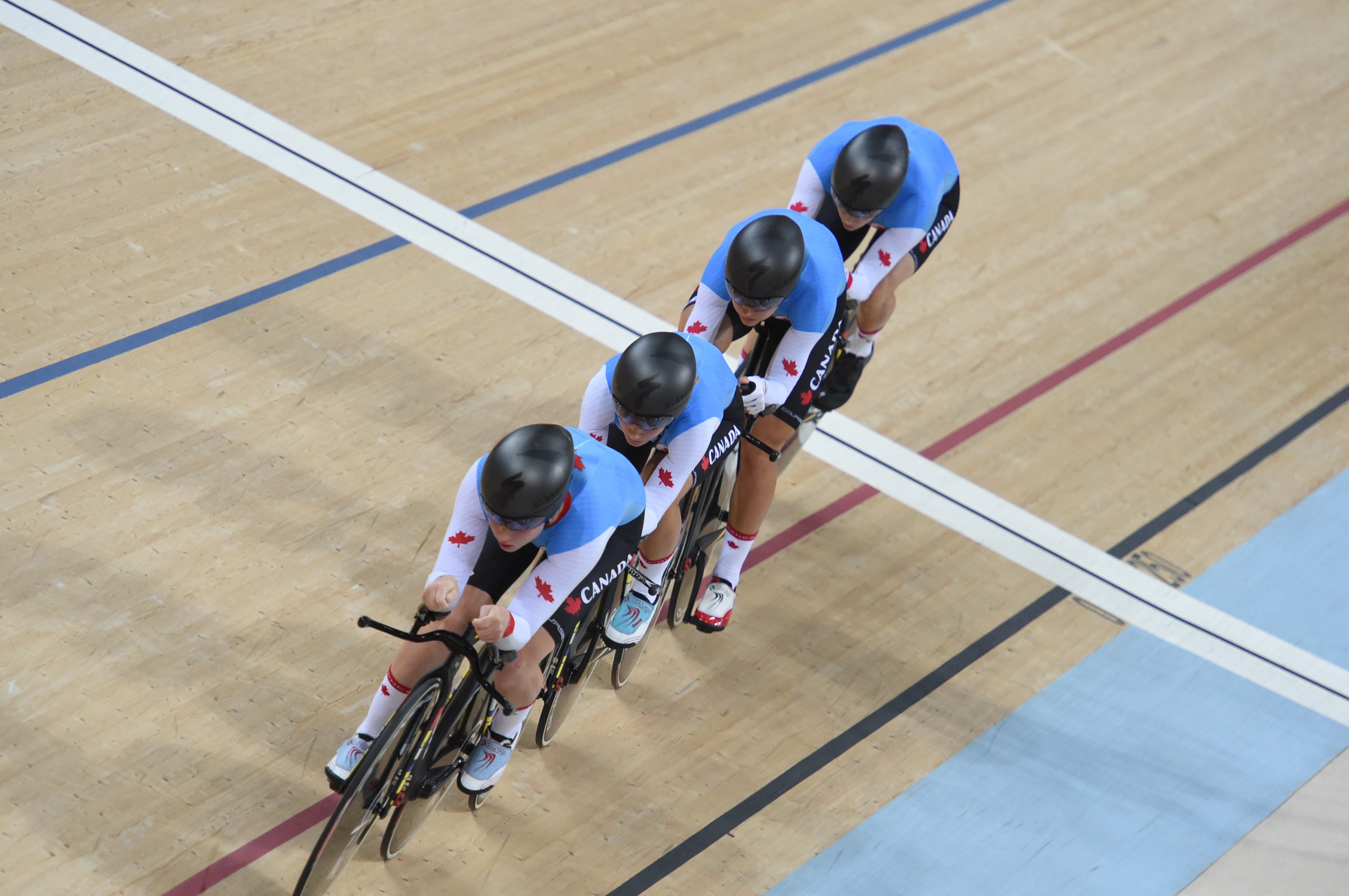
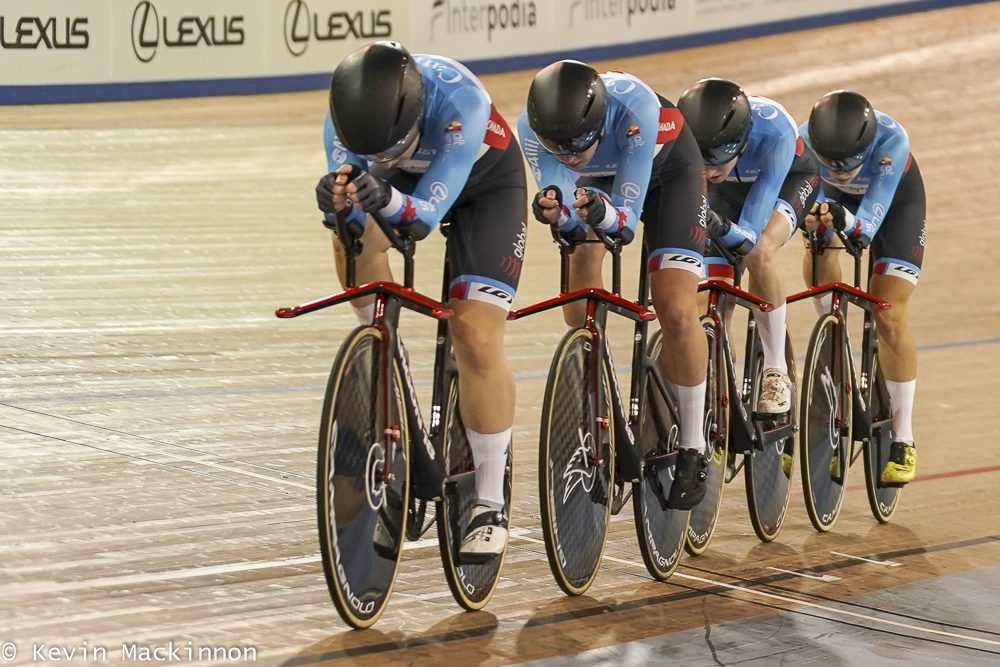
If we’re talking about the women’s team pursuit team: four.
Four total? That’s the depth of the team pursuit squad that you have available right now is four athletes?
That’s more or less the elite team that is travelling, right? With the shift of focus that we’re having, we’re going to still have athletes at the junior track worlds coming up and that we’re going to be supporting. We’re going to go to Apeldoorn, which is a kind of next gen track event, which is mainly juniors. We’re going to still be participating at the Pan Am track championship in February next year. As you probably know, we’re hosting in Milton the Track World Cup next year.
All of these will be opportunities for us. The intent is to make sure that we can select athletes from a bigger pool to participate at these events and fast-track their development so we can be competitive as soon as possible.
How aware were the current athletes of this ongoing assessment? I thought it was one moment of assessment, but it seems to be an ongoing thing. How aware of this process were they, and that it seemed like things hung in the balance? How aware of this deliberation process were they?
There are two things there. We always collect data, especially with track, which is a time-based sport. There’s always data being collected to help the team to do analysis and then review performance. The assessment itself, the latest, was done, as I said, following the last Track World Cup. Again, it’s not unusual that you do an assessment of performance. This is good practice.
Now, this one led to a conclusion, to a very specific decision to not enter a team in the 2026 UCI track world championships. This is why we are here today—because this process of looking at gap mitigation and trying to assess our competition, it’s something that we do on a regular basis. It’s healthy to do that. This is how we can point athletes in the right direction. This is how coaches can make a coaching decision around the team and the position on the team and then different other considerations to produce the best possible performance.
This decision to not send a women’s team pursuit squad to worlds, do you think that remains the right decision?
Yeah, absolutely.
Who owns that decision?
I own it.
You own it?
Yes, I own it based on the information received and the discussion with the coaches and our interim chief technical officer. Everyone agrees with the same conclusion that unfortunately the team is not competitive and we need to shift our focus to development and make sure that we focus on the future of the team.
What do you think about how Cycling Canada has communicated this decision to its athletes?
I think we touched on that earlier. There is some feedback that’s coming to me that I really want to investigate a bit more and understand how come there is that disconnection or that feeling from the athletes that they haven’t been communicated with or communicated to. So, it’s certainly something that we need to address. We need to clarify our process because it should be clear. Now receiving a message like this is never fun. Is there a better way to communicate it? This is what we need to address.
Do you feel the athletes you work with have trust in their national federation?
I mean you’ve all heard the feedback and you’ve all heard their positions. So, it’s certainly something that we need to continue to earn. It’s certainly disappointing some of the feedback that we’ve received. We will make a point to continue to engage with athletes and build that relationship.
It’s always sensitive. It’s hard for us to make decisions like this and it’s hard for the athletes to hear a decision like this.
It’s never a fun position. But we want to do the right thing. We want the right thing for the future of the program. These are some of the decisions that need to be made. Those other athletes will benefit from them. As I mentioned, some of the programming that we’re going to be offering will benefit a larger group of athletes. I think that’s going to really help us to rebuild a competitive team that the community and Canada will be proud to support.
Do you have a timeline for this, I don’t know what to call it, this reset?
We’re doing part of it now with reshifting some of the focus. We’re going to communicate with the athletes and the provinces in the short term just to talk about some of the events that I’ve mentioned in some of the early plans. We are in the process of hiring a chief of high-performance sports. Obviously, that person will be the leader of high performance. I want to be sure that that individual can have some say on the HP strategy and that’s absolutely critical.
We’re also hopeful that some of the recent positive announcements that we got from the federal government will also help us to expand and offer additional services in all our disciplines. Track is one of the programs that is quite expensive because we’re also offering the DTE (daily training environment) between athletes and coaches on a regular basis in Milton or in other velodromes. Any kind of additional funding coming our way will help us to elevate the program.

The IOC has made gender parity a priority. How does this decision fit or relate to that?
We’re talking as if one decision about one team, and one event, as if we’re cutting support to women’s cycling, right? It is absolutely not the case. We’re not saying also that we won’t be supporting a women’s team pursuit. What we’re saying is right now, it’s unfortunate, it’s hard to say and it’s hard to hear, but the current team is not competitive and not showing the potential to close that gap. It’s better for us to use a resource that we have with a group of development athletes that is showing great progress and great potential and focus on the pathway forward.
It doesn’t mean that 2028 L.A. is out the window. If we have some evidence that we can be competitive, if we have some evidence that we have the right talent, for sure we will go for it. But the priority, the long-term vision is to be competitive leading up to Brisbane in 2032.
So by not going to worlds this year, L.A. is out of the question or L.A. is just unlikely?
L.A. is unlikely right now, to be honest. But not going to worlds this year can make L.A. qualification a bit more difficult. But again, if we have a competitive team it could be possible to qualify a team for L.A. I think the way I message this is, yes, L.A. if we have the right team and we can be competitive, we will consider it, but the priority is to rebuild the foundation making sure that we are competitive leading up to 2032. As I said, we have some really good talent right now in the pipeline, some really good talent going to junior track worlds. We’re going to follow that very closely. If we can demonstrate a good progression rate and we can be competitive, we’re in, right?
What is your data showing you or indicating for the men’s team pursuit program?
If you take as an example one specific race result that I think speaks really well is the Hong Kong World Cup. I think the women finished ninth, about nine seconds from the top six and 12 seconds from the top four. You take the men’s result which is eighth. They finished 1.2 seconds from the top six and 1.5 seconds from the top four, so it’s not the same gap to close, right? This is pretty much the same thing also that we’re seeing from individual performances as far as the added watts or power that they need to produce to close the gap. It’s way smaller currently on the men’s side than on the women’s side. That’s indicating to us that it’s realistic with good commitment from the team. We’re also, on the men’s side, having a bit of a bigger pool of athletes that we can draw from for the team pursuit.
To return to gender parity, is there like a balancing act? You made it clear that you’re not cutting the women’s program completely, and no one’s saying that. But is there some sort of rebalancing that you are in the process of doing?
The rebalancing is making sure that through our development activities, we can quickly identify a group of women that will be able to step up to the elite team, if you want. The intent is certainly to support both programs.
If your question is, will we do more development activities specifically for women, the answer is right now, we’re thinking that what we’re offering for both genders will do the job. But if at some point we’re not getting the athletes that we need, absolutely, we’re going to need to take specific action to build that pool of athletes. We want that talent and also we know that we can be competitive with both genders.